Intel Core Ultra Series 3 with Intel vPro

Intel’s commercial portfolio powers 125+ designs across enterprise, education, government and SMB—delivering scale, security and AI for the modern workplace

NEWS HIGHLIGHTS:

  • Intel Core Ultra Series 3 for Business PCs: Built on Intel 18A, Intel’s newest leading-edge node for commercial PCs, powering a full spectrum of devices from laptops to advanced workstations.
  • Intel vPro Platform Leadership: Advanced security, AI-driven manageability and easy fleet service activation, drive more than 1300+ global commercial customer activations.
  • New Intel Arc Pro B-series GPUs: Cost-effective, high-performance solutions for professional graphics and AI inference workloads.
  • Intel Xeon 600 Workstation Processors: Now available, delivering scalable performance for professional and technical computing.

NEW YORK, March 25, 2026 – Intel today unveiled its most advanced commercial client portfolio, purpose-built for every type of professional and powering more than 125 designs. The new Intel Core Ultra Series 3 with Intel vPro delivers an optimized PC experience for end users with power-efficient performance, industry-leading security and easy device management for IT teams. Intel also unveiled its high-end Intel® Arc™ Pro B70 & B65 discrete graphics cards, alongside retail availability for its Intel® Xeon™ 600 processors for workstation, both of which are designed  to deliver high compute and scalability for professionals across every industry.

At the center is Intel Core Ultra Series 3, the first commercial PC platform built on Intel 18A, bringing next-generation performance efficiency and integrated AI acceleration to businesses worldwide. Combined with the latest Intel vPro® platform enhancements, Intel is redefining what organizations can expect from managed PCs – from seamless deployment to proactive security and intelligent fleet operations.

 “From commercial laptops to high-performance workstations, this is the most expansive and capable commercial portfolio Intel has ever delivered. We’re enabling IT and business leaders with the performance, power efficiency, security, manageability and AI capability they need to power the next era of work.”

– David Feng, Vice President of Client Computing Group and GM of PC Segments

 Event Press Kit: Intel at Pro Day 2026

Facial Recognition Kiosk Hardware: A Buyer’s Guide and Executive Checklist

Executive Checklist

1Architecture & Data Ownership

  •  Edge vs Cloud vs Hybrid clearly defined
  •  Biometric templates stored where? (device / on-prem / cloud)
  •  Data ownership contractually assigned (not vendor-controlled)
  •  Retention + deletion policies documented

2Regulatory & Compliance

  •  BIPA (Illinois), GDPR (EU), and regional laws evaluated
  •  Explicit consent / opt-in workflows implemented
  •  Audit trail + logging enabled
  •  Accessibility (ADA / EN 301 549 / EAA) considered

3Accuracy & Performance

  •  FAR (False Accept Rate) meets use case threshold
  •  FRR (False Reject Rate) acceptable for throughput
  •  Performance validated across lighting / demographics
  •  Mask / occlusion handling tested
  • FAR (False Accept Rate): Probability that the system incorrectly matches an unauthorized person.
    FRR (False Reject Rate): Probability that the system rejects an authorized user.

4Throughput & Operations

  •  Transactions per minute benchmarked
  •  Average authentication time measured
  •  Queue impact modeled for peak usage
  •  Fallback flow defined (QR / PIN / staff assist)

5Security & Spoofing Protection

  •  Liveness detection (active/passive)
  •  Anti-spoofing certified (ISO/IEC 30107 or equivalent)
  •  Protection against replay / deepfake attacks
  •  Hardware root of trust (TPM 2.0 / secure enclave)
  •  Measured boot / remote attestation capability
  •  Full disk + biometric template encryption
  • Liveness Detection: Techniques used to verify a real, live person is present (not a photo, video, or deepfake).
  • 5A.Trusted Platform Security.

    •  TPM 2.0 or equivalent hardware root of trust present
    •  Secure boot chain enforced
    •  Remote device attestation supported
    •  Key storage isolated from OS (no software-only keys)
    •  Compliance with enterprise endpoint security policies

6Hardware & Environment

  •  Camera quality aligned with use case (not consumer-grade)
  •  Lighting conditions validated (indoor/outdoor)
  •  ADA height and reach compliance
  •  Environmental durability (heat, glare, vandalism)

7Edge AI Strategy

  •  On-device inference for latency/privacy
  •  Offline capability (network failure scenarios)
  •  AI model update strategy defined
  •  Compute platform lifecycle (5–7 years) validated

8Integration Stack

  •  IAM / identity platform integration
  •  POS / payments (face-pay?) integration
  •  EHR (healthcare) or enterprise backend integration
  •  API-first architecture
  • IAM (Identity and Access Management): Enterprise system that manages user identities, authentication, and authorization.
  • API (Application Programming Interface): Interface that allows the kiosk to integrate with backend systems such as payments, identity, or healthcare records.

9User Adoption & UX

  •  Enrollment friction minimized
  •  Clear user consent messaging
  •  Multi-modal fallback (don’t force biometrics)
  •  Cultural acceptance evaluated by region

10.Total Cost of Ownership.

  •  Hardware tiers (camera + compute) defined
  •  Licensing model (per user / per transaction) understood
  •  Maintenance + recalibration costs included
  •  Upgrade / obsolescence risk modeled

11.Europe.

What changes vs your checklist:

  • Consent is mandatory (opt-in, not implied)
  • Data minimization required (no “collect everything”)
  • Storage scrutiny (cross-border data transfer issues)
  • Auditability required (who accessed biometric data?)
  •  GDPR lawful basis defined
  •  Data Protection Impact Assessment (DPIA) completed
  •  Right-to-delete workflow implemented
  •  Accessibility compliance enforced (ADA / EN 301 549 / EAA)

12.Asia.

What changes:

  • Facial recognition is often default UX, not optional
  • Massive installed base + user familiarity
  • Strong integration with payments + identity ecosystems
  • Government influence on standards and deployment

Add to checklist:

  •  Face-pay integration (Alipay / WeChat Pay ecosystems)
  •  High-throughput optimization (sub-second auth)
  •  Ecosystem compatibility (super apps / national ID)
  •  Localization for dense urban environments

13.Japan & Korea.

More balanced:

  • Higher privacy sensitivity than China
  • Strong tech adoption but controlled rollout
  • Retail + transit leading use cases

Add:

  •  Hybrid auth (face + card/mobile)
  •  Cultural UX sensitivity (non-intrusive flows)

14.LATAM Region.

What changes:

  • Biometrics used for fraud reduction + identity verification
  • Infrastructure variability (network, lighting, maintenance)
  • Regulations exist (e.g., Brazil LGPD) but less uniformly enforced

Add to checklist:

  •  Offline capability (critical)
  •  Fraud / identity verification focus
  •  Environmental hardening (heat, dust, glare)
  •  Network resilience planning

15.Regional Deployment Overlay.

  •  Regulatory model (strict / moderate / permissive)
  •  Default UX (opt-in vs default-on)
  •  Identity ecosystem (isolated vs integrated)
  •  Network dependency level
  •  Cultural acceptance level

Definitions

Key Terms and Acronyms

  • TPM
  • FAR / FRR
  • Edge AI
  • IAM
  • GDPR / BIPA / LGPD
  • Trusted Platform Module (TPM) is a hardware-based security component embedded in a kiosk’s compute platform that establishes a root of trust for the entire system. In facial recognition kiosks, TPM securely stores cryptographic keys, verifies system integrity during boot (secure/measured boot), and enables device authentication and remote attestation, ensuring that biometric data and identity transactions are processed on a trusted, untampered device.
  • GDPR: EU data protection regulation governing personal data and biometrics
  • BIPA: Illinois law regulating biometric data collection and use
  • LGPD: Brazil’s data protection law similar to GDPR
  • ISO/IEC 30107 ISO/IEC 30107: International standard for biometric presentation attack detection (anti-spoofing).
  • FIDO (Fast Identity Online): Passwordless authentication standard
  • PKI (Public Key Infrastructure): Framework for managing encryption keys and certificates
  • NIST: U.S. standards body influencing biometric and security guidelines

More Resources

  • Edge AI  Curated hub that explores how edge AI, computer vision, and conversational interfaces are transforming self-service kiosks by improving performance, privacy, and real-time user interaction across industries.
  • FAQ  What is a kiosk? Comprehensive, experience-driven knowledge base that answers practical questions on planning, deploying, securing, and optimizing self-service kiosks across industries like retail, QSR, and healthcare.
  • Standards and Regulations  includes EAA checklist for 2026
  • 2026 Compliance Architecture Framework for Self-Service  moving to mandate from recommendation

Interactive Digital Software by Sitekiosk

identity integration (Keycloak), accessibility hardware, power/device control, and a more modern, stable technical base.

Key new capabilities

  • Identity & security

    • Keycloak is now supported as an identity provider for both cloud and on‑prem deployments, extending SSO and user management integration options (setup requires consultation).

  • Accessibility & input hardware

  • Power and device management

    • Supports Nexmosphere NEO for power management, enabling more advanced use cases where display power supply and device control are relevant (e.g., turning peripherals on/off).

Platform and editor updates

  • Editor fixes

    • Fixes issues in the project editor when handling .webp and .gif images, improving reliability for asset-heavy layouts.

  • Runtime stack refresh

    • Updates the client platform to Electron 40.5.0 with Chromium 144.0.7559.177, giving a more current browser engine for stability, security, and compatibility in continuous operation. [144 is a January 2026 stable and extended‑stable branch (now also LTC/LTS in some ChromeOS channels).

  • General stability

    • Includes additional unspecified bug fixes and optimizations across the platform.

Practical implications

  • Better fit into enterprise IAM stacks (via Keycloak) in both cloud and on‑prem kiosk/signage environments.

  • Stronger accessibility story at the hardware level (EAA‑Pad) on top of the earlier accessibility features introduced in 1.7–1.8.

  • Improved options for interactive retail or DOOH scenarios where power control and sensor-driven experiences via Nexmosphere gear matter.

  • Reduced risk from an aging embedded Chromium and fewer editor hiccups with modern image formats.

Definitions

  • Keycloak is an open‑source identity and access management (IAM) platform used to handle authentication, single sign‑on, and authorization for applications and APIs.

    Core idea

    • Runs as a central identity provider (IdP) that apps trust for login, logout, and token issuance instead of each app managing its own accounts.

    What it provides

    • Single sign‑on and single logout across multiple web, mobile, and backend apps using OpenID Connect and SAML.

    • User management, roles, and groups, including integration with LDAP/Active Directory or external IdPs (Google, Azure AD, etc.).

    • Identity brokering and federation so you can plug multiple identity sources into one consistent login experience.

    In kiosk/digital signage terms, it’s the central SSO service your players, CMS, and admin portals can delegate login to, instead of each system rolling its own auth.

April 2026 Gaps Progress Report on ANSI EVSP 2023 Roadmap

EV Call for Comments

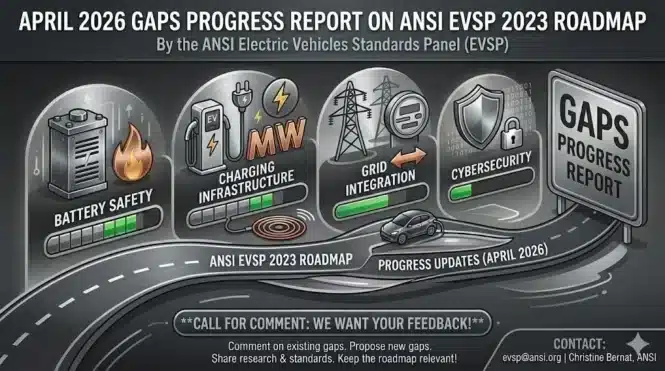
April 2026 Gaps Progress Report on ANSI EVSP 2023 RoadmapBy theANSI Electric Vehicles Standards Panel (EVSP)

EVSP Call for Comments — The ANSI Electric Vehicles Standards Panel has released its April 2026 working draft “Gaps Progress Report” updating the 2023 Roadmap of Standards and Codes for Electric Vehicles at ScaleThe report tracks progress on priority gaps around battery safety, charging infrastructure (including megawatt and wireless charging), grid integration, and cybersecurity that directly affect how public-facing EV charging is deployed and maintainedStakeholders are invited to comment on individual gaps or propose new ones to help keep the roadmap aligned with real-world deployment and operations 

Call for Comment Instructions:


Thanks to solution partners Intel (Kathy) , Pyramid Computer (Zahdan), TPGI (Traci) and NZ Technology .  

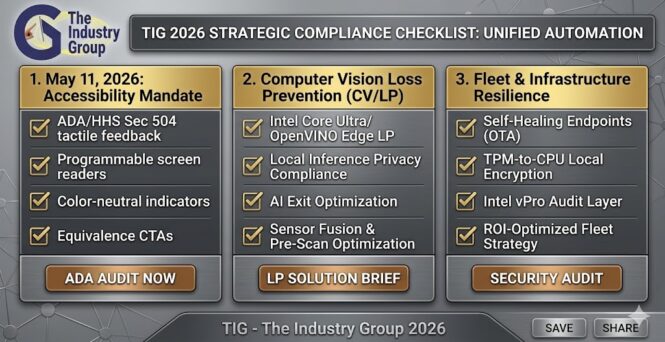
2026 Strategic Compliance Checklist

2026 Strategic Compliance Checklist

In 2026, compliance is no longer a legal review process—it is a system architecture decisionOrganizations deploying kiosks, self-checkout, or unattended retail must now design for accessibility, AI-driven loss prevention, and zero-trust security from day one.

This checklist is not theoreticalIt reflects what regulators, auditors, and operations teams will actually enforce in production environments.

The 2026 compliance landscape has moved from “best practice” to legal mandate, with a specific focus on two areas: the May 11, 2026, HHS Section 504 deadline and the shift toward Computer Vision (CV) as the standard for loss prevention.

Below is the consolidated 2026 Strategic Compliance Checklist derived from recent industry guides and regulatory updates.

  • “2026 compliance = accessibility + edge AI + zero trust”
  • “Design-time requirement, not retrofit”
  • “Failure = legal exposure + operational breakdown”

1Healthcare & Public Access (The May 11 Deadline)

The HHS Section 504 rule is the most immediate regulatory hurdle for organizations with 15+ employees.

  • [ ] Tactile Integration: Kiosks must be operable by keyboard or tactile input alone; scheduling and payment interfaces cannot rely on touch-only or mouse-driven flows.

  • [ ] Non-Visual Feedback: Images, diagrams, and status indicators (like error alerts) must have meaningful audio descriptions or “programmatically associated” labels for screen readers.

  • [ ] Color Neutrality: Critical information (e.g., “Required Field” or “Transaction Failed”) cannot be conveyed by color alone (e.g., just turning the box red).

  • [ ] Privacy Equivalence: Alternative procedures for those who cannot use a kiosk must afford the same level of confidentiality and convenience as the digital transaction.

2Retail Shrink & AI Loss Prevention (The “Edge AI” Standard)

Retail shrink—now exceeding $100B annually—has moved Computer Vision from pilot to required infrastructure.

  • [ ] Sensor Fusion (The “Anti-Swap” Protocol): Move beyond simple weight scalesSystems must now integrate CV with transactional data to detect “ticket switching” or “mismatched item” events in real-time.

  • [ ] Local Inference (Privacy Compliance): To meet 2026 data privacy standards, CV must run on Edge AI hardware (e.g., Intel Core Ultra with OpenVINO)PHI and biometric data should be processed on the device, not streamed to the cloud.

  • [ ] AI Exit Compatibility: Packaging and labeling must be optimized for “Scan & Go” AI exit systems to reduce manual employee checks at the door.

  • [ ] “Pre-Scan” Optimization: Ensure kiosk workflows are compatible with “pre-scan” technologies used by staff to assist high-volume checkout zones.

3Operational Resilience & Security

With $400B in annual downtime losses, “Infrastructure-Grade” kiosks must meet new Resilience Standards.

  • [ ] Self-Healing Endpoints: Kiosks must be configured with “Persistence” technology that allows security software to autonomously reinstall or repair itself if tampered with physically or remotely.

  • [ ] Zero-Trust Policy Sync: Fleet management (UEM) must enforce identical security and accessibility configurations across the entire fleet (Windows, Android, or iPadOS) over-the-air (OTA).

  • [ ] TPM-to-CPU Encryption: Protect against “bus attacks” on unattended terminals by ensuring hardware-level encryption of the link between the Trusted Platform Module and the CPU.

    • Pro Tip — If you spec Dell / HP / Lenovo inside kiosks:
      • You are almost always getting firmware TPM
      • You don’t control TPM vendor anymore

      If you need:

      • FIPS certification
      • Hardware isolation
      • High-assurance identity

      Then you must explicitly spec:

      • Industrial board (Advantech, AAEON, etc.)
      • With Infineon / Nuvoton discrete TPM
    • Discrete TPM (Infineon, Nuvoton, ST) — Was the Default:

      • Still critical
      • But now only in regulated, embedded, or long-lifecycle deployments

Top 4 Failure Modes (2026)

  • Retrofitting accessibility instead of designing it in
  • Cloud-dependent AI violating privacy expectations
  • Consumer hardware deployed in 5–7 year lifecycle environments
  • Inconsistent fleet configurations breaking compliance at scale

Intel-Specific Hardware Update

Intel’s “Store-in-a-Box” reference architecture is now the benchmark for this checklistBy utilizing the vPro management layer, operators can remotely audit a fleet’s ADA Compliance state and AI Inference health without a truck roll—a critical requirement for 2026 ROI.

Intel’s “Store-in-a-Box” (also referred to as the Autonomous Micro-Store architecture) is a modular, high-performance edge computing framework designed to convert traditional retail spaces into fully automated, “frictionless” environments.

Rather than relying on a massive, expensive cloud-based backend, this architecture pushes the “intelligence” to the physical store itself.

Core Components of the Architecture

  1. High-Performance Edge Nodes: The system is anchored by Intel Core Ultra or Xeon processors located on-siteThese provide the raw horsepower needed to handle hundreds of data streams simultaneously without the latency issues of the cloud.

  2. Intel OpenVINO Toolkit: This is the “brain” of the operationIt allows the store to run complex Computer Vision (CV) models to track customer movement, identify products being picked up, and manage real-time inventoryIn 2026, this is the primary tool for catching “ticket switching” or mis-scans at self-checkout.

  3. Intel vPro Technology: For the operator, this is the management layerIt allows for remote, hardware-level management of the entire storeIf a kiosk or sensor fails, IT can power-cycle or repair the software “out-of-band” without sending a technician to the physical site.

  4. Sensor Fusion: The architecture integrates data from multiple sources—including weight sensors on shelves, 3D LiDAR, and overhead cameras—to create a unified “event” (e.g., “Customer A put an Apple in their bag”).

Priority Stack for 2026:

  1. Section 504 Accessibility (Deadline-driven)
  2. Edge AI + Privacy (Regulatory + operational)
  3. Security + Zero Trust (Risk mitigation)
  4. Hardware architecture (Long lifecycle support)

Executive Roll-Up

✅ TRUE MANDATORY (2026 enforcement)

  • Accessibility (all 4 items)
  • Privacy (if regulated data present)

⚠️ CONDITIONAL MANDATORY (depends on environment)

  • Local AI inference (privacy-driven)
  • Zero-trust fleet enforcement
  • TPM-level hardware security

🔵 EMERGING STANDARD (fast becoming required)

  • Sensor fusion (retail shrink)
  • Self-healing endpoints

🟡 BEST PRACTICE (optimization layer)

  • AI exit compatibility
  • Pre-scan workflow alignment


NRA National Restaurant Show

See Association of Kiosk Manufacturers at National Restaurant Show

The National Restaurant Association Show returns to Chicago from May 16–19, 2026, bringing together the full spectrum of foodservice innovation—from global brands to emerging technology providers shaping the future of hospitalityHeld at McCormick Place, the event serves as a central hub for operators, IT leaders, and solution providers focused on improving efficiency, customer experience, and profitabilityVisit Booth 5829 in the North Building to explore the latest in self-service kiosks, digital ordering, contactless engagement, and edge-powered restaurant technology designed to meet the evolving demands of modern foodservice environments.

What and Where To See

What To See in our booth

  • Vispero — accessibility for quick serve restaurants and self-order kiosks
  • Pyramid Computer – Kiosks — two different self-order kiosks

Set up a Meeting

text 720-324-1837 whatsapp or wechat — 


Thanks to solution partners Intel (Kathy) , Pyramid Computer (Zahdan), TPGI (Traci) and NZ Technology .  

Self-Service Tech News – March 29

Last Updated on March 29, 2026 by 

Today, March 29, 2026, the self-service industry is recalibrating as the QSR sector reaches a $1.55 trillion valuation milestone, driven more by tech-enabled price optimization than foot traffic. While the “hardware wars” continue in Asia, the domestic focus has shifted to Unified Automation Stacks —moving away from fragmented “cool kiosks” toward integrated, resilient infrastructure that manages everything from labor to food safety.

Top Industry Headlines

  • 2026 QSR Sales Projected to Hit $1.55 Trillion Amid “Price-Driven” Growth

    Industry reports indicate that while nominal sales are soaring, real volume growth is modest, forcing brands to use kiosks and AI-analytics to protect margins through aggressive “Value vs. Premium” menu balancing.

    Source: Harmelin Media

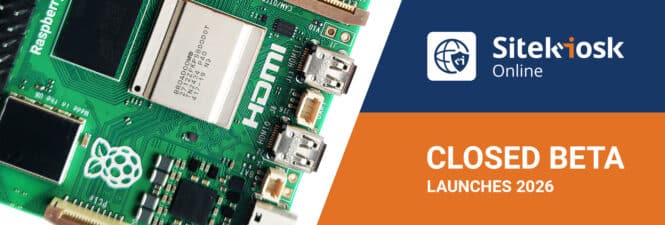
  • SiteKiosk Online Expands to Raspberry Pi for “Mass-Scale” Kiosk Deployments

    Announced this weekend, the new client allows operators to deploy full-featured, secure kiosk environments on low-cost Raspberry Pi hardware, targeting budget-conscious retail and smart city projects.

    Source: SiteKiosk

  • The “Automation Stack” Becomes the 2026 Baseline for Retail Survival

    Industry leaders are officially declaring the end of “pilot programs,” with major retailers like Walmart moving to a 5-layer tech stack that integrates Edge AI, thermal vending, and mandatory ADA compliance.

    Source: Kiosk Industry

  • Drive-Thru Kiosks Deliver 30% Higher Average Tickets than Staffed POS

    New 2026 performance data shows that customer-led ordering at the drive-thru is consistently outperforming human-led POS by providing reliable, visual upselling and reducing labor costs by 25%.

    Source: NovaTab

  • Digital Signage 2.0: Shift from “Scaling Reach” to “Scenario-Based Interaction”

    Analysis of March 2026 trends reveals that signage is moving away from classic advertising funnels toward flexible models where screens act as scenario-based tools for deep, data-driven customer personalization.

    Source: Advision Digital

  • Absolute Security Debuts “Self-Healing” Endpoint Resilience for Kiosks

    In response to $400B in annual downtime losses, new 2026 security protocols allow globally distributed kiosks to autonomously repair their own security software if it fails or is tampered with.

    Source: Absolute Security


Intel & Hardware Intelligence

  • Intel Core Ultra Series 3 Certified for 24/7 “Industrial Edge” Use

    Intel’s newest AI PC platform, built on the 18A process, is now officially certified for embedded use in robotics, medical kiosks, and smart cities, featuring 50 NPU TOPS for local AI processing.

    Source: Business Wire

  • Intel vPro Moves to the “Front Door” of Autonomous Retail

    Intel is shifting its positioning from a component supplier to a visible co-brand, partnering with KIOSK Information Systems and WINTEC to power vision-assisted loss prevention and “store-in-a-box” concepts.

    Source: ThinClient.org

  • 2026 Platform Security Report: Intel Hardens Hardware-to-Cloud Link

    Released this week, the report outlines new hardware-level protections designed to secure the increasingly large fleets of AI-enabled kiosks against sophisticated physical and remote bus attacks.

    Source: Intel Newsroom


Asia-Pacific Tech Update

  • Sakura Internet Selected as Japan’s First Domestic “Government Cloud” Provider

    In a major move for digital sovereignty today, Japan’s Digital Agency selected Sakura Internet alongside U.Sgiants to provide the common information infrastructure for all central and local government services

    Source: Japan Times

  • APAC Self-Service Market Projected to Hit $11.5B by 2033

    Driven by the world’s highest rates of QR-code and digital wallet adoption, the Asia-Pacific region is currently the fastest-growing frontier for 8K signage and AI-enabled ordering kiosks.

    Source: AVIXA Xchange

  • Avalue Technology Debuts “Battery-Powered” Mobile Kiosks for Japan

    To solve chronic labor shortages, Avalue has launched wireless kiosks that can be moved anywhere on a retail floor without permanent wiring, specifically targeting the Japanese convenience store market.

    Source: SelfService.io

Raspberry Pi Digital Signage Software Released

SiteKiosk Online goes Raspberry Pi

January 29, 2026

SiteKiosk Online expands to Raspberry Pi, delivering a full-featured kiosk clientSign up for the early beta starting at Integrated Systems Europe 2026.

SiteKiosk Online’s family of supported OS for the kiosk client will grow! By the end of this year, we will have a new client to bring SiteKiosk’s platform to the Raspberry Pi. This will be not only a simple Digital Signage client but a full featured Kiosk clientAll key SiteKiosk Online features are supported, so you get the complete protect, manage, and show experience.

Starting with this year’s ISE in Barcelona, you can sign up to become part of our early beta programJust send an email to sales-america@sitekiosk.com.

Reference https://www.sitekiosk.com/news/sitekiosk-online-goes-raspberry-pi/


Thanks to solution partners Intel (Kathy) , Pyramid Computer (Zahdan), TPGI (Traci) and NZ Technology .  


CareU service simulates everyday kiosk environments to help seniors gain confidence

LG Electronics Launches Kiosk Practice Service for Seniors on TV

It’s significant because it treats kiosk literacy for seniors as a mainstream “home appliance” feature, not a niche training program, and it fits into a broader accessibility and aging‑society strategy for LG and for Korea.

Why this matters strategically

  • It acknowledges kiosks as basic infrastructureWhen only 17.9% of Koreans 65+ say they can use kiosks for ordering/registration, they are effectively excluded from a big chunk of everyday commerceTurning kiosk training into a TV app reframes it as essential life‑skills support, like remote health or medication reminders.

  • It extends LG’s senior platformEasy TV was already a senior‑focused product with simpler UI, larger fonts, and services like LG Buddy for remote family support and remindersAdding kiosk practice and brain‑health games deepens that ecosystem rather than being a one‑off feature.

Implications for kiosks and self‑service

  • It directly addresses the “fear and friction” barrierSeniors can rehearse kiosk flows (burger QSR, café, food court) end‑to‑end—from item selection through payment—without time pressure, queues, or social embarrassmentThat’s the biggest psychological blocker in real stores.

  • It builds a training channel retailers don’t controlInstead of retailers installing special training kiosks, training moves upstream into the home; in theory, chains could later co‑design TV scenarios that match their own UIsThis opens a new B2B content/partnership angle for LG.

Business and market angle

  • It differentiates LG in an aging‑market raceSouth Korea, Japan, the US, and EU are all dealing with rapidly aging populations; LG has already said Easy TV is intended for export to those marketsKiosk training plus brain games and Buddy give LG a clearer senior‑lifestyle value proposition than “just a simpler TV.”

  • It complements LG’s own kiosk hardware strategyLG is promoting more accessible kiosk designs (larger touch targets, better UX, etc.)Teaching seniors kiosk mental models at home makes it more likely that LG‑style kiosk UX conventions become the default “learned” pattern in the population.

Policy and accessibility significance

  • It aligns with government concern over the digital divideKorea has already been running kiosk‑training programs through senior centers because older adults struggle with digital self‑service in a “contact‑free” cultureBy quantifying the gap (only 17.9% confident users) and productizing a response in a mass‑market TV, LG positions itself as a private‑sector partner in digital inclusion.

  • It normalizes “practice mode” as part of UXIf this model spreads, you could see kiosk “simulator” apps on TVs, tablets, and phones become an expected accessibility feature, similar to screen readers or high‑contrast modes today.

From our kiosk‑industry lens, the interesting question is whether large QSR/retail brands will start co‑developing LG‑style at‑home training experiences that mirror their own flows—do you see clients being willing to invest in that kind of pre‑store training content?


From Chosun March 2026

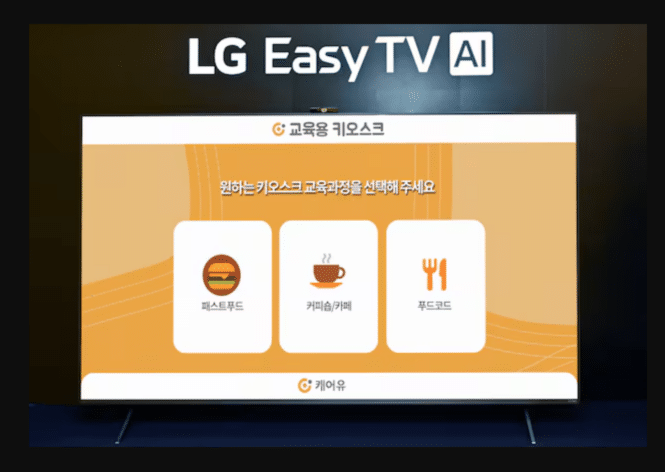
A service has been launched allowing seniors to practice using kiosks (unmanned payment devices) on TV beforehand.

LG Electronics announced on the 29th that it will introduce the ‘CareU’ service, which enables kiosk ordering practice on the ‘LG Easy TV.’ Currently, the service is only available on the ‘LG Easy TV,’ a senior-friendly TV released last year by LG Electronics, reflecting feedback from senior customers.

The kiosk practice service was developed to assist senior customers struggling with complex screen layouts and unfamiliar payment proceduresAccording to the Ministry of Health and Welfare’s ‘2023 Senior Citizens Survey,’ only 17.9% of those aged 65 years old and older responded that they could use kiosks for ordering and registration.

The ‘CareU’ service is designed to help users easily learn kiosk usage in various situations by realistically implementing three everyday kiosk environments: hamburger restaurants, cafes, and food courtsFor example, users can experience the entire process—from selecting food to payment—by placing an order via a kiosk at a hamburger restaurant, as demonstrated on the screenLG Electronics stated, “We planned this service to help senior customers practice using kiosks comfortably at home, thereby boosting their confidence in using digital devices and making kiosk usage easier.”

LG Electronics has also incorporated brain health games for senior customers into not only the ‘LG Easy TV’ but also the ‘StandbyMe 2’ and ‘StandbyMe Go’ devicesThe company plans to sequentially expand the application of the ‘LG Buddy’ and brain health games to other LG smart TVs.

Thanks to solution partners Intel (Kathy) , Pyramid Computer (Zahdan), TPGI (Traci) and NZ Technology .  

EAA Checklist for 2026

EAA Checklist 2026

1. Scope Check — Does EAA Apply?

If YES to any, you are in scope:

  • ☐ ATM / banking kiosk
  • ☐ Ticketing / transport kiosk
  • ☐ Check-in (airline, hospital, hospitality)
  • ☐ Retail self-order / POS
  • ☐ E-commerce terminal / self-service purchase
  • ☐ Government or public service kiosk

Insight: If your kiosk facilitates transactions or public services, assume EAA applies.


2. Core Requirement — EN 301 549 Alignment

You must align to EN 301 549 (ICT accessibility standard).

Functional Performance (MANDATORY)

  • ☐ Usable without vision
  • ☐ Usable with limited vision
  • ☐ Usable without hearing
  • ☐ Usable with limited mobility
  • ☐ Usable with limited cognition

Insight: If any one of these fails → non-compliant


3. Non-Visual Operation (Critical Failure Area)

  • ☐ Full workflow accessible via audio guidance
  • ☐ Headphone jack or private audio output
  • ☐ Screen reader / TTS support
  • ☐ Logical navigation (step-by-step, no dead ends)
  • ☐ No reliance on visual-only cues

Insight: Reality: Most kiosks fail here.


4. Non-Audio Operation

  • ☐ All functions available without sound
  • ☐ Visual equivalents for alerts and confirmations
  • ☐ Captions or visual prompts for instructions

5. Input & Interaction

  • ☐ Touch targets usable with limited dexterity
  • ☐ No requirement for multi-finger gestures
  • ☐ No time-limited actions without extension
  • ☐ Alternative input supported (keyboard, tactile, assistive tech)

6. Cognitive Accessibility

  • ☐ Simple, consistent navigation
  • ☐ Clear language (no jargon)
  • ☐ Step-by-step workflows
  • ☐ Error recovery is obvious and forgiving
  • ☐ No “memory traps” (user must remember prior steps)

7. Visual Accessibility

  • ☐ Sufficient contrast (WCAG baseline)
  • ☐ Scalable text / readable UI
  • ☐ No reliance on color alone
  • ☐ Clear focus indicators

8. Assistive Technology Compatibility

  • ☐ Compatible with screen readers
  • ☐ Supports external assistive devices
  • ☐ No blocking of accessibility APIs (OS level)

9. Transactions & Receipts (Often Overlooked)

  • ☐ Transaction confirmation accessible via audio
  • ☐ Receipts available in accessible format
  • ☐ No visual-only verification steps

Insight: This is explicitly implied in EN 301 549 — and often missed.


10. Physical Integration (ADA Still Matters)

Even in Europe, you must consider:

  • ☐ Reach ranges (wheelchair access)
  • ☐ Clear floor space
  • ☐ Operable controls without tight grasping
  • ☐ Accessible headphone/audio port placement

Insight: EAA + EN ≠ replacement for good physical design
Insight: Use ADA as baseline discipline


11. Real-World Testing (Not Optional)

  • ☐ Tested with actual users (not just QA team)
  • ☐ Includes:
    • Blind users
    • Mobility-impaired users
    • Elderly users

Insight: Lab compliance ≠ real usability


12. Documentation & Proof (CRITICAL)

  • ☐ VPAT (or equivalent accessibility report) completed
  • ☐ EN 301 549 mapping documented
  • ☐ Known limitations disclosed
  • ☐ Accessibility statement available

Insight: Europe is self-declaration + accountability


13. Legal / Market Readiness

  • ☐ Product falls within EAA-covered category
  • ☐ Accessibility included in procurement response
  • ☐ Internal compliance owner assigned
  • ☐ Risk assessed for each deployment

Insight: No certification = you must defend your position


Common Failure Points

  • No audio navigation
  • Headphone jack missing or poorly placed
  • “WCAG compliant” but unusable in practice
  • Visual-only payment confirmation
  • No documentation / VPAT

Final Takeaway

EAA compliance is not about passing a test.
It is about proving that your kiosk works for everyone — and being accountable when it doesn’t.

If accessibility is not designed into the system from the start, it will not be fixed later.


Why Cash Still Matters In A “Tap To Pay” World

Why keeping cash in the mix still matters for consumers, small merchants, and the self‑service systems that serve them

Scroll through the headlines and you’d think cash is already deadBetween mobile wallets, tap‑to‑pay cards, QR codes and “no‑cash” lanes, it’s easy to forget that simple paper money is still doing a lot of work in the background of the U.S. economyFor anyone who cares about payments, consumer choice and financial inclusion, cash is not nostalgia—it’s infrastructure.

Full Article https://kioskindustry.org/why-cash-still-matters-in-a-tap-to-pay-world/

Thanks to solution partners Intel (Kathy) , Pyramid Computer (Zahdan), TPGI (Traci) and NZ Technology .  


Frictionless Payments and Consumer Spending

Making It Easy For Customers To Pay

“The less customers feel the payment, the more they spend.” One of our principles of ROI is keep TTT (Time to Transaction) at the top of priority metricsCustomers dwelling over payment stage are not good.

Frictionless payments are no longer just a convenience feature—they are a primary driver of consumer behavior and revenue growthNew research from NMI confirms what many in self-service and unattended retail have been seeing in the field: when you remove effort, hesitation, and visibility from the payment process, consumers don’t just complete transactions faster—they spend more, buy more often, and think less about the transaction itselfIn effect, payments have evolved from a necessary step in commerce into a behavioral lever that directly influences basket size, frequency, and brand loyalty.

Article – https://kioskindustry.org/frictionless-payments-and-consumer-spending/

Excerpt – Frictionless payments are rewiring consumer spending habits, according to new research from NMI®, a global leader in embedded payments infrastructureIn its “Psychology of Payments” survey of 1,000 U.S. adults, half (50%) say they shop more frequently when payments feel seamless, while an equal share (50%) admit they abandon carts when the checkout process feels complicated or frustrating.

Thanks to solution partners Intel (Kathy) , Pyramid Computer (Zahdan), TPGI (Traci) and NZ Technology .  


IGEL Technology helps London’s homeless over the festive period.

Reading, UK. November 19th, 2014: IGEL Technology is extending its support for the Crisis at Christmas initiative to help London’s homeless over the festive period. This year 300 IGEL thin clients will be deployed at 10 schools and colleges used as IGEL Thin Client Crisis Christmas Centres over the holiday. During the operation 8,000 Crisis charity volunteers across the country will make the greatest possible difference for more than 3,000 homeless guests. This will be IGEL’s fifth year of consecutive support for the initiative.

For the first time this year, IGEL thin clients will be used at each London location as Video Call Kiosks to allow homeless guests to get in touch with friends and family and to consult with Crisis specialists at other locations to help improve their situation. The remaining IGEL devices are used to provide access to email, word processing and collaboration tools to enable Crisis charity volunteers to communicate and identify shelter for homeless people over the Christmas period, as well as for homeless visitors to access the internet for information and communication.

The thin clients are part of a total IT solution being provided to Crisis at Christmas by the Aimar Foundation, a charity founded to provide IT support to other charities. The Aimar Foundation is funding and setting up the information systems network, with help from global IT companies, hosted desktop provider Vesk and the support of volunteers, principally from Morgan Stanley. In total 200 technology professionals and volunteers will set-up the vital communications network in a 48 hour period.

“We are providing thin clients and IT expertise, through the Aimar Foundation, to enable Crisis to provide vital support and contact for those who are homeless at this very difficult time of the year for them,” said Simon Richards, IGEL’s UK Managing Director.

“The IGEL thin clients are ideal for Crisis at Christmas because they are simple and fast to set-up using centralised management software, secure because all data is held on central servers and reliable.”

For further information about Crisis at Christmas visit: http://www.crisis.org.uk/pages/christmas.html

For further information about the Aimar Foundation visit: www.theaimarfoundation.org

About IGEL Technology

A world leader in thin and zero client solutions, IGEL Technology helps organizations improve the agility, efficiency, and security of their virtual desktop and application delivery systems. IGEL produces one of the industry’s widest range of hardware thin and zero clients, based on Linux and Microsoft Windows, and leads the market in software based thin clients allowing customers to access a broad spectrum of server-based infrastructures and applications. IGEL also offers powerful and intuitive management software for easy deployment and administration of thin clients throughout any size organization. Partnerships with industry leaders like Citrix, VMware, Red Hat, and Microsoft ensure that IGEL provides the most up-to-date technology and trustworthy security to clients in industries that include Healthcare, Education & Research, Public Sector, Financial, Insurance, Retail, Logistics, and Manufacturing. IGEL has offices in the United Kingdom, Australia, France, the Netherlands, Austria, Belgium, Switzerland, Sweden, the United States, Germany, Hong Kong, Shanghai, Beijing and Singapore and is represented by partners in over 50 countries worldwide. To learn more, visit www.igel.co.uk or follow us on Twitter:twitter.com/IGEL_Technology


Editorial Contacts:

IGEL Technology GmbH

Dr. Frank Lampe

Hanna-Kunath-Str. 31

28199 Bremen

Tel.: 0421 / 52094 1300

Fax: 0421 / 52094 1399

E-Mail: lampe@igel.com

Web: www.igel.com


Amber Group

Paul Smith

Tel: +44 (0)7770 828525

Email: paul@ambergroup.net

Thanks to solution partners Intel (Kathy) , Pyramid Computer (Zahdan), TPGI (Traci) and NZ Technology .  


IGEL | IGEL protects customer investment with its long-term Linux Thin Client OS updates

Reading UK. 9 March 2015 – IGEL has updated the firmware of its Linux thin client operating system with the latest software clients for Citrix XenApp / XenDesktop, VMware Horizon and Microsoft R

Source: www.realwire.com

IGEL’s customer focus and quality German engineering is the reason businesses continue to choose us,” said Simon Richards, IGEL’s UK & Ireland Managing Director. “For thin clients to keep pace with the latest developments in the data center, they need up-to-date software clients and protocol standards. The earlier the firmware becomes obsolete, the more often the hardware has to be replaced. These long-term firmware updates are yet another example of our commitment to provide customers with continued access to the best desktop technology available.”

The update for the IGEL Linux v4 operating system (Version 4.14.100) features the Citrix Receiver (Versions 12 and 13). Citrix Receiver 13.1.2 offers support for Citrix XenApp / XenDesktop 7.5 including Citrix StoreFront. The update also offers a range of new options such as straightforward and secure user authentication via smartcard and pass-through.


Additional management features
Various other client updates are included such as Version 3.2 of the VMware Horizon Client, IGEL’s own RDP Client including RemoteFX 8 for accessing Microsoft RemoteApp and Microsoft Remote Desktop. To make administration even easier, IGEL has also integrated a range of practical extra functions, for example the IGEL Quick Navigator that speeds up configuration procedures by referring directly to necessary and possible set-up settings.


“Customers buying IGEL thin clients back in 2009 would never have imagined the functionality that would become available with features such as Citrix Storefront and RemoteFX 8 and yet with these firmware updates, customers using these older IGEL thin clients can still take advantage of these features,” explained Simon.

Thanks to solution partners Intel (Kathy) , Pyramid Computer (Zahdan), TPGI (Traci) and NZ Technology .  

Thin Client Manufacturer – German thin client market leader expands its international growth continues

IGEL Technology: German thin client 285d0f10-35d0-46c8-b958-f0c1735c3969.jpgmarket leader expands its international growth continues

IGEL is the undisputed According to the International Data Corporation (IDC), a market leader for thin clients in Germany and backed this position with a market share of 30%. In international comparison the Bremen thin and zero client specialist maintains its position at number 5 in the world and ranks in Western Europe ranked third

Bremen March 24, 2015 – IGEL Technology is expanding its leading position in the international thin client market, where remains of 2014, the clear No. 1 in Germany -. For the ninth consecutive year.

For nearly a decade, we are German thin client market leader. This is a great success, and we do not rest on our laurels. Heiko Gloge, Managing Director and Partner at IGEL Technology

According to the latest figures from IDC any other manufacturer in this country has sold more thin clients last year. The market share rose to 30%, which related to Germany, an increase of over 25%. In Germany, according to IDC last year, about 481.900 Thin clients sold – so the market is growing by about 22% and remains by far the most important market in Europe. In international comparison IGEL can look back on an outstanding year. Both in Europe (eg Finland, France, Italy, Spain) and overseas (USA and Australia), the company was able to improve its market share. The continuous growth in the global market is also the view of the total sales. Of a total of 276,142 sold worldwide IGEL thin clients (+ 25%) was sold nearly half of it outside Germany.

“For nearly a decade, we are German thin client market leader. This is a great success, and we do not rest on our laurels. We have in recent years continuously expanded our international business and provided with regional offices to ensure that our customers can rely world to talk to an expert on the spot, “said Gloge, Managing Director and Partner at IGEL Technology.” At the same time, we have expanded our product portfolio consistently removed without losing the user’s needs in mind. Thus, we are not only German market leader, but with an export share of nearly 50% worldwide a firm and reliable factor. “

Sehr geehrte Damen und Herren,

IGEL Technology baut seine führende Position auf dem internationalen Thin Client-Marktweiter aus und bleibt auch 2014 die klare Nr. 1 in Deutschland – bereits zum neunten Mal in Folge. Laut den aktuellen Zahlen von IDC hat kein anderer Hersteller im vergangenen Jahr hierzulande mehr Thin Clients verkauft. Der Marktanteil stieg dabei auf 30%, was auf Deutschland bezogen einem Anstieg von über 25% entspricht.
In Deutschland wurden laut IDC im vergangenen Jahr rund 481.900 Thin Clients verkauft – damit wächst der Markt um etwa 22% und bleibt mit Abstand die wichtigste Absatzregion in Europa.

Auch im internationalen Vergleich kann IGEL auf ein hervorragendes Jahr zurückblicken.Sowohl in Europa (z.B. in Finnland, Frankreich, Italien, Spanien) als auch in Übersee (USA und Australien) konnte das Unternehmen seine Marktanteile verbessern. Von insgesamt 276.142 weltweit abgesetzten IGEL Thin Clients (+ 25%) wurde annährend die Hälfte außerhalb Deutschlands verkauft. 


Pressemitteilung


IGEL Technology: Deutscher Thin Client-Marktführer baut internationales Wachstum weiter aus

IGEL ist laut International Data Corporation (IDC) unangefochtener Markführer für Thin Clients in Deutschland und untermauert diese Position mit einem Marktanteil von 30%. Im internationalen Vergleich behauptet der Bremer Thin und Zero Client-Spezialist seine Position auf Platz 5 weltweit und rangiert in West-Europa auf Platz 3.

Bremen 24. März 2015 – IGEL Technology baut seine führende Position auf dem internationalen Thin Client-Markt weiter aus und bleibt auch 2014 die klare Nr. 1 in Deutschland – bereits zum neunten Mal in Folge. Laut den aktuellen Zahlen von IDC hat kein anderer Hersteller im vergangenen Jahr hierzulande mehr Thin Clients verkauft. Der Marktanteil stieg dabei auf 30%, was auf Deutschland bezogen einem Anstieg von über 25% entspricht. In Deutschland wurden laut IDC im vergangenen Jahr rund 481,900 Thin Clients verkauft – damit wächst der Markt um etwa 22% und bleibt mit Abstand die wichtigste Absatzregion in Europa. Auch im internationalen Vergleich kann IGEL auf ein hervorragendes Jahr zurückblicken. Sowohl in Europa (z.B. in Finnland, Frankreich, Italien, Spanien) als auch in Übersee (USA und Australien) konnte das Unternehmen seine Marktanteile verbessern. Das kontinuierliche Wachstum auf dem Weltmarkt zeigt sich auch mit dem Blick auf die Gesamtverkaufszahlen. Von insgesamt 276.142 weltweit abgesetzten IGEL Thin Clients (+25%) wurde annährend die Hälfte außerhalb Deutschlands verkauft.
„Seit fast einem Jahrzehnt sind wir deutscher Thin Client-Marktführer. Das ist ein großartiger Erfolg, auf dem wir uns aber nicht ausruhen. Wir haben in den letzten Jahren unser internationales Geschäft kontinuierlich ausgebaut und mit regionalen Niederlassungen dafür gesorgt, dass unsere Kunden weltweit auf kompetente Ansprechpartner vor Ort bauen können“, kommentiert Heiko Gloge, Managing Director und Partner bei IGEL Technology. „Gleichzeitig haben wir unser Produktportfolio konsequent ausgebaut, ohne die Bedürfnisse der Anwender aus den Augen zu verlieren. Somit sind wir nicht nur deutscher Marktführer, sondern mit einem Exportanteil von fast 50% auch weltweit eine feste und verlässliche Größe.“


Thanks to solution partners Intel (Kathy) , Pyramid Computer (Zahdan), TPGI (Traci) and NZ Technology .  

Intel Core Ultra 200 for edge and business thin clients

Intel Core Ultra 200 for edge and business thin clients

Insight:  Inside the new Core Ultra 200V/H/U/S “Series 2” processors sits a blend of computing parts – brain, graphics muscle, plus a special neural engine. These pieces team up tightly, hitting speeds near 99 trillion operations each second when running on portable devices. That leap means tasks such as Llama‑3 responses, image creation via Stable Diffusion, along with visual analysis run faster than before. Previous versions from Intel couldn’t match this pace.

Starting with Microsoft on Copilot+ PCs, Intel makes sure many Windows machines handle AI tasks right where they are – cutting delays, boosting data control, fewer trips to remote servers. This move props up x86’s role just when smart functions go mainstream across computers.

Starting with built-in vPro on the 200V lineup, then folding in fresh cloud tools – like Intel Endpoint Cloud Services and the soon-to-arrive vPro Fleet Services – the grip tightens. Hardware-level control pairs up with smart security fed by AI. This mix keeps business device groups tied closer to Intel’s ecosystem. Not a sudden shift, just gradual weaving. Each piece links without flash, yet adds weight over time.

Starting in 2025, businesses eyeing upgrades may lean toward Intel. That’s because built-in security features – like MITRE-verified vPro and partner-driven tools such as Pluton – are baked into the hardware. These layers help guard systems without slowing them down. Meanwhile, nearly all existing apps keep working, around 99.7 percent by Intel’s count. So when shifting from Windows 10 to Windows 11, hiccups tend to stay low. Fewer roadblocks often mean smoother rollouts. Because of that, procurement choices could tilt steadily in Intel’s direction.


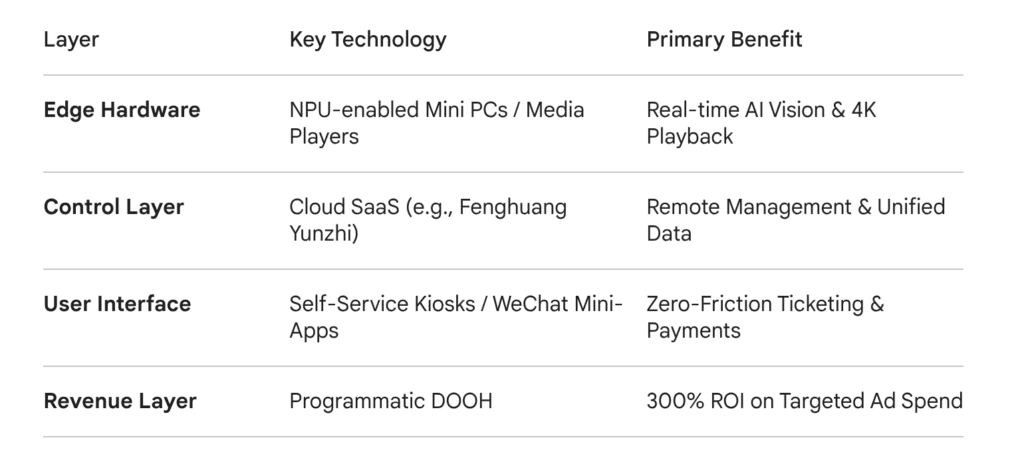
Over the past three months, Intel has once again garnered industry attention in the thin client and mini PC market. With the launch of the new generation of Intel Core Ultra processors, AI acceleration capabilities are gradually becoming standard on end devices. These processors integrate an NPU, enabling local AI inference, significantly reducing reliance on the cloud while improving responsiveness and data security.

Furthermore, the Intel vPro platform provides a more efficient solution for large-scale enterprise device deployments through hardware-level security and remote management capabilities. In terms of connectivity, the new platform supports Wi-Fi 7 and faster data transfer interfaces, making mini PCs and thin clients perform better in office, edge computing, and smart terminal scenarios.

Overall, AI is moving from the cloud to the edge, driving a new upgrade cycle for mini PCs and thin clients. For OEMs and system integrators, early deployment of AI PCs and edge computing products will be a crucial opportunity to seize future market share.

Reference Link — https://www.intc.com/news-events/press-releases/detail/1722/intel-extends-leadership-in-ai-pcs-and-edge-computing-at

Thanks to solution partners Intel (Kathy) , Pyramid Computer (Zahdan), TPGI (Traci) and NZ Technology .  

Partner Tech Partners with Intel: How AI is Reshaping the Future of Self-Checkout

Partner Tech Partners with Intel: How AI is Reshaping the Future of Self-Checkout

In today’s fast-paced retail world, self-checkout systems have shifted from a convenience to a standard expectation for consumers. Partner Tech, a global leader in smart POS and self-service solutions, is changing this experience with its AI-powered system that uses Intel Core processors.
AI-Driven Efficiency Revolution
At the core of Partner Tech’s solution is its AI software platform, Otter. By using computer vision and machine learning, it tackles a major issue in traditional self-checkout: identifying bulk items. Customers used to spend time scrolling through menus to find the right option when purchasing fruits or vegetables. This process was slow and often led to mistakes. Now, Otter’s Picklist Assistant automatically recognizes items, needing only confirmation from the customer. This approach reduces selection time to just 4 seconds and speeds up transactions significantly.
Smart Security and Loss Prevention
AI also enhances security. Partner Tech’s system includes smart security cameras and weight verification technology. AI algorithms can differentiate between accidental scanning mistakes and deliberate fraud, providing real-time alerts for possible theft situations, such as barcode swapping or unscanned products. This “invisible” security measure helps retailers cut losses while ensuring a smooth experience for honest customers.
Flexible Product Matrix
To cater to various types of retailers, Partner Tech offers three main products:
• Starling: A fully integrated, feature-rich solution perfect for large supermarkets and busy environments, with highly customizable hardware options.
• Alfred: A modular desktop solution that combines grocery store features with a compact size, ideal for shops with limited space.
• Paula: A compact all-in-one desktop machine designed for convenience stores and fast-food restaurants, supporting self-checkout and self-ordering with excellent space utilization.
A Chinese Perspective
In China, the retail industry is transforming through a deep integration of online and offline channels. Consumers here have high expectations for both efficiency and experience. Partner Tech’s AI self-checkout technology has great market potential if it integrates well with the local ecosystem. This includes connecting seamlessly with WeChat Pay and Alipay and improving recognition models for Chinese products, like bulk dried goods and fresh produce. Additionally, the Chinese market pays close attention to data privacy and compliance, which means these systems must follow relevant regulations during local deployment to protect user data. Moreover, with China’s large retail labor market, AI self-checkout does not just replace human workers. It frees employees from repetitive cashier tasks, allowing them to concentrate on better customer service and operational improvements, truly achieving “human-machine collaboration.”
Conclusion
Partner Tech’s partnership with Intel shows how AI technology can change self-checkout from a simple payment method into a smart, efficient, and secure retail hub. It reduces wait times and provides real profit increases for retailers by minimizing the need for intervention and preventing fraud. With ongoing technological advancements, the future of retail checkout will be more seamless, intelligent, and user-friendly.

Payment Trends in Europe with VISA and Mastercard

What’s Going On In Europe With Payments?

Strategic takeaway: Europe isn’t dumping Visa and Mastercard—it’s quietly rewiring the plumbing so that, by the end of this decade, US card schemes become optional rather than existential for its domestic payments.

Question: did Europe just turn their back on VISA and Mastercard

Answer:

Not entirely, but the “breakup” has officially startedAs of March 2026, Europe is making its most aggressive move in decades to end its 95% dependence on U.S. payment infrastructure.

It’s less of a sudden “turning of the back” and more of a massive, coordinated “eviction notice” through three major projects:

Article – https://kioskindustry.org/payment-trends-in-europe-with-visa-and-mastercard/

Thanks to solution partners Intel (Kathy) , Pyramid Computer (Zahdan), TPGI (Traci) and NZ Technology .  


TIG Weekly Self-Service & Retail Tech Briefing Feb 23

What We Read This Week

Reporting Period: January 24 – February 23, 2026

Focus: 18A Edge Compute, Trillion-Dollar Automation, and Federal Deadlines


## 1. Strategic Watch List & Financials

  • Diebold Nixdorf ($DBD): Record Growth and Efficiency
  • Summary: On Feb 12, Diebold Nixdorf reported a blowout Q4, with revenue hitting $1.1 billion (up 12%). The company achieved a staggering 182% increase in EPS for the year. CEO Octavio Marquez highlighted their “lean operating model” as the driver for a $255M–$270M free cash flow target in 2026. This is a clear signal that their pivot toward software-integrated self-service and ATM recycling is paying off.
  • URL: Diebold Nixdorf Q4 Financial Momentum
  • Walmart ($WMT): Peak Automation Spending
  • Summary: Walmart CFO John David Rainey confirmed on Feb 20 that the company is hitting its peak investment in supply chain automation this year. Currently, 50% of e-commerce fulfillment is automated, and 60% of stores receive automated freight. Strategically, Walmart is moving toward “higher-skilled” roles where associates manage robotics rather than manual sorting—a blueprint for the future of large-scale retail labor.
  • URL: Walmart Automation Investment Peaks in 2026
  • NCR Voyix ($VYX): Buyback Expansion Ahead of Earnings
  • Summary: NCR Voyix increased its share repurchase authorization on Feb 17, signaling a bullish stance ahead of its Feb 26 earnings release. The company continues to shift away from pure hardware manufacturing (outsourcing to Ennoconn) to prioritize its cloud-native software platform for the retail and restaurant sectors.
  • URL: NCR Voyix Investor Updates

## 2. Regulatory & Accessibility (The “May 2026” Clock)

  • HHS Section 504: The Kiosk Hard Deadline
  • Summary: Federal scrutiny is intensifying as the May 11, 2026 deadline approaches for healthcare providers to ensure all patient-facing kiosks meet WCAG 2.1 AA standards. This rule applies to any entity receiving federal assistance. For manufacturers, this means accessibility features (screen readers, tactile buttons, height requirements) are no longer “optional extras” but mandatory for the medical market.
  • URL: May 2026 HHS Kiosk Deadline Details

## 3. Edge Computing & Mini PCs

  • Intel ($INTC): 18A “Panther Lake” Industrial Launch
  • Summary: At CES 2026, Intel debuted the Core Ultra Series 3, the first chips built on the US-based 18A process node. Critically for the kiosk and digital signage industry, these chips are now certified for 24/7 embedded use. They offer 50 NPU TOPS for AI vision tasks (like checkout fraud detection) and up to 2.3x better performance-per-watt for video analytics compared to previous generations.
  • URL: Intel 18A Core Ultra Series 3 Newsroom

## 4. Smart Lockers & EV Charging

  • Smart Lockers: The Shift to “Physical APIs”
  • Summary: Market reports from Feb 2026 show the smart locker market growing to $3.71B this year. The strategic shift is away from “storage” and toward Process Workflow Automation (PWA). Lockers are now being integrated as physical nodes in digital workflows (e.g., IT asset handoffs, tool tracking) using IoT sensors and cloud-based policy enforcement.
  • URL: Smart Locker Market Size & Forecast 2032
  • Nayax Acquires Lynkwell: EV Payment Integration
  • Summary: Nayax recently completed the $25.9M acquisition of US-based Lynkwell. This move specifically targets the lack of unified payment and management software in the EV charging space, allowing for a more “vending-like” seamless payment experience at the charger.
  • URL: Nayax/Lynkwell EV Acquisition

Credit: TIG – the industry group

Thanks to solution partners Intel (Kathy) , Pyramid Computer (Zahdan), TPGI (Traci) and NZ Technology .  


China Infrastructure and Smart Lockers

Summary: Smart Lockers as Urban Infrastructure—Lessons from China

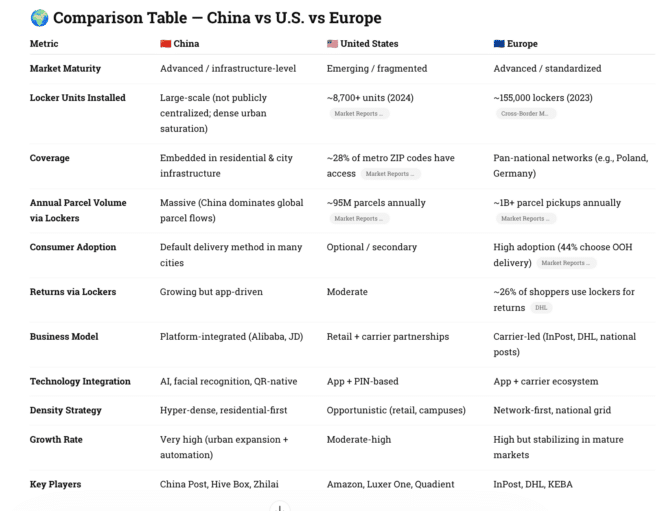
In China’s high-density cities, door-to-door delivery is increasingly inefficient. Smart lockers have emerged as a 24/7 self-service solution, with networks like Hive Box operating over one million units to manage the country’s 130 billion annual parcels.

Reference –

Why the China Model is Winning:

  • Infrastructure Status: In Tier 1 and 2 cities, lockers are now considered essential utilities, similar to elevators or mailrooms, integrated directly into residential compounds and transit hubs.

  • Cost Efficiency: Implementing these systems reduces logistics labor costs by 10–20% and slashes failed delivery attempts by up to 25%.

  • The Technology Stack: These aren’t just boxes; they are sophisticated kiosks utilizing IoT monitoring, cloud management, and “mobile-first” QR/facial recognition access.

Expanding Beyond Parcels:
The market is shifting toward specialized, multi-purpose hardware. Refrigerated modules for fresh groceries, meals, and pharmaceuticals are seeing 15–20% higher utilization rates than parcel-only systems.

Strategic Takeaways for the Self-Service Industry:

  1. Manufacturing Dominance: China’s control over key components—display panels, embedded PCs (often powered by Intel), and IoT sensors—positions its OEMs (like Zhilai Tech) as dominant global suppliers.

  2. Market Divergence: While China follows an “Infrastructure Model” and Europe a “Network Model,” the U.S. remains a “Fragmented/Opportunity Model” with significant upside in multi-family housing and BOPIS (Buy Online, Pick Up In-Store) retail.

  3. The “Smart Tip”: Hardware costs vary wildly by region. A standard master/slave setup can cost ~$1,800 in emerging markets compared to ~$3,500 in the U.S. or Europe, impacting how quickly these networks can scale.

The Bottom Line: As urban centers worldwide face growing delivery congestion, the integration of modular hardware and digital authentication seen in China is becoming the global standard for last-mile logistics.

Frictionless Payments and Consumer Spending

Payment Trends in Europe with VISA and Mastercard

NRA National Restaurant Show

China’s Five-Year Plan

Summary: How China’s 15th Five-Year Plan Accelerates Hardware Self-Reliance

China’s 15th Five-Year Plan (2026–2030) represents a “structural pivot” toward technological sovereignty. Driven by geopolitical tensions and export controls, Beijing is moving beyond software innovation to prioritize the domestic production of the physical “guts” of the modern economy.

Reference How Will China’s 15th Five-Year Plan Accelerate Tech Self-Reliance in Hardware?
  China’s 15th Five-Year Plan (2026–2030) prioritizes technological self-reliance in critical hardware sectors …

Key Drivers for Hardware Independence:

  • Massive R&D Commitment: The plan targets an annual R&D spending growth of over 7%, focusing on “core technologies” where China currently faces external “chokeholds.”

  • “AI Plus” Initiative: A national push to integrate AI across manufacturing and retail infrastructure. This isn’t just about algorithms; it’s about the AI accelerators, edge processors, and sensors required to run them locally.

  • Semiconductor Sovereignty: China is aggressively scaling its domestic chip ecosystem (led by firms like SMIC and Naura), aiming to have at least 50% of chip-making equipment be locally produced by 2030.

Impact on the Self-Service and Kiosk Industry:

  1. Rise of Domestic Edge Computing: Expect a surge in Chinese-made mini-PCs and ARM-based edge servers. These are designed to replace Intel/AMD components in kiosks, offering lower-cost, high-performance alternatives for unattended retail.

  2. Advanced Component Localization: The plan prioritizes the production of high-end touchscreens, industrial-grade sensors, and biometric authentication hardware (facial recognition and voice ordering).

  3. Standardization over Adoption: Instead of just following global standards, China is moving to set its own international technological standards for robotics and “phygital” (physical-digital) infrastructure.

The Bottom Line: For global vendors, the 15th Five-Year Plan creates a dual reality: more intense competition from low-cost, high-tech Chinese hardware, and a shrinking window to supply foreign components into the Chinese domestic market as “domestic substitution” becomes the mandate.


Learn more about China’s push for self-reliance

This video provides a concise breakdown of how China is placing technological self-reliance at the absolute center of its national development strategy.


Embedded Industrial Computing and Giada

Summary: Giada at Embedded World 2026—Powering the Edge AI Transition

At Embedded World 2026 in Nuremberg, Giada Technology showcased its latest evolution of embedded computing hardware. The focus was clear: creating the high-performance, industrial-grade backbone required for sophisticated self-service and AI-driven edge applications.

Reference — Giada Showcases Embedded Computing Innovations at Embedded World 2026
www.giadatech.com/about/news1193.html   Embedded World 2026, one of the world’s most influential exhibitions …

Hardware Highlights for the Self-Service Industry:

  • Multi-Display Performance: The new Giada D108 (powered by AMD Ryzen) supports up to four HDMI 2.0 outputs. This makes it a primary candidate for complex digital signage networks and multi-screen kiosk environments that require heavy visual workloads without sacrificing a compact footprint.

  • Industrial-Grade Reliability: Giada introduced SMARC modules (based on Rockchip and NXP) capable of operating in extreme environments (–40°C to 85°C). For outdoor lockers or industrial kiosks, this level of thermal resilience is a non-negotiable requirement.

  • AI-Native Terminals: The showcase included Android-based industrial PCs with integrated NPUs (Neural Processing Units). These are specifically designed for machine vision tasks like automated defect detection and retail analytics, moving processing away from the cloud and onto the local device.

Strategic Impact on Kiosk Infrastructure:

  1. Versatile Connectivity: Support for HDMI, LVDS, and EDP allows these carrier boards to integrate seamlessly with various industrial displays and medical-grade peripherals, simplifying the supply chain for complex kiosk builds.

  2. Edge AI Integration: By embedding AI processing directly into the PC hardware, operators can deploy features like facial recognition and gesture control with lower latency and higher security.

  3. Lifecycle Stability: The move toward SMARC modules reflects an industry-wide need for long-term lifecycle support, ensuring that kiosk deployments can be maintained for years without frequent hardware redesigns.

The Bottom Line: Giada’s 2026 lineup underscores the industry’s shift from “basic computing” to “intelligent edge infrastructure.” For self-service operators, the availability of NPU-integrated hardware at the component level makes advanced AI features more accessible and reliable than ever before.

Resources

Intel’s Self-Service Push: From Kiosks to Autonomous Stores

KIOSK Information Systems and Intel: Advanced Self-Service at the Edge

Intel is quietly but aggressively deepening its role in self-service, moving beyond “inside the box” CPUs to become a visible co‑brand on self-checkout, returns kiosks, and fully autonomous stores. At NRF 2026, the company and its partners framed self-service as one of the primary proving grounds for edge AI in retail, with kiosks and SCO terminals as the front line.

KIOSK Information Systems and Intel: Advanced Self-Service at the Edge

KIOSK Information Systems continues to be one of Intel’s flagship self-service partners, with “Advanced Self-Service Kiosk Solutions” featured in Intel’s solution library. KIOSK is leveraging Intel processors, IoT platforms, and vPro remote management to support large fleets across retail, banking, hospitality, and healthcare, with emphasis on security, health monitoring, and lights‑out servicing at the edge.

At NRF 2026, Intel highlighted KIOSK as a core example of “retail reinvented,” tying together self-checkout, returns automation, click‑and‑collect, endless aisle, and digital signage into a single self-service fabric. The message: kiosks are no longer standalone islands, but managed edge endpoints plugged into a broader Intel‑powered retail infrastructure.

AI-First Self-Checkout: WINTEC and Partner Tech

On the self-checkout front, Intel is leaning into AI‑assisted SCO rather than just faster CPUs. WINTEC’s Smart Self‑Checkout for Loss Prevention and Food Recognition uses Intel Core processors and Vision AI to recognize items, address pricing errors, and reduce shrink at unattended lanes. The solution is positioned for both retail and restaurant sectors, with computer vision and QR‑based self-payment as standard rather than experimental features.

Partner Tech is taking a similar approach, showcasing a full line of self-checkout systems built on Intel Core, with AI used for analytics, fraud detection, and operational optimization. At NRF, these platforms are explicitly marketed as “frictionless self-checkout powered by AI,” signaling that the industry is moving from simple scan‑and‑bag to context‑aware, vision‑assisted transactions.

Autonomous Stores: Brysk and Vision AI

Intel is also putting its weight behind fully autonomous formats. The Brysk Autonomous Checkout concept, featured in Intel’s solutions library in February 2026, describes an always‑on “micro‑store” model where Vision AI monitors checkout, inventory, and customer experience in real time. The store is aimed at locations like campuses, offices, and hospitality, where a 24/7, no‑staff footprint is more valuable than a full staffed shop.

This is a notable pivot: instead of treating kiosks as single‑purpose devices, Intel is endorsing a model where a cluster of vision sensors, edge compute, and compact kiosks together act as a self‑service store in a box. For kiosk vendors, it opens a path to move “up‑stack” into autonomous store solutions rather than just shipping standalone units.

Self-Service as Intel’s Retail Front Door

The NRF exhibitor listing for Intel sums up the positioning: interactive kiosks, smart vending, self‑checkout, and dynamic digital signage are all now part of a unified edge retail portfolio that combines AI‑driven checkout, loss prevention, and customer analytics. Open‑source tools and reference packages (including self-checkout examples on Intel Retail’s GitHub) are meant to lower the barrier for OEMs and ISVs to build on this stack.

For the self-service ecosystem, the implications are clear:

  • Intel sees kiosks and SCO as marquee applications for edge AI, not just generic embedded compute.

  • Vision‑assisted loss prevention and food recognition are moving from pilot to product, led by partners like WINTEC and Partner Tech.

  • Autonomous micro‑stores such as Brysk’s design are emerging as a new category that blends kiosks, cabinets, and vision sensors into a single always‑open self-service footprint.


Executive Briefing – Self-Service & Retail Tech Strategy Feb20

Recent News for Self-Service and Retail Tech

## Strategic Watch List & Financials

  • Walmart ($WMT): Automation vs. Human Touch
    Walmart reached a $1 trillion market cap this month. Strategically, they are shifting 65% of stores to automated servicing but are notably reintroducing manned registers in select zones to combat “self-checkout friction” and shrink.
    Source: Walmart’s Omnichannel Strategy
  • Diebold Nixdorf ($DBD): Strong 2026 Outlook
    Reported Q4 earnings beat expectations with a free cash flow target of $255M–$270M for 2026. Retail revenue is up 12% YoY, driven by global demand for POS and self-service hardware.
    Source: Diebold Nixdorf Financial Summary
  • Intel ($INTC): Edge-Ready Silicon
    Intel launched the Core Ultra Series 3, the first chips on the 18A process certified specifically for embedded industrial edge use (perfect for high-performance kiosks and media players).
    Source: Intel 18A Edge Certification

## Regulatory & Accessibility Alerts

  • HHS Section 504 (Healthcare Kiosks)
    Deadline: May 11, 2026. Healthcare providers must ensure all patient-facing kiosks meet WCAG 2.1 AA standards. Non-compliance after this date carries significant federal litigation risk.
    Source: HHS Accessibility Mandate Details
  • ADA Title II (State & Local Gov)
    Deadline: April 24, 2026. This mandate requires all digital content and accompanying kiosk interfaces used by local governments to be fully accessible.
    Source: ADA Title II Compliance Guide

## Edge Computing & Infrastructure

  • Scale Computing Acquires Adaptiv Networks
    This acquisition integrates SD-WAN and SASE security directly into edge platforms. This is a critical move for retailers managing thousands of kiosks who need “zero-touch” secure connectivity.
    Source: Scale Computing Strategic Acquisition


## Special News


## Asia Watch

  • In India and other Asian growth markets, Walmart’s automation program will likely accelerate demand for self‑checkout, computer‑vision loss prevention, and digital shelf labels, while raising workforce and training questions.
  • Diebold’s ‘local‑for‑local’ push positions its POS and SCO stack for faster deployment with regional manufacturing and integration partners in Asia, where grocery and QSR formats are rapidly standardizing.
  • In Asia, partners like Advantech in Taiwan are packaging Core Ultra Series 3 into off‑the‑shelf edge AI boxes aimed at smart retail, kiosks, and digital signage, which will likely be the first wave of deployments outside the U.S. and EU.
  • Integrated SD‑WAN/SASE plus edge compute is exactly what multi‑country QSR and convenience chains in Asia need to run thousands of kiosks with zero‑touch provisioning and central orchestration.
  • Rollback and uncertainty around U.S. tariffs will ripple through Asian manufacturing hubs—particularly China, but also Vietnam, Malaysia, and India—affecting hardware BOM costs, kiosk enclosure sourcing, and display supply chains for U.S. self‑service deployments.
More Links


Posiflex Redefines Self-Service with AI Food Recognition and Multimodal SOK Kiosks

The Shift from Transactional to Intelligent: How Computer Vision and Voice AI are Driving QSR Efficiency

At EuroShop 2026 this week, Posiflex is revealing the technical architecture behind their new FR Series (Food

Posiflex intel

Posiflex intel

Recognition) and SOK Series kiosks.

These units are specifically engineered to solve the “cafeteria bottleneck” by replacing manual PLU/barcode entry with a computer-vision-based “tray-to-payment” workflow.

Technical Breakdown: Posiflex FR & SOK Series

  • Multimodal Object Recognition: The FR Series uses high-performance AI (optimized for Intel-based edge processing) to identify multiple distinct food items on a tray simultaneously. It can distinguish between similar-looking items (e.g., different types of pastries or side dishes) regardless of their orientation or overlap on the tray.
  • Edge-First Processing: To ensure sub-second recognition speeds and maintain customer privacy, the AI inference happens locally on the kiosk hardware rather than in the cloud. This utilizes Intel Core™ Ultra processors to handle the intensive computer vision workloads without lag.
  • The “SOK” Series Voice Layer: While the FR series handles visual recognition, the SOK Series integrates AI Voice Interaction. This allows for a multimodal interface where customers can visually confirm their tray and use natural language to add items (e.g., “Add a large water”) or modify orders without touching the screen.
  • Loss Prevention Integration: The system includes an automated validation layer that compares the visually identified items against the final transaction, flagging discrepancies in real-time to reduce “shrink” in self-service environments.
  • Modular “Scenario-Driven” Design: The hardware is built with a modular internal architecture, allowing operators to swap between weighing scales, RFID readers, or vision-only modules depending on the specific QSR or cafeteria layout.

Intel’s Role in this Architecture

Intel is the “silicon backbone” for these specific Posiflex units. By utilizing the OpenVINO™ toolkit, Posiflex has optimized their vision models to run efficiently on Intel’s integrated GPUs (iGPUs) and NPUs (Neural Processing Units), which significantly reduces the thermal footprint—allowing these high-power AI features to run in the relatively cramped, fanless enclosures typical of sleek kiosk designs.

Technical Breakdown: Intel Inside the SOK Series

  • The Processor: Specifically, these units are using 13th/14th Gen Intel Core (Raptor Lake) silicon. While the standard POS terminals often use the Celeron J6412 (Elkhart Lake) for basic transactions, the SOK Series requires the higher thread count and integrated graphics performance of Raptor Lake to handle the AI voice interaction and real-time inference.
  • The “AI” Engine: To power the “Tray-to-Payment” food recognition (FR Series) and the natural language processing in the SOK units, Posiflex is utilizing the Intel OpenVINO™ toolkit. This allows the AI models to run on the processor’s integrated GPU and NPU, keeping the kiosk responsive without needing a discrete (and heat-intensive) graphics card.
  • Reliability Specs: These are part of the Intel Premium POS Validation Program, meaning the Raptor Lake implementation is specifically tuned for “extreme uptime”—high-heat, 24/7 retail environments where traditional consumer-grade chips might throttle.


Best POS for Small Restaurants (and ones to Avoid)

Gemini said

Recommendations for POS for Restaurants (small restaurants)

Based on the article from Kiosk Industry, here is a summary of the top-rated restaurant POS systems for small and budget-conscious businesses in 2026.

The report notably excludes industry giants like Toast and NCR Aloha, arguing that they are often too complex or expensive for the “smallest” restaurant category. Instead, it identifies three primary recommendations based on specific business needs:

The Top Three Recommendations

  • Square (Best for Startups & Mobile): Recognized as the most budget-friendly option. It is ideal for food trucks, pop-ups, and new restaurants due to its free plan and low hardware barrier, though it lacks some high-end full-service features.

  • Clover (Best for Growing Teams): Recommended for those wanting robust, all-in-one hardware and deeper analytics. It has higher monthly fees but offers better long-term flexibility and loyalty integration.

  • TouchBistro (Best for Table Management): A restaurant-specific solution that excels in guest management and dining room control. It is iPad-based, which requires a separate hardware investment in Apple products.

Honorable Mentions & Specialized Tools

  • SpotOn: Highly competitive rates for higher-volume establishments.

  • SumUp: Best for micro-businesses with sporadic sales due to its ultra-low reader cost and zero minimums.

  • FoodTec: Highlighted as a “punch above its weight” option for specific niches like pizza delivery and multi-unit chains.

Critical Advice for Small Operators

  1. Connectivity is Key: The article strongly advises spending an extra $30–$50 per month on a backup connection (like DPL Wireless) to avoid downtime, as most cloud-based systems (like Toast or Square) have significant feature limitations when offline.

  2. Beware of “Free” Bundles: Small businesses are cautioned against “Free POS” offers from generic processors, which often hide high transaction rates and punitive exit fees.

  3. Low-Volume Optimization: For restaurants processing under $10,000/month, flat-rate pricing (Square/Zettle) is usually better than “Interchange Plus” models, which only provide savings at higher volumes (typically $20k+).

Systems to Avoid (for Tight Budgets)

The article specifically steers budget-sensitive SMBs away from Orders.co (due to fee opacity), POS Nation (clunky for retail), and Oracle Micros/Simphony Essentials (excessive enterprise complexity for a single location).


LG Kiosk at CSUN next week with Dot

CSUN – See LG Kiosk with Dot Inc. – Accessible kiosk

LG CSUN Kiosk

LG at CSUN with Dot Braille

Two notable things stand out: LG is clearly positioning this as an evolution of its Gen2 accessible kiosks, and they are now publicly tying that roadmap to Dot’s full braille/tactile module and multi‑modal access (audio, sign language, braille) at CSUN, which reinforces their “Better Life for All” accessibility narrative.

From LG — “We are excited to announce that LG will be showcasing our co-developed kiosk with Dot at the upcoming CSUN event. The event will be held at the Anaheim Marriott from March 11 to March 13, and you can find us at Booth #703.  This innovative kiosk builds on the existing Gen2 accessibility features and includes additional solutions such as a screen reader, sign-language guidance, and a braille module. We believe these enhancements will significantly improve accessibility for all users.

Details – Locations, DOT booth, Vispero Booth

  • The kiosk exhibition will take place from March 11 to 13 at the Anaheim Marriott, Marquis Ballroom.
    The correct booth number is #703, which is LG’s booth
  • Grand Ballroom + Marquis Ballroom are exhibit areas
  • DOT is in booth 603 and that is where you find LG we think
  • Vispero is 503 for reference
  • Exhibitors – 41st CSUN Assistive Technology Conference-compressed

Full Article https://kioskindustry.org/csun-lg-kiosk-dot/

Mini PCs Are Replacing Traditional PCs Inside Self-Service Kiosks

Why Mini PCs Are Replacing Traditional PCs Inside Self-Service Kiosks in Asia

Across China and the wider APAC region, the computer inside a kiosk is getting smaller. Five to eight years ago, many self-service machines used full-size desktop PCs mounted inside the cabinet. Today, more OEMs are choosing mini PCs, thin clients, or compact industrial boxes instead.

This shift is not only about hardware trends. It reflects how Asian operators manage space, cost, power consumption, and long-term maintenance across large deployments.

What Is Inside a Kiosk Today in Asia?

In China, most newly deployed kiosks use one of three computing types:

    1. x86 mini PCsAndroid boxes (ARM-based)


    1. Fanless industrial embedded PCs 

On platforms such as Alibaba and 1688, compact x86 systems from brands like Beelink, Shenzhen MeLE Technologies, and Shenzhen JWIPC Technology are widely listed for kiosk, POS, and digital signage use.

These units are typically small form factor boxes with SSD storage, multiple USB ports, dual HDMI outputs, and support for Windows or Linux. Many are fanless or use low-noise cooling systems designed for 24/7 operation.

Compared with a traditional desktop tower, these mini PCs are often no larger than a paperback book. They can be mounted behind a display, inside a narrow cabinet, or on a VESA bracket.

Why Mini PCs and Thin Clients Fit Kiosks

Size and Mounting

Space inside a kiosk is limited. Designers must fit printers, QR scanners, bill acceptors, card readers, speakers, and power modules in a compact enclosure.

A mini PC can be fixed behind the screen or on the side wall of the cabinet. This simplifies internal wiring and allows thinner, more modern kiosk designs. For OEMs competing on appearance and footprint, this is a major advantage over bulky desktop PCs.

Power and Heat

Traditional desktop PCs often consume over 150W under load. In contrast, many mini PCs based on low-power processors operate between 10W and 30W.

Lower power consumption means:


    • Less internal heat 
    • Smaller cooling fans 
    • Reduced dust intake 
    • Lower failure rates 

In hot and humid regions such as southern China or Southeast Asia, heat management directly affects reliability. Lower-power systems help maintain stable operation in non-air-conditioned environments.


Reliability and Maintenance

Mini PCs usually rely on SSD storage and have fewer moving parts than desktop towers. If a unit fails, technicians can replace the entire box quickly without disassembling the kiosk.

For operators managing hundreds or thousands of terminals, fast swap-out capability reduces downtime and labor cost.

Cost and Supply Chain Advantage

China’s electronics ecosystem allows mini PCs to be produced at large scale with competitive pricing. OEMs can source standardized hardware quickly without waiting for customized motherboard production.

This availability makes mini PCs attractive for projects that require fast rollout across multiple cities.

The Role of Intel-Based Mini PCs

Many kiosks in Asia still use x86 architecture because retail and government software often runs on Windows. Mini PCs using processors from Intel, including N-series or compact Core-based platforms, are common.

For self-service applications, this provides:

    • Smooth 1080p or 4K video playback 
    • Dual-screen support (operator + customer display) 
    • Stable USB connectivity for scanners and payment devices 
    • Long lifecycle availabilityIn most kiosk scenarios, a low-power Intel mini PC delivers sufficient performance without the excess power draw of a full desktop.

Examples from China and APAC

Supermarket Self-Checkout

Large Chinese supermarket chains are deploying compact self-checkout stations. These machines must support barcode scanning, weighing scales, digital receipts, and payment terminals. A mini PC provides enough computing power while fitting inside a slim checkout frame.

A traditional desktop PC would increase cabinet size and cooling requirements without improving functionality.

Metro and Transit Ticketing

Metro ticket vending machines in cities across China and parts of Southeast Asia operate nearly 24 hours a day. Space inside these cabinets is limited due to cash modules and ticket printers.

Fanless mini PCs reduce dust intake and handle continuous operation more effectively than larger desktop systems.

Hospital Registration Kiosks

Public hospitals in China are expanding self-service registration and payment kiosks. These systems integrate ID card readers, QR scanners, and thermal printers.

Mini PCs allow quick hardware replacement if needed, which is critical in high-traffic medical environments.

Personal Observation: China vs. Western Hardware Choices

From my observation, Chinese kiosk manufacturers focus strongly on cost efficiency, compact design, and fast deployment. The hardware must be affordable, easy to replace, and stable under continuous use.

In Western industry , there is often more emphasis on brand-name industrial PCs and rugged certifications. In China, many operators are comfortable using reliable local mini PC brands if they meet performance and stability requirements.

Price, space efficiency, and low power consumption are often more important than brand prestige. As a result, mini PCs and thin clients are becoming the default computing platform inside self-service kiosks across China and much of APAC.


Phygital 2.0: When AI Becomes Retail Infrastructure

selfservice tingting

From “Unmanned Stores” to Intelligent Retail Systems

Around 2018, the global retail industry became fascinated with the idea of the “unmanned store.” Retailers began experimenting with cashierless checkout systems, computer vision technology, and automated payment kiosks. The goal was simple: reduce labor costs while improving customer convenience.

However, many of these early projects focused primarily on automating the checkout process. While removing the cashier improved efficiency, the rest of the retail infrastructure—inventory systems, supply chain logistics, and merchandising strategies—often remained unchanged. As a result, the early unmanned store model proved difficult to scale beyond pilot deployments.

By 2026, the industry has moved beyond this phase into what analysts now describe as Phygital 2.0. In this new stage, artificial intelligence is no longer limited to front-end applications. Instead, AI is becoming a core infrastructure layer connecting physical stores, digital platforms, and logistics networks.

AI as the Backbone of Retail Operations

Modern retail environments increasingly rely on AI-driven analytics and real-time data processing. Edge computing devices deployed in stores collect information from cameras, sensors, payment terminals, and digital displays.

These systems allow retailers to analyze customer behavior patterns, monitor product availability, and adjust promotions dynamically. For example, AI vision systems can detect when shelves are running low on inventory and automatically trigger restocking alerts. At the same time, digital signage can update promotional messages based on customer demographics or real-time demand.

The result is a retail environment that operates with continuous data feedback, allowing stores to respond quickly to changing consumer behavior.

The Rise of Agent-to-Agent Retail Systems

One of the key technological developments supporting this transformation is the emergence of Agent-to-Agent (A2A) architectures.

In an A2A system, multiple specialized AI agents perform different tasks and communicate with each other. One agent may focus on product recommendations, another on demand forecasting, while others manage warehouse logistics or marketing automation.

Major digital commerce ecosystems such as Alibaba and JD.com are actively experimenting with these distributed AI systems. By allowing autonomous AI agents to exchange data and coordinate decisions, retailers can create a self-optimizing operational environment that reacts quickly to demand fluctuations and customer preferences.

Digital Humans and New Forms of Customer Engagement

Another visible development in modern retail is the use of multimodal digital humans.

For example, JD.com has developed a virtual host known as Yanxi. This AI-powered digital assistant can host livestream shopping events, answer customer questions, and explain product features using natural language interaction.

Unlike traditional chatbots, digital humans combine several advanced technologies including speech recognition, computer vision, and generative AI. They are capable of interacting with both online audiences and in-store customers through smart displays or kiosks.

These systems can operate 24 hours a day and support thousands of simultaneous interactions. In many cases, digital hosts can operate at approximately one-tenth the cost of human staff, making them an attractive option for retailers operating large-scale livestream commerce platforms.

The Role of Kiosks and Edge Computing in Smart Stores

While cloud AI platforms handle large-scale data analysis, edge computing devices inside physical stores remain essential for real-time retail operations.

Smart kiosks, self-service terminals, and compact industrial mini PCs serve as the local processing layer within the retail infrastructure. These devices connect cameras, touch displays, sensors, and payment systems while running AI inference models directly at the edge.

By processing data locally, edge systems reduce network latency and allow stores to respond immediately to customer interactions. For example, a kiosk may identify a customer’s product selection, retrieve pricing data, display recommendations, and complete a payment transaction within seconds.

Compact computing platforms such as mini PCs are increasingly used because they provide high computing performance in a small form factor, making them suitable for embedded retail environments like vending machines, self-checkout stations, and smart kiosks.

Real-World Examples of AI-Driven Retail

Several retail companies are already demonstrating how AI infrastructure can reshape the shopping experience.

One well-known example is Amazon’s Amazon Go stores. These locations use computer vision, sensor fusion, and machine learning algorithms to enable a “Just Walk Out” shopping experience, where customers can pick up items and leave without traditional checkout.

In China, Alibaba operates the Hema (Freshippo) supermarket chain, which integrates mobile ordering, automated warehouse fulfillment, and in-store analytics. Customer data from the mobile app feeds directly into inventory systems, enabling rapid restocking and personalized promotions.

Meanwhile, JD.com has been expanding AI-powered logistics systems and digital human livestream hosts to support its rapidly growing e-commerce ecosystem.

These examples illustrate how AI is no longer a single feature but a multi-layered infrastructure connecting stores, digital platforms, and supply chains.

A View from China

From China’s perspective, the evolution toward Phygital 2.0 has been accelerated by the country’s unique digital ecosystem. High mobile payment adoption, large-scale e-commerce platforms, and the widespread popularity of livestream commerce have created an environment where new retail technologies can be deployed at scale.

Companies such as Alibaba and JD.com are using AI agents, digital humans, and intelligent logistics systems to create highly integrated retail infrastructures. Their large-scale experimentation provides valuable insights into how physical retail and digital intelligence may converge in the future.

As these technologies mature, the concept of the “Sentient Store”—a retail environment where AI continuously analyzes, predicts, and optimizes operations—may become a defining model for the next generation of global retail systems. China’s experience demonstrates that AI is not merely enhancing retail interfaces; it is becoming the core infrastructure powering the future of commerce.

More Resources


Acer Repositions With Posiflex Buy

Implications for Posiflex Group (Posiflex, Portwell, KIS)

TAIPEI (February 21, 2025), Acer Inc. (TWSE: 2353) announced plans to acquire 25.6% of Enrich Investment Inc. and 100% of Embedded City Limited (ECL) common shares at a total amount not exceeding NT$3.45 billion. https://news.acer.com/acer-to-acquire-all-of-posiflex-technology-incs-preferred-shares
Acer is effectively becoming a strategic “anchor shareholder” and distribution/solutions partner for Posiflex Group’s SDA-based AIoT platform, which should tighten the Acer–Posiflex ecosystem in POS, kiosks, and embedded edge while putting competitive pressure on other PC/embedded vendors and independent kiosk/POS players.
Strategic implications for Acer
Acer is converting from a pure PC/IT brand into a commercial AIoT and B2B solutions company by owning Enrich, Embedded City and all Posiflex preferred shares (~29% economic interest in Posiflex).
The deal gives Acer direct exposure to a global POS–kiosk–AIoT stack: Posiflex (POS/kiosk hardware), Portwell (embedded/edge compute), and KIOSK Information Systems (managed self‑service).
Acer can now bundle PCs, edge compute, POS, kiosks, and services as a single vendor offer into retail, QSR, hospitality, and transportation accounts, improving account control and deal size.
Implications for Posiflex Group (Posiflex, Portwell, KIS)
Posiflex gains Acer’s global channel, Highpoint/Enfinitec service networks, and balance sheet, which are important for big multi‑country rollouts and SLAs.
SDA (Scenario‑Defined Appliance) is reinforced: Acer becomes another large “anchor” systems partner feeding software‑defined scenarios (ISVs, operators’ software teams) onto Posiflex hardware/services.
Over time, you should expect tighter integration between Acer PCs/monitors and Posiflex POS/kiosks (shared platforms, common management, maybe joint branding in some regions).
Market and competitive impact (POS, kiosk, embedded)
This pushes Acer into the same strategic conversation as NCR Voyix, Diebold Nixdorf, HP, Lenovo and Toshiba Global Commerce Solutions in retail and hospitality—but with a more AIoT/edge‑centric orientation via Portwell and KIS.
For ISVs and integrators, Acer–Posiflex becomes a de‑risked “one‑throat‑to‑choke” supplier: hardware, deployment, and global field service under a larger parent, which may pull volume away from smaller white‑box and regional vendors.
In embedded/edge, Portwell plus Acer’s scale makes them a more serious alternative to Advantech, Aaeon, IEI, etc., especially where customers care about long‑life, scenario‑specific appliances.

Specific to kiosks and self-service

KIOSK Information Systems, already part of Posiflex Group, now effectively sits under Acer’s umbrella influence, so you can expect: more capital for vertical solutions, more cross‑selling through Acer’s enterprise accounts, and stronger managed services positioning.
This likely accelerates AI‑enabled kiosk rollouts (vision, loss‑prevention, tap‑to‑pay, etc.), as illustrated by Posiflex’s AI‑enabled SCO and tap‑to‑pay systems being showcased as core group capabilities.
For retailers/QSRs, this means more pre‑packaged SDA solutions (hardware + OS + middleware + ISV app + lifecycle services), reducing need for bespoke kiosk engineering but potentially shrinking hardware vendor diversity.
Brief risk/constraint angles
Posiflex remains a separate listed entity, so Acer is influential but not a 100% owner; strategy will still need to balance founding families, Esquarre Capital, and public shareholders.
Channel conflict risk: Acer’s traditional channel partners could overlap with Posiflex/KIS integrators, so execution quality on segmentation and SDA positioning will determine how much value is actually realized.

What Are Impacts To US Kiosk Manufacturers

Acer–Posiflex–KIOSK shifts KIOSK firmly into the “global platform + scale” camp, while Olea remains a high‑touch, design‑led specialist; they will increasingly sell different kinds of value into many of the same RFPs.
SDA vs custom: Posiflex’s Scenario‑Defined Appliance model aims to pre‑package hardware + ISV + services for named scenarios; that favors repeatable, high‑volume, somewhat standardized solutions. Olea’s heritage is high‑touch standard‑plus‑custom work (outdoor, access control, biometrics, complex integrations), where SDA “appliances” are less plug‑and‑play and custom engineering is still valued.

Where Olea still has clear lanes

Design‑critical environments: Theme parks, stadiums, museums, high‑brand‑equity retail, complex access‑control—areas where Olea’s custom industrial design, enclosures, and peripheral flexibility win on look/feel and site constraints.
Security / identity / access: Partnerships like HID facial/ID verification and hyper‑modular security kiosks give Olea strong positioning in secure check‑in and ID‑heavy flows, less about commodity checkout.
OEM / white‑label: Olea’s OEM posture for ISVs and solutions providers who want “their” kiosk design without tying to a full Acer/Posiflex ecosystem remains attractive.
Expect more RFP language leaning toward “single global platform partner” and “pre‑integrated SDA solution,” which favors KIOSK/Posiflex/Acer in large, standardized programs.
Olea will stay very competitive where: design, outdoor performance, complex peripherals, or partner flexibility trump global scale—so you’ll likely see more Olea wins in high‑complexity, high‑touch projects, and more Acer/Posiflex wins in standardized global rollouts.

What About Europe and Asia

Acer becoming the largest shareholder in Posiflex Group effectively creates a better‑capitalized, globally integrated “Euro‑Asian” platform competitor, which puts price and scale pressure on many European and Asian kiosk/POS manufacturers while also opening some partnership and consolidation opportunities.
Direct pressure on European manufacturers
Posiflex Group is already positioning itself as a global top‑5 brand in POS and kiosk, with KIOSK Europe GmbH and KIOSK Embedded Systems GmbH offering “made in Europe” solutions from a Pan‑EU base. Acer’s backing strengthens that footprint, making it harder for mid‑tier European OEMs (local kiosk fabricators, regional POS box vendors) to compete on scale, lifecycle service, and SDA‑style packaged offers.
With Acer’s channel and field service reach layered on top of Posiflex/KIOSK’s Düsseldorf hub, more large European tenders (retail, QSR, transit) can be addressed by a single integrated platform, which threatens European specialists that historically won on proximity and local support rather than global standardization.
Expect sharper competition for “McDonald’s‑style” standardized self‑ordering programs in Europe, where Pyramid (Diebold Nixdorf), Elo, and local kiosk fabricators have been strong; Acer–Posiflex–KIOSK now offers a comparable scale story plus SDA/AIoT messaging.

Impact on Asian manufacturers

Posiflex already manufactures in Taiwan with ISO‑certified facilities and has strong APAC distribution; Acer’s investment reinforces this as a regional AIoT hub, competing more directly with Chinese and Korean kiosk/POS vendors on both quality and integration.
Chinese suppliers like HiStone, Taiyun, CCL and others that have been growing in QSR and retail across Asia and the Middle East now face a regional peer that can match them on cost‑effective hardware but add a stronger global brand, deeper SDA solutions, and closer ties to Western ISVs.
For Asian kiosk/embedded OEMs that are more engineering‑driven than brand‑driven, Acer–Posiflex’s “Commercial AIoT platform” positioning pushes them toward either white‑label manufacturing roles for global players or toward doubling down on vertical niches (e.g., transportation, government, banking) where local standards and relationships still dominate.

Channel, ISV, and SDA dynamics

The SDA (Scenario‑Defined Appliance) model favors vendors that can ship repeatable, pre‑certified solutions with embedded ISV software and remote management (e.g., Canopy, AI analytics), which Acer–Posiflex is clearly investing in. European and Asian manufacturers who remain “metal + PC + screen” without a solution stack risk being pushed down to commodity status in big chains’ eyes.
However, SDA also creates a clearer layer for independent manufacturers to plug into as hardware partners in segments where Acer–Posiflex doesn’t want to specialize (e.g., highly customized form factors, rugged or regulated sectors); here, regional vendors may win as ODMs under another brand’s SDA umbrella.
Likely strategic responses for EU/Asia OEMs
Move up‑stack: Invest in their own scenario packages (e.g., “drive‑thru SDA,” “pharmacy SDA”) with ISV alliances, analytics, and fleet management, mirroring Posiflex but adapted to local regulations and use‑cases.
Deepen specialization: Focus on sectors where local standards/regulators, outdoor/environmental complexity, or mechanical customization matter more than global standardization—transport ministries, rail, healthcare, banking, and smart‑city kiosks.
Partner or consolidate: Join forces with POS, payment, or screen vendors (similar to how Diebold Nixdorf and Pyramid pair, or Elo partners with kiosk builders) to present more complete solutions to global brands that still want a “European” or “Asian” stack.
Resources

https://kioskindustry.org/cash-watch-diebold-nixdorf-will-it-adapt-fast-enough-or-pull-an-ncr/