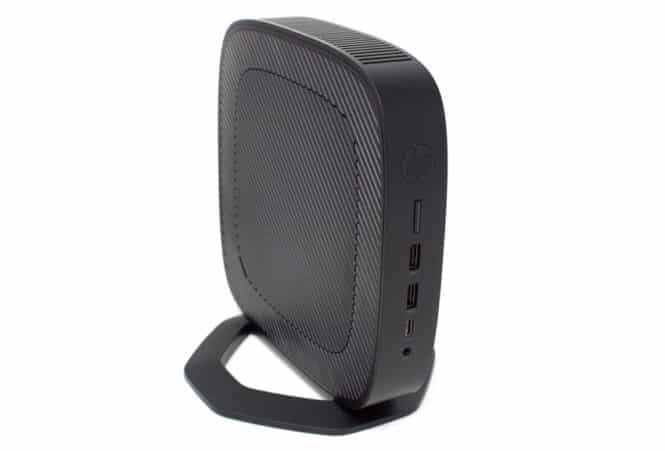
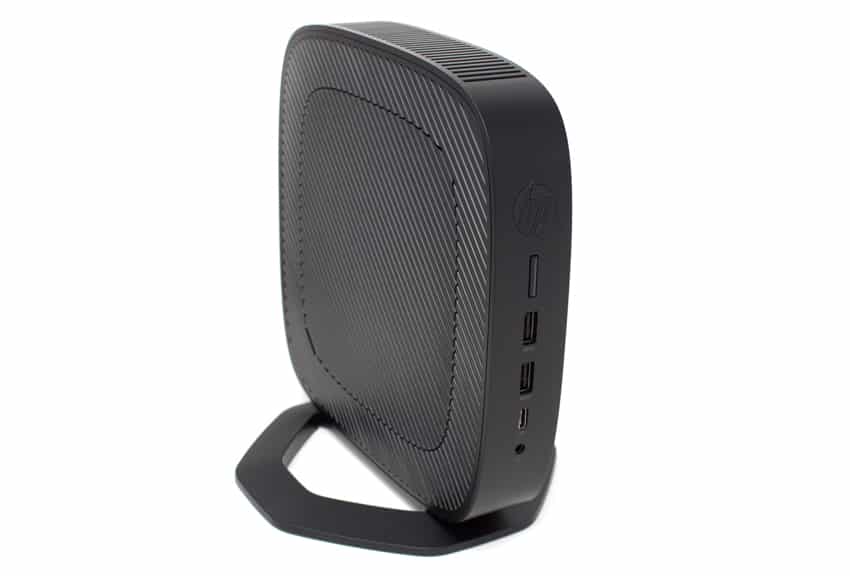
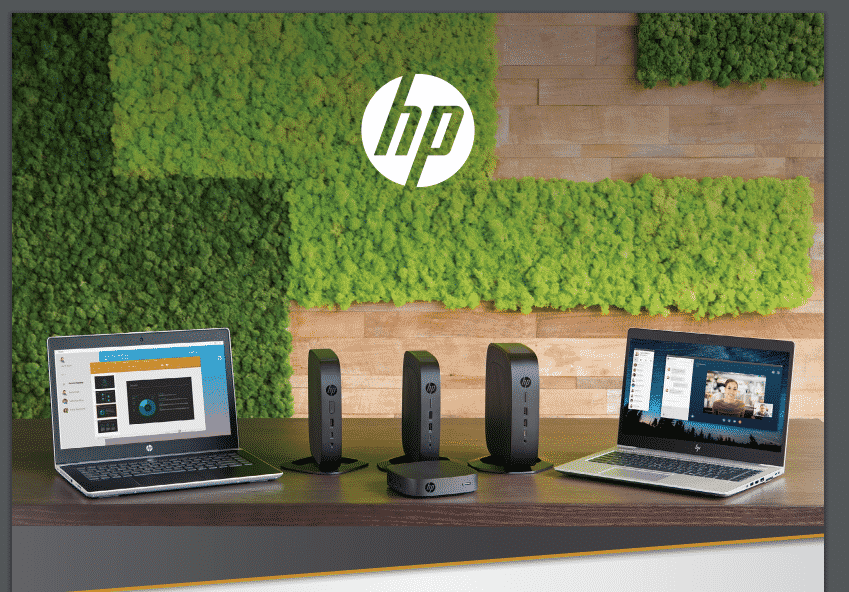
From Storage Review Jul 2020 and Tom Fenton — In this article, we will give an in-depth overview of the t640 VDI client’s specifications, design and build quality, and a summary of the testing that we carried out on it. We will then lay out the key findings from those tests and provide our thoughts about the device and briefly discuss who would benefit from using this product.
HP t640 Thin Client Specifications
Below are the specifications of the t640 VDI Client we used in this review. Other configurations of the t640 are available.
Model: HP t640
Part Num: M5R76AA
MSRP: $561 USD – Street price $651 USD
Client type: Desktop thin client
Form factor: Small desktop
OS: Windows 10 IoT LTSC 2019 (HP ThinPro optional)
Supported remote display protocols: Microsoft RDP; HP RGS; VMware Horizon RDP/PCoIP, Blast Extreme; Citrix ICA/HDX (not all OS support all protocols), TTWin, TTerm and others
CPU: AMD Ryzen R1505G with Radeon Vega 3 Graphics
Memory: Hynix 8 GB DDR4L-2400 SODIMM (2 x 4 GB)
Storage: Phison 128 GB Flash memory
Speaker: Internal amplified speaker system for basic audio playback.
Display: Three displays at up to UHD/4K (3840 x 2160 @ 60 Hz) resolution
Power: 19.5V, 4.62A external power adapter
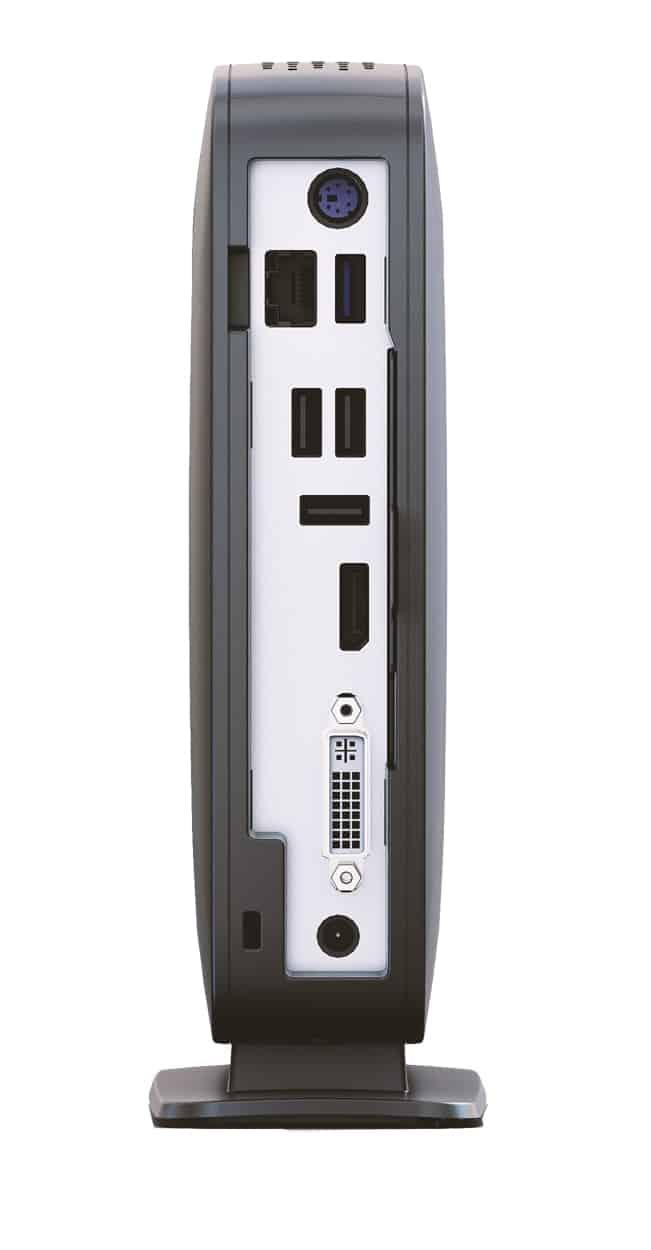
Ports:
1 x USB Type-C 3.1 Gen 2
3 x USB-A 3.1 Gen 1
1 x USB-A 3.1 Gen 2
2 x USB-A 2.0
1 x RJ45
6 x full size DisplayPort 1.2
1 x 3.5 mm headphone/microphone Combo
1 x AC power
Network connectivity:
RJ45 – Realtek RTL8111HSH Gigabit Ethernet (GbE) Controller with support for DASH out-of-band remote management
Intel Wireless-AC 9260 Wi-Fi/Bluetooth combo; 2×2 802.11ac Wi-Fi and Bluetooth
Bluetooth 5
Physical size: 3.5 x 19.6 x 19.6 mm
Physical weight: 1 Kg
Color: black
Keyboard: HP USB Slim Business Keyboard with built-in smart card reader (TPC-S001K)
Mouse: HP USB Optical Mouse (MOFYUO)
Compliant standards: UL, CSA, FCC, Energy Star, EPEAT 2019, and many others
Package Contents: t640, Power Adapter, HP mouse and keyboard, base stand, warranty and setup guide
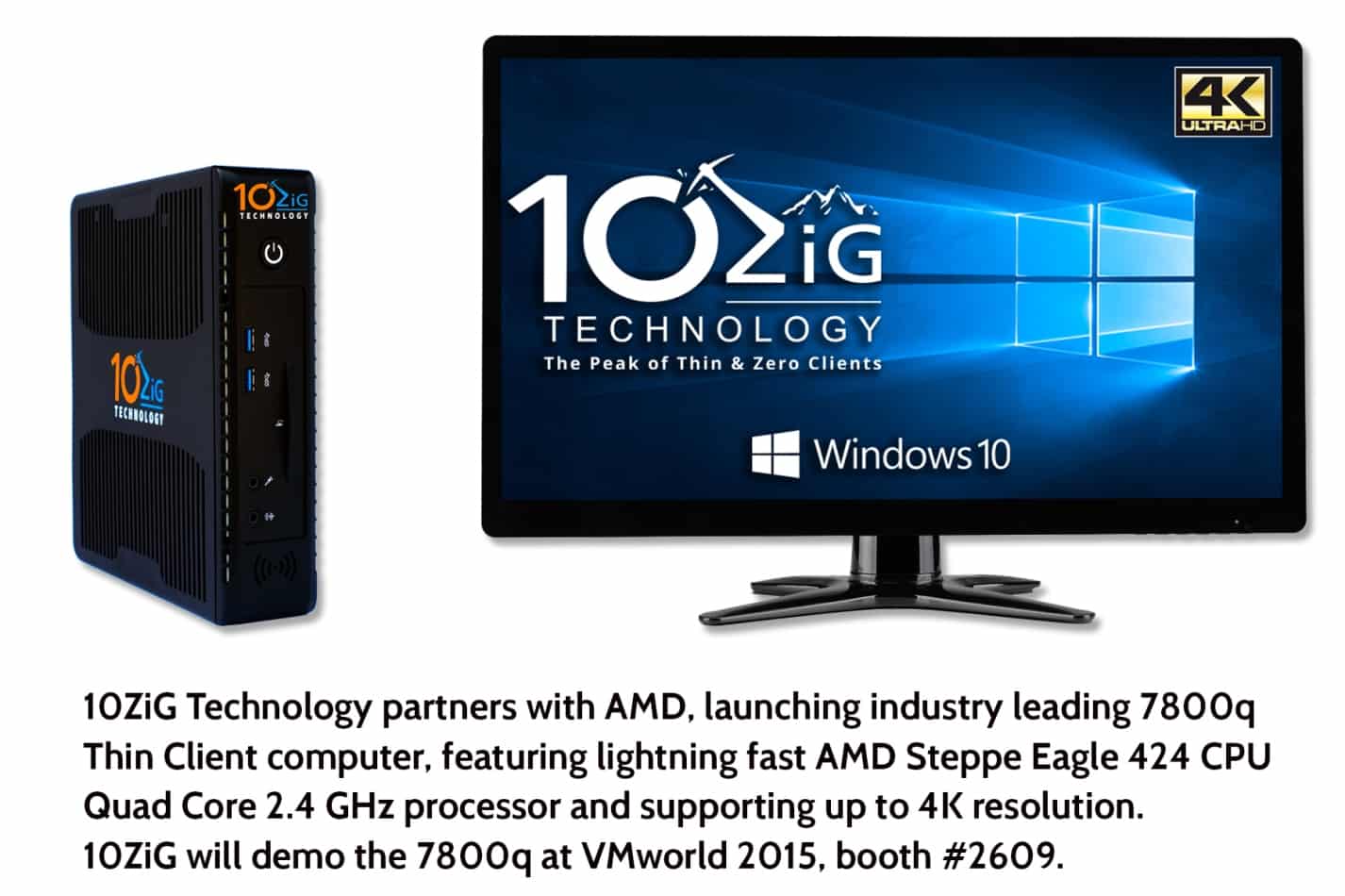
VMworld 2015 attendees will have good reason to be excited this year when visiting the 10ZiG Technology booth with the introduction of the industry leading 7800q Thin Client.
10ZiG Technology Partners with AMD, Launching Industry Leading Thin Client Computer at VMworld 2015
10ZiG Technology introduces the all-new, 7800q Series Quad Core Thin Client Computer; available to demo at VMworld 2015, booth #2609, in San Francisco August 30 – September 3.
Leicester, UK – VMworld 2015 attendees will have good reason to be excited this year when visiting the 10ZiG Technology booth with the introduction of the industry leading 7800q Thin Client.
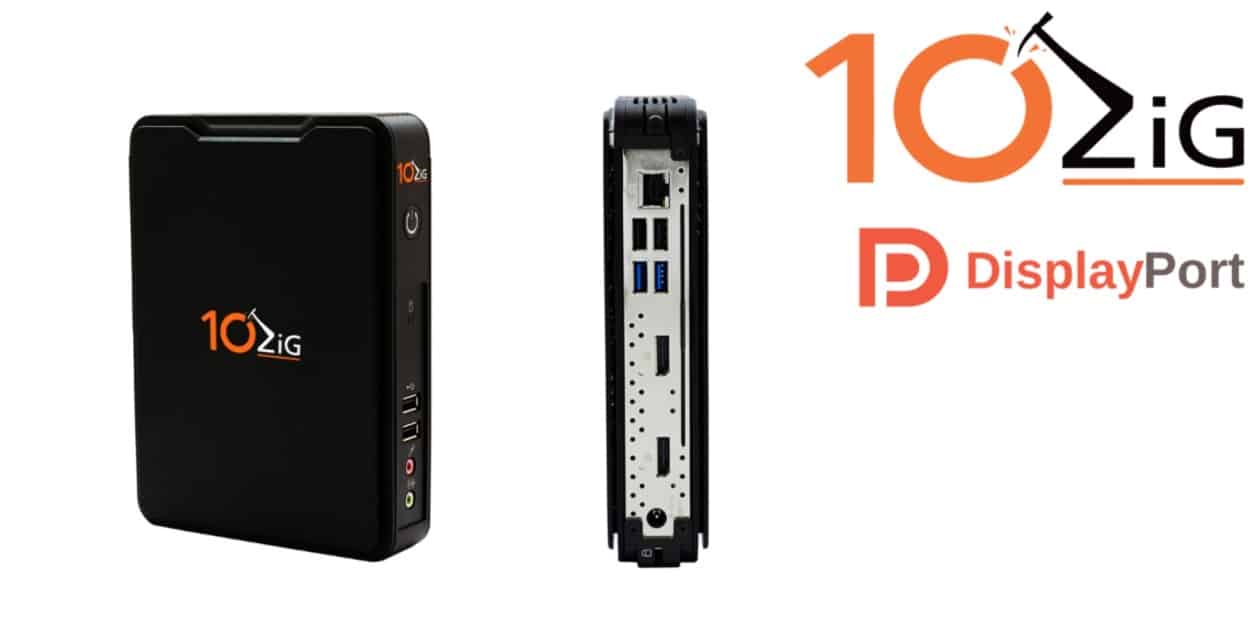
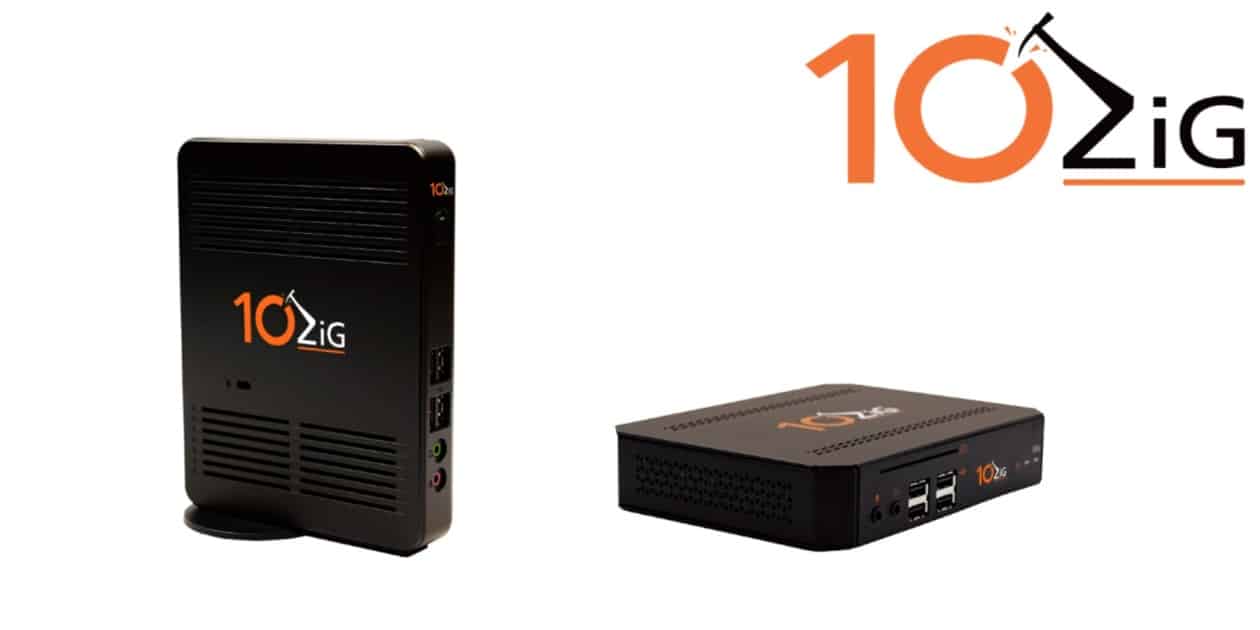
Featuring a lightning fast AMD Steppe Eagle 424 Quad Core 2.4 GHz processor, configurable to 8GB DDR3-1866MHz RAM, optional Quad Video Output and an integrated Smart Card reader, 10ZiG’s new 7800q Series Thin Client computer is poised to redefine the market.
The new 10ZiG 7800q Series is designed to meet the increasing demand within the VDI market to support power users who rely heavily on CAD, 3D graphic design and imaging programs within sectors such as Healthcare, Government and Manufacturing. Such power users also require ultra-high resolution (UHD) support in addition to speed and performance, all of which the 10ZiG 7800q delivers.
Engineered with such users in mind, the new 10ZiG 7800q Series packs a punch and has all the horsepower required to support the latest VDI solutions including VMware Horizon and Citrix XenDesktop, XenApp, while paired with Server based GPU technology such as NVIDIA GRID. This combined technology is able to match full-size dedicated workstations in terms of performance, while maintaining the many virtues of a Thin Client. 10ZiG’s 7800q also features as standard 2x Display Port connectors for supporting ultra-high resolution monitors, including 2560×1600 and 3840×2160 (4K).
To complement the cutting edge hardware performance of the 7800q, 10ZiG will be offering this unit with a variety of customizable Operating Systems including their own PEAKos (Linux), Windows Embedded 7 or 8 and the recently released Microsoft Windows 10 IoT product.
“Through working with users and partners and identifying changes in the types of users and sectors who are now being considered for VDI, we’re recognizing more and more users require higher resolution displays to carry out their work,” says Andy Martin, General Manager, 10ZiG Technology.
“It’s still a common misbelief that Thin Clients provide the same performance to its user regardless of specification, as it’s the server side components of VDI which perform the grunt of the work. However, an increase in users requiring 2560×1600 and even 3840×2160 (4K) resolution support, places a much greater demand on the Thin Client processor. The Thin Client processor is ultimately responsible for decoding this display information in addition to its other tasks. This local processing demand increases with additional resolution and also where screen content changes regularly, such as in multimedia/3D and Imaging use cases. Supplying a Thin Client with the necessary local processing power is essential to the combined success of a VDI deployment,” stated Robert Fitzer, Head of Research and Development, 10ZiG Technology.
“10ZiG Technology looked to AMD to supply the necessary processing power to match these high-end customer demands, therefore we are extremely excited to partner with AMD to be first to market in introducing a Thin Client with features that open up an entirely new market to Thin Client computing which was only previously serviceable by full size PC’s,” confirmed Robert Fitzer.
“The technology partnership with 10ZiG is a prime example of our thin client strategy. It’s a case in point of how we’re working with our customers to push the boundaries of end-user computing within the VDI embedded marketplace,” said Ralph Gonzalez, senior marketing manager, AMD Embedded Solutions. “As Thin Client technology advances, the benefits of switching from standard PCs to Thin Clients will become increasingly more apparent. With this device users get performance and a full range of functionality, powered by the AMD G-Series Embedded SoC.”
The news of 10ZiG’s new 7800q Series comes on the heels of their recent announcement of their powerful, new web-based Centralized Utility Management software which will also be on display at VMworld 2015.
About 10ZiG Technology
10ZiG Thin Clients and Zero Clients are optimized for desktop virtualization and offer the latest VDI brokers preinstalled, with support for PCoIP, HDX, and RDP protocols to name a few. Combining the best available security, high performance and flexibility, 10ZiG devices offer the complete desktop experience. 10ZiG’s goal is to take the complexity out of Desktop Virtualization by providing Thin Clients and Zero Clients with components that simplify implementation, improve management and enhance the user experience. 10ZiG Thin Clients and Zero Clients are available in a wide-range of hardware options including wireless devices, All-In-Ones and small form factor logic units. Thin Client OS options encompass PEAKos (Linux), Windows Embedded 7 or 8.
Headquartered in Phoenix, Arizona, with US based Sales and Technical Support, 10ZiG also has offices in Europe and Asia Pacific; affording it a worldwide reach in the Thin and Zero Client marketplace.
To learn more about the cutting edge 10ZiG 7800q Thin Client, or any of 10ZiG’s VDI solutions, please contact: 10ZiG Technology at: Unit S2, Troon Way Business Centre, Humberstone Lane, Leicester, LE4 9HA, United Kingdom, phone: +44 (0116) 2148650
Amulet Hotkey announced today the launch of the world’s first NVIDIA GRID™ vGPU™ capable Dell Blade, allowing enterprises to experience the full benefit of remote access to rich graphics applications using VMware Horizon 6 and vSphere® 6 with the new NVIDIA GRID 2.0.
NVIDIA GRID 2.0 Comes To Dell Blade Platform With Amulet Hotkey’s Dell M630 Blade Based DXM-M6 vGPU Blade
Enterprises Can Now Deploy Scalable, Graphics-Accelerated Virtualized Workflows Using GRID 2.0 on Amulet Hotkey OEM-Customized Dell Blade Platform
SAN FRANCISCO – Aug 31, 2015– VMworld 2015 – Amulet Hotkey announced today the launch of the world’s first NVIDIA GRID™ vGPU™ capable Dell Blade, allowing enterprises to experience the full benefit of remote access to rich graphics applications using VMware Horizon 6 and vSphere® 6 with the new NVIDIA GRID 2.0.
The new platform will be generally available in late October with evaluation units available immediately.
Early customer feedback has shown that NVIDIA GRID vGPU with VMware Horizon 6, built on vSphere, enhances desktop virtualization with immersive graphics, greater security for mission-critical data, scalable performance and cost-effectiveness.
Among the benefits of enterprise graphics virtualization with VMware Horizon 6 and vSphere:
Ability for enterprises to virtualize workflows for designers, architects and engineers to run the most advanced, graphics-rich applications from anywhere on any device with the new NVIDIA GRID 2.0 solution.
Flexibility for IT departments to support as many as 16 users on GPU-powered applications on a single industry-leading blade server.
Cost-effective virtualized graphics for workers who don’t require maximum GPU performance but whose applications benefit from GPU acceleration.
Support for end users to run immersive, graphics-rich Windows 2D, 3D and media-rich graphics applications on essentially any device through the use of VMware Horizon 6. This brings workstation-class performance to remote and mobile workers, even over high-latency networks.
“The lack of rich 3D graphics on virtual desktops was a barrier to some organizations as the user experience was less than satisfactory. NVIDIA GRID 2.0 removes this barrier and effectively enables IT managers to virtualize a whole new class of users,” said Phil Blades, Chief Marketing Officer at Amulet Hotkey. “NVIDIA GRID 2.0 with VMware Horizon and vSphere allows the market to expand for virtualization and accelerate enterprise adoption of desktop virtualization in 2015.”
“Enterprise virtualization is transforming traditional enterprise desktops and applications, and our collaboration with Amulet Hotkey extends the transformation to high-end workstations and applications so organizations can benefit from the mobile cloud era,” said Joyce Mullen, VP/General Manager GLOBAL OEM Solutions at Dell. “Specialized industries such as design agencies, automotive companies and architecture firms will be able to embrace business mobility to help retain talent, control costs and compete in the 21st century.”
“By bringing a great computing experience to users, NVIDIA and Amulet Hotkey are expanding the possibilities for enterprise-wide workflow virtualization,” said Andrew Cresci, General Manager of the NVIDIA GRID business at NVIDIA. “NVIDIA GRID 2.0 delivers the best graphics performance to an industry leading virtualization platform on the Amulet Hotkey M630 DXM-M6 blade server.”
Wide Benefit for Enterprises
These new graphics virtualization capabilities are expected to have widespread impact.
NVIDIA is the world leader in visual computing, with more than 12 million professional users and 300 professional applications certified and accelerated by NVIDIA GPUs. NVIDIA GRID 2.0-based blade servers are sold and supported by Dell through its OEM partnership with Amulet Hotkey. Amulet Hotkey is the world’s largest custom engineering partner for the Dell blade platform. VMware is the leader in virtualization, with more than 500,000 customers worldwide.
Amulet Hotkey’s early access program included a range of enterprise and public-sector customers. Among them are a law enforcement agency, a defense and aerospace systems provider, a global banking firm and an oilfield services company.
Positive Customer Reaction
“Our testing shows the Amulet Hotkey Dell PowerEdge M630 blade fitted with the DXM-M6 NVIDIA GRID 2.0 and VMware Horizon View on vSphere has been incredibly positive “said Ron Nash, CEO of Pivot3. “By layering our software onto Amulet Hotkey’s blade-based solutions, we are able to bring mission critical virtualized graphics to a scale-up-scale-out platform that can support many types of powers users from a single unified platform.”
Visitors attending VMworld USA (Moscone Center, San Francisco, Aug 30 – Sep 3) can visit Booth #2434 to see the new NVIDIA GRID 2.0 blade and vGPU capabilities and use cases. The Amulet Hotkey technical and leadership team will be delighted to see you.
Technology Brief
The Dell M630 blade is the 13th generation of the Dell blade platform and offers dual processor servers with Intel’s latest generation of Xeon processors and up to 768GB of DDR4 memory. The Dell M1000e blade chassis can accommodate 16 M630 blades in 10u of rack space. Theoretical maximum density for the M630 combined with the Amulet Hotkey DMX-M6 (powered by GRID 2.0) indicates that a single M1000e chassis can accommodate 256 graphics users in a virtualised environment (VDI). This means that one rack could accommodate 1,024 vGPU graphics users and we believe this is an industry leading combination.
To Keep Current on Amulet Hotkey CoreStation™ Solutions and PCoIP Blade technology:
Amulet Hotkey’s proven architecture provides remote blade workstation solutions to tens of thousands of high end and power users worldwide, be they multiple screen trading positions, command and control systems or specialist defense applications. With the introduction of our VDI Accelerated blade family they now offer this scalable architecture to meet the needs of enterprise graphics professionals and demanding enterprise graphics virtualization.
Our expertise allows enterprises to simplify and secure the desktop environment without compromise, moving desktop workstations to the data centre or cloud environment. Using our own Zero Client, PCoIP Hosts, and Blade Workstations, we dramatically reduce desktop power consumption and heat generation, minimizing cabling and clutter. In the data centre our solutions maximize space and facilitate central management of desktops, operating systems, policies and security.
Amulet Hotkey actively partners with many leading manufacturers of data centre, cloud and virtualization technologies, and is instrumental in helping them bring to market solutions for VDI, virtualization, GPU offload and PCoIP integration and acceleration. More information at http://www.amulethotkey.com/vGPU
Managing PC estates is a time-consuming, expensive and thankless task. Better provisioning and management tools can obviously help, but implementing one or more of the various forms of desktop virtualisation available nowadays may also be beneficial.
The virtualisation option, and particularly the use of hardware-based thin clients in that context, was the subject of a recent Reg reader survey. From this we learned that over their many years of existence, thin client devices have found their place in many environments.
Relevant types of users and use cases called out in relation to this (in respondents’ own words) include:
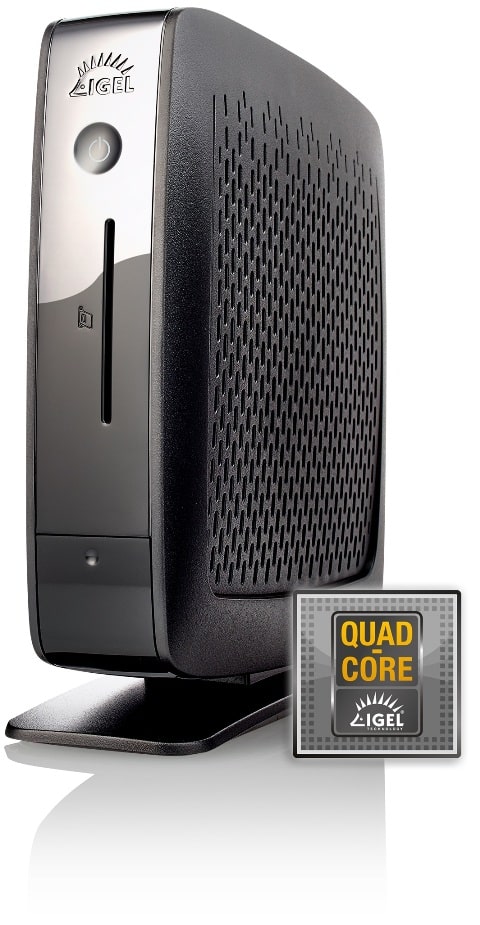
The thin client’s AMD quad core processor offers even better performance for demanding multimedia knowledge workers and supports 4K displays
Click Image for Expanded View
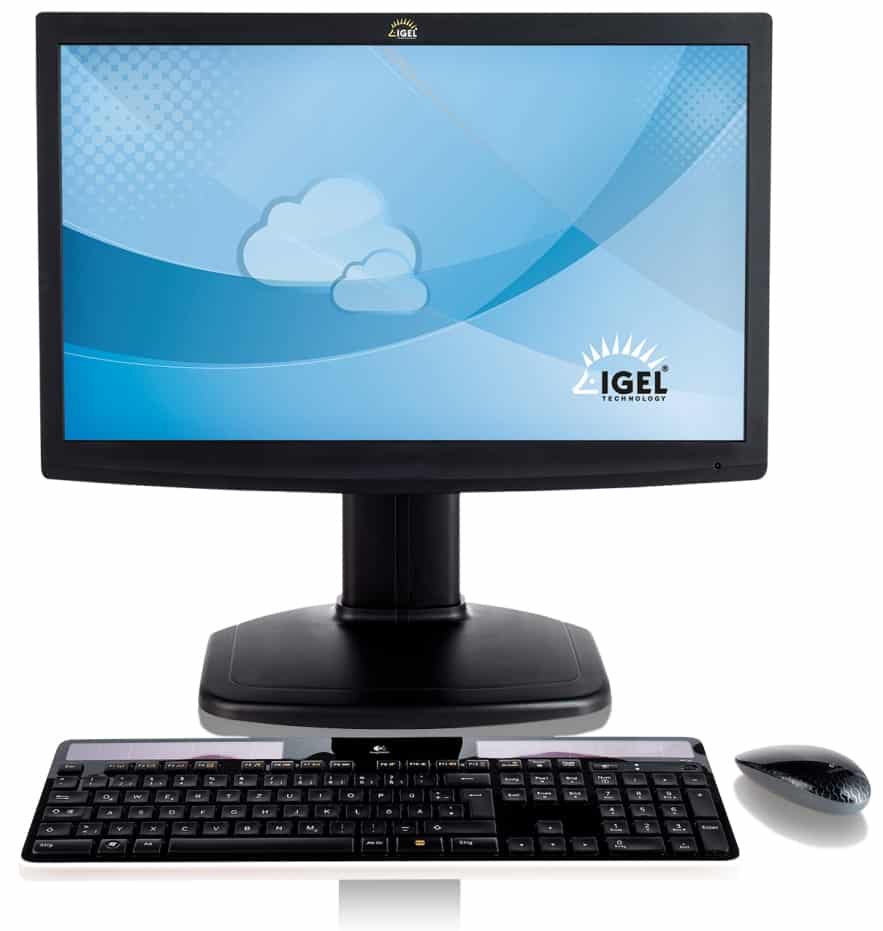
Reading, UK. 15th February 2016 – With a major hardware update, IGEL Technology is improving the performance of its UD3 thin and IZ3 zero clients. The IGEL devices will feature an AMD quad core processor from the Embedded G range (codename “Steppe Eagle”) with 1.2 – 1.6 GHz that will offer even more efficient access to virtual desktops and applications from Citrix, VMware and Microsoft. The new CPU will be backed by 2GB of DDR3L RAM memory for demanding multitask applications. The IGEL UD3’s slim housing will remain unchanged, apart from one new addition – a rear DisplayPort will enable users to work with high-resolution 4K displays. Together with proven features such as Dualview, USB 3.0 and an approximate 50% reduction in power consumption, IGEL is offering its customers more thin client for the same money.
The IGEL UD3 has been an established part of the IGEL hardware portfolio since 2009. During this time, the range has been constantly updated to provide the very best thin client user experience. With the latest update, IGEL is taking into account the growing demands now being placed on thin clients.
Click Image Expanded View
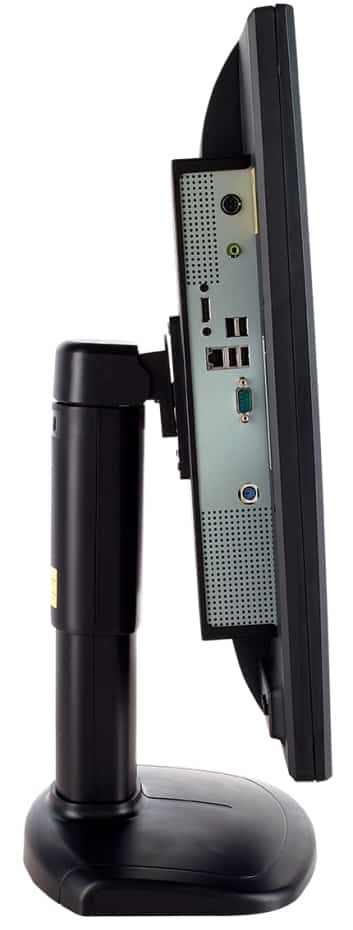
The UD3 will now come with a DisplayPort as well as a DVI-I connection, enabling efficient work on two monitors – even in the high-resolution 4k format with 4,096 x 2,160 pixels (DisplayPort) and a maximum resolution of 1920 x 1200 (DVI). Alternatively, the supplied DVI-VGA adapter allows analog monitors to be easily used. For even quicker, more convenient data transfer, there is a further USB 3.0 port on the front side of the device in addition to the four USB ports on the rear side (3 x USB 2.0, 1 x USB 3.0).
Sound basis for the IGEL managed workspace
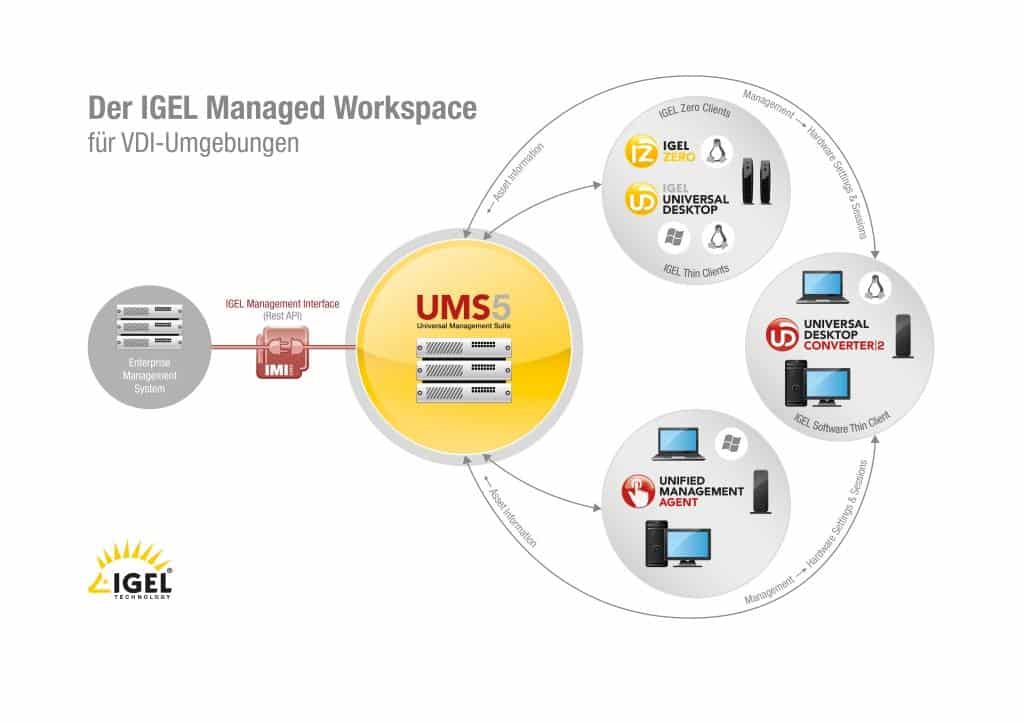
As always, the sector-leading IGEL Universal Management Suite (UMS) remote management software comes supplied with every device and allows standardized, secure remote administration as well as a quick rollout. All IGEL Universal Desktop thin clients, zero clients and software thin clients converted using the standardization software (UDC2) can be managed in the same manner. Windows 7 clients with the Unified Management Agent (UMA) installed on them fit just as seamlessly into the market-leading management solution. The overall package gives customers the unique opportunity to manage heterogeneous IT landscapes from different manufacturers and brands in a centralized, cost-effective VDI workspace management system.
Prices and availability
The IGEL UD3 LX with IGEL Linux is available for £322 and the IGEL UD3 W7+ with Windows Embedded 7 for £421. The equivalent IGEL IZ3 zero client range for dedicated access to virtualized desktops via Citrix HDX, Microsoft Remote FX or VMware Horizon is available from £292. All prices are net of vat and end-customer list prices.
About IGEL Technology
A world leader in thin and zero client solutions, IGEL Technology helps organizations improve the agility, efficiency, and security of their virtual desktop and application delivery systems. IGEL produces one of the industry’s widest range of hardware thin and zero clients, based on Linux and Microsoft Windows, and leads the market in software based thin clients allowing customers to access a broad spectrum of server-based infrastructures and applications. IGEL also offers powerful and intuitive management software for easy deployment and administration of thin clients throughout any size organization. Partnerships with industry leaders like Citrix, VMware, Red Hat, and Microsoft ensure that IGEL provides the most up-to-date technology and trustworthy security to clients in industries that include Healthcare, Education & Research, Public Sector, Financial, Insurance, Retail, Logistics, and Manufacturing. IGEL has offices in the United Kingdom, Australia, France, the Netherlands, Austria, Belgium, Switzerland, Sweden, the United States, Germany, Shanghai, Beijing and Singapore and is represented by partners in over 50 countries worldwide. To learn more, visit www.igel.co.ukor follow us on Twitter: twitter.com/IGEL_Technology
mit einem kraftvollen Hardware-Update steigert IGEL Technology die Leistungsfähigkeit seiner Allround-Serie IZ3/UD3. Ab sofort gibt ein AMD Quad-Core-Prozessor der Embedded G-Serie (Codename „Steppe Eagle“) mit 1,2 – 1,6 GHz beim meist verkauften Thin Client Deutschlands den Takt an und macht damit den Zugriff auf virtuelle Desktops und Applikationen von Citrix, VMware und Microsoft noch performanter. Unterstützt wird die neue CPU von 2GB DDR3L RAM-Arbeitsspeicher und ermöglicht somit anspruchsvolles Multitasking.
Das schlanke Gehäuse des IGEL UD3 bleibt unverändert, bietet aber mit Blick auf die Rückseite dennoch eine Neuerung: Ein DisplayPort versetzt Anwender in die Lage, auch hochauflösende 4K-Displays anzusteuern. Gemeinsam mit bewährten Features wie Dualview, USB 3.0 und einer Reduzierung des Stromverbrauches um ca. 50% bietet IGEL seinen Kunden bei konstanten Preisen mehr Thin Client fürs gleiche Geld.
Weitere Informationen entnehmen Sie bitte der beigefügten Pressemeldung.
Druckfähiges Bildmaterial sowie die Meldung im Wordformat finden Sie hier.
—————————————————————————————————
Wünschen Sie keine weiteren Pressemeldungen, schicken Sie uns diese Mail bitte mit dem Betreff “Abmelden” zurück.
IGEL and DLoG: Technology partnership brings Linux thin client operating system on logistics terminals of the latest generation
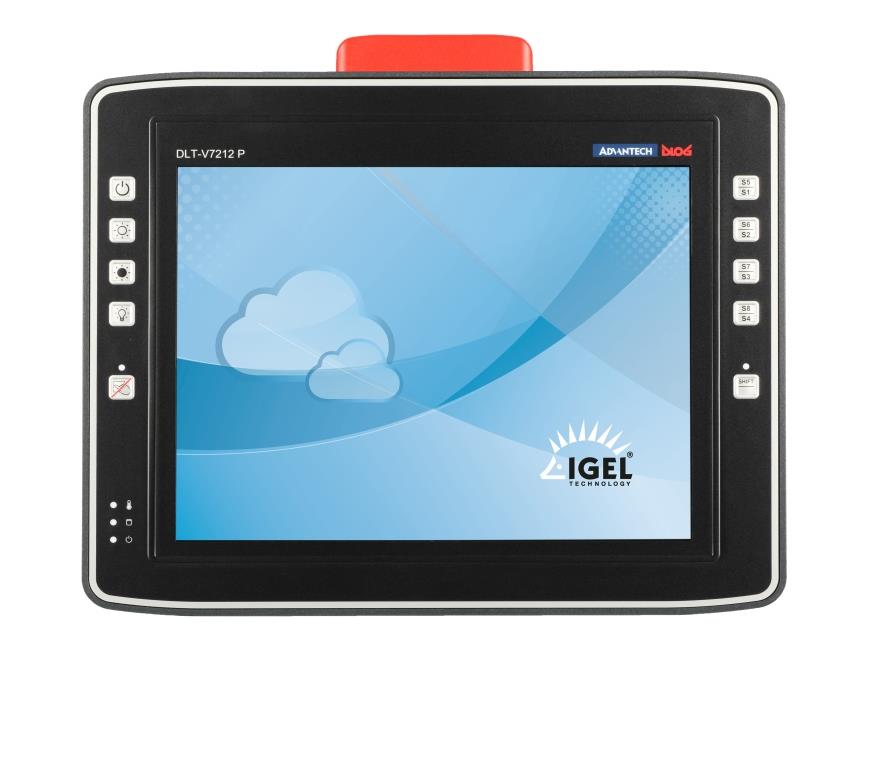
The German thin client market leader IGEL Technology and Advantech-DLoG, a specialist in industrial PC and vehicle terminal solutions, raise their cooperation to the next level: At LogiMAT in Stuttgart DLoG presents its new industrial PC series DLT V72, which will be available with the slim IGEL Linux operating system.
Bremen, Germering February 22, 2016 –Software expertise meets proven hardware expertise: IGEL Technology and Advantech-DLoG, a leading global provider of rugged industrial PC solutions for logistics, large machinery and industrial manufacturing, pooling their expertise in a ongoing technology partnership. The collaboration can take at the international trade fair for distribution, material and information flow “LogiMAT” in inspection interested customers from 8 March: the new vehicle terminal series DLT V72 from Advantech-DLoG. The rugged industrial PCs are suitable for logistics applications of all kinds and will also be available with the IGEL Linux operating system in the future. Thus equipped, they can be remotely managed easily via the included management software IGEL Universal Management Suite (UMS) and fit seamlessly into centralized IT infrastructures. Another highlight of the joint development work: The direct integration of Advantech-DLoG WLAN driver in the Linux firmware. In this way, the switching between different access points in the WLAN (roaming) is ensured as smooth as possible and without any failures. With the DLT V72 series, both companies present a thoughtful combination of hardware and software as a perfectly coordinated overall solution.
The new DLT V72 Series Advantech-DLoG is the successor of the successful model range MTC 6, had founded with the IGEL and DLoG four years ago a technology partnership. The new generation of vehicle terminals withstand extreme weathering stand and is insensitive to dirt, dust, vibrations or strong impacts. In this way, the maintenance and repair requirements are reduced to a minimum and ensures trouble-free, continuous use. In addition to a powerful processor technology and extensive configuration options, the DLT V72 series features various interfaces and wireless technologies. As the form factor are 10 ” and 12 ‘to select, through innovative concepts bracket allows the terminals to use comfortably on almost any vehicle logistics.
Centralized management reduces administration and maintenance costs
The IGEL Linux operating system allows smooth access to centralized IT infrastructures provided by Citrix XenApp / XenDesktop, Microsoft Remote Desktop Services, VMware Horizon and many other software solutions. A local web browser serves as the interface to cloud services. TheAdvantech-DLoG DLT V72 series can thus be used as a universal client, which is also suitable for hybrid environments.
All settings of the vehicle terminals can be made in the future with IGEL Linux via the included management software IGEL UMS remote. The management is group-based based on profiles. Common settings can be easily pre-define and assign a few clicks individual devices or whole device groups. Firmware updates rarely drop and also can be automated or distributed time-controlled via the network, for example in the production period.
Availability
The Industrial PC series DLT V72 from Advantech-DLoG is first presented at LogiMAT that from 8 to 10 March Stuttgart takes place (Hall 7, Stand 7F19). The DLT V72 series is now available to order for customers.
IGEL Technology, a world leader in the delivery of powerful workspace management software, software-defined thin clients, and thin and zero client solutions, announced that it recently formed an alliance with Samsung Electronics.
IGEL Technology Powers Samsung Electronics’ TC-L Series Thin Client Displays
Industry-leading Linux-based OS and Universal Management Suite (UMS5) deliver efficiency, security and automated remote endpoint management for the Samsung TC222L and TC242L cloud displays
LONDON, July 27, 2016 – IGEL Technology, a world leader in the delivery of powerful workspace management software, software-defined thin clients, and thin and zero client solutions, announced that it recently formed an alliance with Samsung Electronics. As part of the agreement, IGEL Linux OS and IGEL Universal Management Suite (UMS) software is now being leveraged by Samsung Electronics to power its TC222L (21.5”) and TC242L (23.5”) thin client cloud displays.
“IGEL Technology is committed to delivering innovative and cost-effective software solutions that drive performance, increase efficiencies and support secure and stable end-user computing environments,” said Simon Richards, Managing Director for UK & Ireland at IGEL Technology. “Samsung Electronics’ selection of our powerful workspace management solutions, including the embedded Linux OS and IGEL Universal Management Suite, provides external validation of our position as a market leader. We are proud to be partnering with them in the delivery of their new TC-L Series all-in-one thin client displays, and look forward to expanding our reach into new market sectors and geographies through this alliance.”
IGEL’s Linux OS brings broad feature set to the Samsung TC-L Series thin client cloud displays that includes remote access and reliable multi-protocol connectivity to mainstream VDI environments and cloud resources such as Citrix, VMware and Microsoft. Leveraging any one of these protocols, end-users can securely consolidate their desktop applications and infrastructure into a series of cloud-based virtual applications and desktops.
Through the IGEL Universal Management Suite (UMS) software, users of the Samsung TC-L Series thin client cloud displays also benefit from a robust and secure standardized endpoint management system that enables the cost-effective management of any terminal device running the IGEL Linux OS. Additionally, with IGEL’s UMS, IT organizations gain added visibility into their clients’ configurations, and can automatically apply configuration adjustments to an entire deployment of thin client assets throughout the enterprise.
“Today’s enterprises need state-of-the-art, yet cost-effective end-user computing solutions that offer the flexibility to support remote operations, while safeguarding against evolving security threats,” said Greg Spence, Senior Business Development Manager, Samsung Electronics. “Our TC-L series thin client displays, powered by IGEL’s market-leading workspace management software, offer our enterprise customers a cost-efficient and secure all-in-one thin client design that is ideal for any business environment.”
About IGEL Technology
A world leader in the delivery of powerful remote management software, software-defined thin clients, and thin and zero client solutions, IGEL Technology helps organizations improve the agility, efficiency, and security of their virtual desktop and application delivery systems.
IGEL produces one of the industry’s widest range of hardware thin and zero clients, based on Linux and Microsoft Windows, and leads the market in software based thin clients allowing customers to access a broad spectrum of server-based infrastructures and applications. IGEL also offers powerful and intuitive management software for easy deployment and administration of thin clients throughout any size organization. Partnerships with industry leaders including Citrix, VMware, Red Hat, Microsoft and Cisco, ensure that IGEL provides the most up-to-date technology and trustworthy security to clients in industries that include Healthcare, Education & Research, Public Sector, Financial, Insurance, Retail, Logistics, and Manufacturing.
IGEL has offices in the United Kingdom, Australia, France, the Netherlands, Austria, Belgium, Switzerland, Sweden, the United States and Germany and is represented by partners in over 50 countries worldwide. To learn more, visit www.igel.com/us or follow us on Twitter atwww.twitter.com/IGEL_Technology.
10ZiG 5910q Thin Client is verified as Citrix Ready with H.265
The 10ZiG 5910q Win 10 IoT Thin Client, qualified for HDX Ready, HDX Premium and HDX 3D Pro verification levels, is the first Citrix Ready verified endpoint to support the new H.265 video decoding ability on Citrix Receiver for Windows, setting a new industry standard which will enhance Citrix workspace solutions for its customers using 10ZiG endpoints.
Click for full size image
Leicester, UK – July 12, 2018 – 10ZiG Technology today announced that its 5910q Windows 10 IoT Thin Client is verified as Citrix Ready and becomes the first VDI endpoint provider to achieve the new Citrix H.265 encoding support.
Not long after the Citrix release of H.265 High Efficiency Video Coding (HEVC) Technology, 10ZiG was quick to respond and support the revolutionary codec via its exceptional triple-monitor, 4K UHD, power class 5910q Windows 10 IoT Thin Client. Once HEVC was announced for Citrix XenDesktop7.16 and NVIDIA GPUs, 10ZiG left slower-moving endpoint providers behind by quickly becoming the first to achieve Citrix Ready for the H.265 codec.
Says Kevin Greenway, 10ZiG CTO, “As with any new release feature, 10ZiG is always ready to quickly get our cutting-edge, high-performing, hardware supportive as soon as possible. Our 5910q device for Windows 10 IoT is the perfect fit for H.265 codec support, as it really pushes the boundaries with its high-quality, 4K UHD, triple-monitor advantage. The combination of the exceptional hardware features with Citrix and H.265 HEVC, offers 3D graphics use cases with improved visuals and reduced bandwidth at up to 4K (UHD) resolutions.”
“10ZiG has been a great Citrix Ready program partner for years. Not only has their 5910q Thin Client passed all three levels of Citrix Ready verification, most notable is that this device supports the Citrix H.265 HEVC codec,” said John Panagulias, Director, Citrix Ready, Citrix. “Their responsiveness to adapt so quickly to the latest release feature is impressive, and we appreciate this milestone achievement as it allows Citrix to now deliver an end-to-end VDI solution more powerful and efficient than ever before.”
The 10ZiG 5900q Series Thin and Zero Client product line is one of the newest endpoints on the market today. It is based on the Intel Braswell Refresh CPU platform, which is one of the few that work with H.265 codec. Its 3-monitor support includes a 1x HDMI / 2x DisplayPort combination and other features include Touch Technology, Optional PoE, and more.
The H.265 codec is the new video compression standard improving coding efficiency. H.265 offers an average 20% reduction of bandwidth consumption with amazing display quality. Its algorithm uses efficient coding by encoding video at the lowest possible bit rate, while maintaining the highest image quality level possible. Both H.265 and H.264 compare and replace different parts of redundant video frames with short information describing the original pixels. Where H.265 differs is its ability to expand the size of these areas into smaller or bigger blocks. This range of capability is much greater in H.265. The end result for Citrix & 10ZiG users is better compression, lower bandwidth, and top-quality displays.
Please join 10ZiG & Citrix for a live webinar on July 25th, 2018 at 5pm BST/6PM CEST as they “Explore the Benefits of Citrix H.265 Encoding with the 10ZiG 5910q Thin Client.”
10ZiG Technology is a world-market leader in Thin Client & Zero Client endpoint devices for Virtual Desktop Infrastructure. 10ZiG provides leading Intel and AMD based Dual and Quad Core Thin Clients and Zero Clients for Citrix (HDX, HDX Premium, HDX 3D Pro), VMware PCoIP & Blast Extreme, and Microsoft environments, in addition to the widest range of Teradici PCoIP Zero Clients on the market. 10ZiG offers free, no-obligation demo devices, Technical Support teams based in the U.S. and U.K., and provides “The 10ZiG Manager” console with cloud capabilities completely free with unlimited user licenses supported. Get a free evaluation device today at 10ZiG.com.
###
Contact Us
To learn more about cutting edge VDI technology from 10ZiG, or to arrange for a FREE Thin or Zero Client demonstration device, please contact 10ZiG below.
Feb 15, 2019 (WiredRelease via COMTEX) — Thin client is a lightweight computer built for remote application services that relies majorly on server for processing, computational operations, and resources.
The Objective of the “Global Thin Client Market” report is to depict the trends and upcoming for the Thin Client industry over the forecast years. Thin Client Market report data has been gathered from industry specialist/experts. Although the market size of the market is studied and predicted from 2019 to 2028 mulling over 2016 as the base year of the market study. Attentiveness for the market has increased in recent decades due to development and improvement in the innovation.
Increasing demand for energy efficient devices from various business sectors is a key factor expected to drive growth of the global thin client market over the forecast period, owing to various benefits offered by thin client such as cost efficiency, reduced energy consumption, and increased productivity.
Detailed investigation of market beneficial in understanding the in-depth market vision and future plans. The information collected from various magazines, yearly reports, internet sources, and journals are confirmed by conducting face-to-face or telephonic interviews with the Thin Client industry specialist.
Editors Note: Fellow grew up on SCO and amber terminals, and Wordperfect. I remember those days as I had one of those terminals. Days I talked about the “elegant file system” of inodes. I grew up on on an XT with an IRMA card working 3270 Mapics. Oh, and DEC220s and Decnet. My intro to real email in 92. Much different today. I just gave my HP Chromebook to my wife to take to the mountains so she could watch Downton Abby at the condo over WiFi. I’m pretty particular about my browser these days as well (Brave as a rule). Looking forward to the next Gnome desktop release in October.
It takes all kinds and I enjoy multiple viewpoints.
Excerpt
Even in traditionally friendly territories, thin client hardware is beginning to be trumped by thin client apps, like Citrix Receiver and VMware View Client. That’s partially because the apps are practically free and can be installed on smartphones and other “thin” devices that are more portable (and more useful) than a static workstation that costs nearly as much as a new desktop. This plays into the whole “bring your own device” approach now being embraced by budget-conscious businesses that might have otherwise opted for thin clients in the past.
The HP Passport seems to be an aberration in all of this. It’s either a thin client for Web-based computing or Web TV for the office. IDG News’ Agam Shah reports that HP spokesman Jim Christiensen explained the Passport as a device intended for Internet cafés, libraries, or schools. “This is the first generation, we’ll see how it does.”
Considering that the Passport doesn’t have the lock-downs on it that those sorts of places want even from thin clients—controlling the length of user sessions or network access to printers, for example—I suspect it won’t do terribly well.
Writeup on TechRadar of very, and I mean very, cheap Android Thin Client. Some good advice too on buying Chinese online.
OUR VERDICT
The Magicsee N5 Nova is the cheapest Android device with 4GB of RAM and 64GB onboard storage so definitely one to consider if you want to experience Android on a big screen; as a thin client, things get a bit more complicated.
FOR
Very cheap
Good performance
Ample storage and system memory
Recovery button
AGAINST
Annoying blue LED
100MBps Ethernet only
No 802.11ac
Only two USB ports
Hardware
At the heart of the Magicsee N5 Nova is the Rockchip RK3318, a four-core ARM-based processor that uses the Cortex-A53 with a Mali-450 GPU. That is paired with 4GB of DDR3 RAM and 64GB onboard storage. Other features include 802.11n, Bluetooth 4.0 and a remote control.
We start the year with a listing and review of thin client models from multiple manufacturers. Thin client computing has seen a big increase in RFPs being issued from local, city, state and federal agencies over 2019. We monitor RFPs for this market. You can see list of them on our RFP page.
Sorry Dell/Wyse but we have to begin with HP, from what we have seen over the last year they are “still” the leader and the one to catch. The main HP Thin Client website is here.
HP Easy Shell – HP Easy Shell provides a streamlined experience for your HP Thin Client Windows embedded environment that’s completely customizable to fit your needs. Precisely tailor your unique security needs so you can make the most of your cloud infrastructure, VDI, and kiosk environments.
HP Thin Update — Download the latest images and add-ons from HP and use the tool to pre-configure the image, capture the golden image using USB key, and deploy it using either the USB key or HPDM.
HP True Graphics — Experience breakthrough video playback, smooth graphics rendering, and impressive high-speed performance with less lag time when you access rich graphical applications and multimedia content from the cloud. Available for Windows® and Linux®-based HP Thin Clients.
HP Device Manager — Make it easy for your IT admins to remotely deploy, update, and manage thousands of HP Thin Clients from anywhere1 through a single console.
By the end of the year approximately 92,000 companies have to carry out an energy audit in Germany, so it wants the Energy Services Act. But where and how can we effectively save electricity? Often take a look at the work-IT, the centralized and with thin clients much more energy efficient and ecological can operate.
Bremen September 28, 2015 – The countdown has begun! Until December 5 companies from 250 employees or more than 50 million euros in sales and more than EUR 43 million annual balance sheet total must check their energy consumption by means of energy audit. Qualified actual analysis aimed at planning of appropriate conservation measures. Away from the traditional areas such as building insulation or lighting but often dormant while undiscovered potential in the form of power-intensive workstation PCs that are functionally no longer necessary for a modern IT operations. With a centralized IT and thin clients on the desks of the energy consumption is reduced, depending on the application scenario to 61-77 percent. If parts of the IT outsourced to an external service, the ecological balance improves further. Thanks to the simpler manageability of thin clients provides the energy audit at the same time the chance to simplify IT management.
Regardless of whether the energy audit has already taken place or is still pending, many companies have already begun to measure IT-related energy and resource consumption and lower. In general, however, these efforts are focused solely on the data center. The computer workstation often remains unnoticed. It has been a study of the Fraunhofer Institute UMSICHT 2011 * shown that an infrastructure of thin clients and virtual desktops reduces power consumption sustainable. Depending on the application scenario and user type drop energy consumption and electricity costs for terminal and data center cooling portion including opposite a functionally comparable, energy-efficient PC to 61-77 percent. If a thin client used solely for internet access in the context of cloud computing, the savings even reached a value of 88 percent.
Further savings can also obtain the universal remote administration of thin clients. While PCs because of the long start-up times often do not shut down after work and so through the night and on weekends, thin clients are put into practice automatically over the network in the sleep mode and then take only about 1 watt of power. In addition, can also make maintenance and support drives superfluous remote management solutions such as the IGEL Universal Management Suite (UMS). If, contrary to expectations, a thin client, simply close the site staff themselves a replacement unit to which configures itself within a few minutes automatically over the network. The management software UMS is included with every IGEL thin client and zero client solutions.
Outsourcing with client as a Service (CLAAS)
A comprehensive remote management also forms the basis for a special type of thin client usage. Make client as a Service offerings from the office computer, a service within the meaning of a well-scalable service. As part of a CLAAS agreement represents the provider’s customers for a monthly fee a complete Workplace available – including Thin, Zero or software thin clients and device management. This only falls the power consumption for the thin client hardware into their own energy balance. Further advantages over the internal operation are the high cost transparency, resulting from the conversion of to be activated acquisition costs in monthly.
Sehr geehrte Damen und Herren,
der Countdown läuft! Bis zum 5. Dezember müssen Unternehmen ab 250 Mitarbeitern oder mehr als 50 Millionen Euro Umsatz und mehr als 43 Millionen Euro Jahresbilanzsumme ihren Energieverbrauch mittels Energieauditüberprüfen. Die qualifizierte Ist-Analyse zielt auf die Planung entsprechender Einsparmaßnahmen ab. Abseits der klassischen Bereiche wie Gebäudedämmung oder Beleuchtung schlummert dabei jedoch nicht selten unentdecktes Potential in Form von verbrauchsintensiven Arbeitsplatz-PCs,die für einen modernen IT-Betrieb funktionell gar nicht mehr nötig sind.
Mit einer zentralisierten IT und Thin Clients auf den Schreibtischen sinkt der Energieverbrauch je nach Einsatzszenario um 61 bis 77 Prozent. Werden Teile der IT im Rahmen eines Client as a Service-Angebotes (ClaaS) an einen externen Dienstleister ausgelagert, verbessert sich die Ökobilanz weiter. Dank der einfacheren Verwaltbarkeit von Thin Clients bietet das Energieaudit gleichzeitig die Chance, auch das IT-Management zu vereinfachen.
Weitere Informationen entnehmen Sie bitte der beigefügten Pressemitteilung.
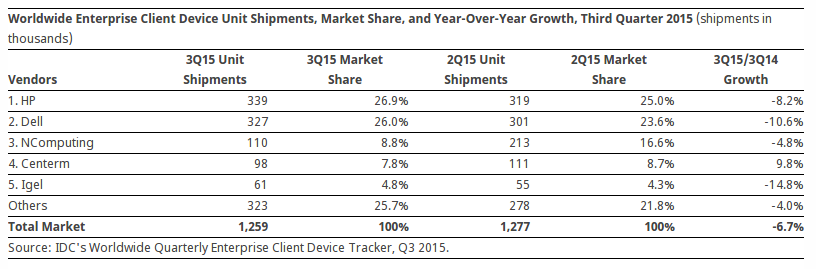
Combined with some persistent factors that negatively affected the market, including budget constraints that delayed major shipments in Asia/Pacific, the emerging markets continued to lag behind mature markets in terms of shipments and projected growth rates going forward. Furthermore, although the market is increasingly accepting of virtualized client computing, devices such as repurposed PCs and even Chromebooks in some cases, pose viable threats to mainstream thin client purchases.
In light of these challenges, IDC expects 2015 shipments to be more subdued than previously forecast, reaching just 5.1 million units for the year, a drop of more than -6% compared to 2014. IDC expects shipments to return to steady growth from 2016 through 2019, reaching 6.4 million units in 2019.
“Shipments in 2015 are expected to decline more than -6% year over year,” said Jay Chou, Research Manager, IDC Worldwide PC & Enterprise Client Device Tracker. “Beyond 2016, we remain optimistic that growth rates will pick up as another cycle of business refresh should fuel renewed growth.”
Last year at CES, we mocked a company called Jide for creating a blatant Microsoft Surface clone. Well, this year they’ve come back with something new — and they’ve also returned much richer. See,…
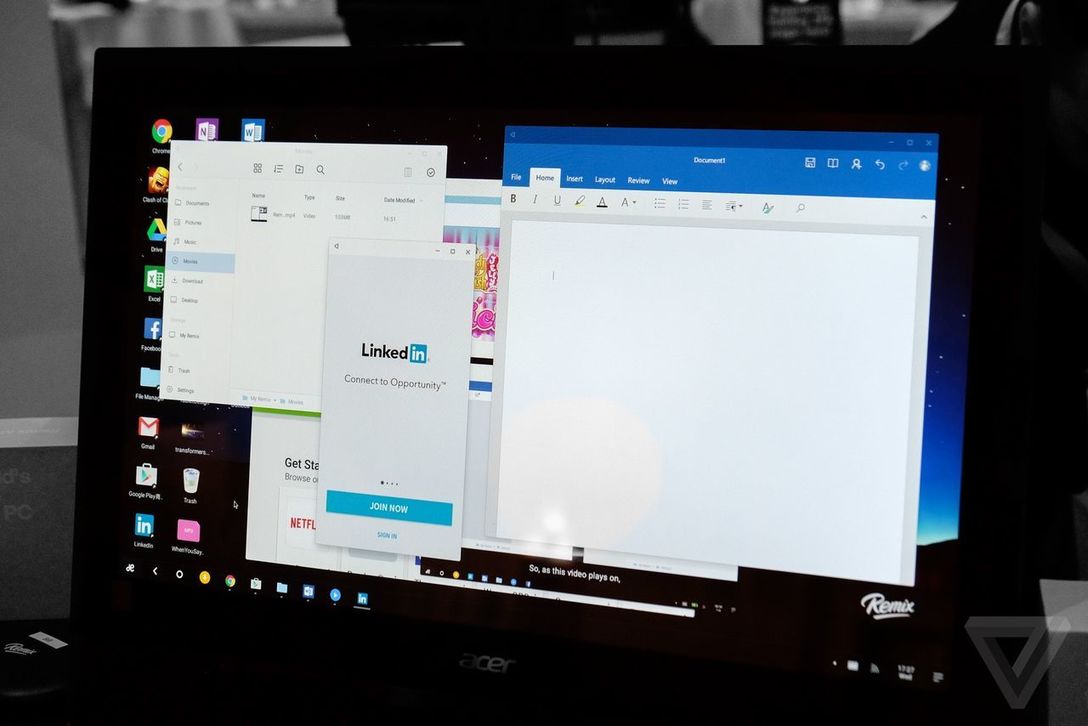
Here’s what’s new at CES today: now you can run Remix OS on any x86 PC (or, in my case, Mac). For free. You can download a system image from the company and toss it onto a USB 3.0 stick, or there’s also the option of making a partition on your computer for a more permanent partition. I simply booted off the SanDisk flash drive they gave me, and within a couple minutes, I was at the Remix OS home screen. It’ll take more time for me to determine whether or not I’d ever consider using this regularly. Even now, my Chromebook rarely gets any use. It’s basically an internet device that lives on my couch.
But in a way, maybe this is what Chrome OS should be. Or, it’s definitely what some people hoped it would become; a productivity-focused take on Android that runs Android apps like they’re desktop apps. Done. Even better, the Jide team is committed to updating the OS constantly. We might’ve chastised these ex-Googlers for what they showed last year. But at this CES? I think I’m pretty into what they’re doing.
IGEL Technology has upgraded its UD9 all-in-one thin client with a powerful Intel Celeron J1900 quad-core processor with a speed of up to 2.42 GHz for quick access to virtual desktop infrastructures (VDI) as well as multimedia and web applications.
The 21.5 inch widescreen thin client will effortlessly meet modern demands for desktop computing
Reading, UK. 13 April 2016 – IGEL Technology has upgraded its UD9 all-in-one thin client with a powerful Intel Celeron J1900 quad-core processor with a speed of up to 2.42 GHz for quick access to virtual desktop infrastructures (VDI) as well as multimedia and web applications. The CPU will be backed by 2GB of main memory (DDR3L-RAM) for all operating systems making it ideal for
Click to for full size image
demanding multi-tasking. With numerous interfaces including USB 3.0 and a DisplayPort, as well as optional features such as a touchscreen (resistive) and WLAN, the IGEL UD9 can be used in a wide range of industry sectors. The device is ideal for retail point of sale where space is limited or in the health or finance sector, as well as for digital signage, public internet kiosks or research terminals in public institutions. The new version of the UD9 will be available from 18 April and the price remains at £539+vat.
With its new, high-performance hardware, the UD9 will come into its own when performing tasks requiring large amounts of computing resources, for example multimedia content or unified communications. The all-in-one model offers a SATA SSD flash memory as standard, ranging from 2GB (LX model) to 8GB (W7+ model). With this specification, even demanding graphics, 3D or multimedia applications can be handled with ease.
The 21.5-inch widescreen display offers full HD resolution (1920 x 1080 pixels), while the DisplayPort output allows an additional monitor to be used for dualview operation (dualview resolution: 2560 x 1600 pixels).
The UD9 supports all popular communication protocols including Citrix HDX, VMware Horizon and Microsoft RDP including RemoteFX. The model comes with an IGEL Linux or Windows Embedded Standard 7 operating system.
Various interfaces and a smartcard reader
With its numerous interfaces and options, the IGEL UD9 is particularly suitable for point of sale use as an information presentation device, checkout or web terminal. For even greater flexibility, the pivot function allows the display to be turned 90°. The standard connections include two fast USB 3.0 and four USB 2.0 ports. There is also a PS/2 connection, a serial interface and a DisplayPort. To complement the 1 Gbit Ethernet interface, IGEL offers an 802.11 a/b/g/n-standard WLAN option for the UD9. An optional integrated smartcard reader also provides the basis for secure two-factor authentication solutions and multi-user scenarios when changing workstations.
Prices and availability
The new IGEL UD9 will be available from 18 April. Prices will start from £539+vat. IGEL offers a three-year warranty. The market-leading IGEL Universal Management Suite (UMS) remote management software comes as standard with IGEL devices.
About IGEL Technology
A world leader in thin and zero client solutions, IGEL Technology helps organizations improve the agility, efficiency, and security of their virtual desktop and application delivery systems. IGEL produces one of the industry’s widest range of hardware thin and zero clients, based on Linux and Microsoft Windows, and leads the market in software based thin clients allowing customers to access a broad spectrum of server-based infrastructures and applications. IGEL also offers powerful and intuitive management software for easy deployment and administration of thin clients throughout any size organization. Partnerships with industry leaders like Citrix, VMware, Red Hat, and Microsoft ensure that IGEL provides the most up-to-date technology and trustworthy security to clients in industries that include Healthcare, Education & Research, Public Sector, Financial, Insurance, Retail, Logistics, and Manufacturing. IGEL has offices in the United Kingdom, Australia, France, the Netherlands, Austria, Belgium, Switzerland, Sweden, the United States, Germany, Shanghai, Beijing and Singapore and is represented by partners in over 50 countries worldwide. To learn more, visit www.igel.co.uk or follow us on Twitter: twitter.com/IGEL_Technology
10ZiG Technology introducing enhanced V1206-PD and V1206-PDS Zero Clients, featuring DP + DVI and Smart Card capabilities.
Leicester, United Kingdom – Two new advanced dual screen Zero Clients, the V1206-PD and V1206-PDS, 10ZiG Technology announces.
The V1206-PD comes standard with six USB 2.0 ports and two high-resolution video ports, one for DP (DisplayPort) and one for DVI (Digital Video Interface). The maximum screen resolution is 2560×1600 for a single screen, 1920×1200 for dual screens.
The V1206-PDS adds to these features the many benefits of an integrated Smart Card Reader. This includes high security desktop authentication on the Secret Internet Protocol Routed Network (SIPRNet) and other classified networks that use CAC (Common Access Card) authentication.
Smart Card technology has become a security standard in areas of research and development, government, healthcare, finance and education, where classified, highly sensitive or personal information is handled. Additional security is provided by AES-128/AES-256 Suite B Cipher encryption found in the PCoIP protocol.
These two TAA compliant Zero Clients feature new streamlined form factors and are powered by the potent Teradici TERA2321 (Tera 2) PCoIP Portal Processor. Overall power consumption is as low as eight watts for both the V1206-PD and V1206-PDS.
Other features include a centralized management utility, optional Fibre SFP module and full compatibility with VMware Horizon, Amazon AWS and other PCoIP platforms. Rugged, low-maintenance, Solid-State construction featuring no moving parts or wear components rounds out a list of impressive specifications.
Complementing the true Zero Client experience of easy centralized management, no virus exposure and no operating system is the peace of mind of 10ZiG’s Advanced Exchange Three Year Warranty. 10ZiG’s warranty is one of the best in the industry, no registration required.
10ZiG is now accepting orders for the V1206-PD and V1206-PDS.
About 10ZiG Technology
To learn more about cutting edge VDI technology from 10ZiG, or to arrange for a FREE Thin or Zero Client evaluation unit, please contact the relevant office below:
(Corporate Headquarters, US)
10ZiG Technology Inc.
23309 N. 17th Drive #100
Phoenix, AZ 85027
P. (866) 865-5250 | Email: sales@10ZiG.com | Web: www.10ZiG.com
(EU Headquarters, UK)
10ZiG Technology Ltd.
Unit S2, Troon Way Business Centre
Humberstone Lane
Leicester LE4 9HA, United Kingdom
P. +44 (0) 116 214 8660 | Email: sales@10ZiG.eu | Web: www.10ZiG.com
Focusing solely in developing Thin and Zero Clients for the latest desktop solutions, 10ZiG Technology has long-standing partnerships with industry leaders such as Citrix, VMware and Microsoft. These partnerships are all with the aim of providing the best performance possible by supporting the full feature sets of acceleration protocols such as HDX, HDX 3D Pro, PCoIP and RDP 8.1. 10ZiG offers traditional dual screen Thin and Zero Clients, including the widest range of TERA2-based PCoIP devices on the market, including Dual Screen, Quad Screen and All-In-One hardware. 10ZiG devices come with a variety of OS options, including Linux, NOS (No OS), Windows 7, Windows 8 and Windows 10 IoT (W10 IoT).
10ZiG is committed to taking the complexity out of Desktop Virtualization, Application Delivery and The Cloud by providing Thin and Zero Clients with components that simplify implementation, improve management, device visibility and enhance the user experience. All 10ZiG devices are accompanied by the 100% free enterprise class 10ZiG Manager Utility, enabling centralized configuration, maintenance and control of all 10ZiG Software Zero, Linux and Windows devices. The 10ZiG product range is underpinned by the most personal Sales and Support service on the market, complemented by a no-obligation, no-hassle, flexible 30-day evaluation offer.
CONTACT:
Tom Dodds
Marketing Executive
10ZiG Technology Ltd. tomd@10ZiG.com
p. +44 (0) 116 214 8658
Manchester, United Kingdom – Leading developer of software and hardware solutions, VXL, today announces the release of its new Fusion EMM agent update that supports the latest Android Nougat (7.0) operating system.
Ensuring all Android mobile devices are optimized for both work and personal use, this new Google release comes with some notable updates to the operating system with an array of enhanced features including more security for data protection, improved management capabilities and increased end-user control.
Commenting on the new agent, VXL’s VP for Worldwide Sales, Frank Noon, said “Fusion EMM customers will be able to take advantage of Android Nougat as soon as the update is delivered to their device and what’s more VXL will also continue to provide support for additional capabilities when made available by Google.”
A browser-based solution which can be provided either as a hosted service, or installed on a company’s network, Fusion EMM software is designed to provide expert management of all Android (& iOS) tablets and smartphones.
Enabling IT departments to easily provision devices, add or update applications, manage access to corporate content and strengthen device security, Fusion EMM complements VXL’s existing Fusion UDM Premium, universal device manager, for desktops, laptops and thin clients.
Fusion EMM is available in two perpetual license versions, Gold – at US $39 per device – and Platinum – at US $49 per device – with annual support available on either at an affordable cost.
“Fusion EMM is set to revolutionise the cost of enterprise mobility management.” “Not only is it a highly effective solution for managing mobile devices, it does so without sacrificing on performance, offering more features than comparable brands as well as providing exceptional value” added VXL’s VP for Worldwide Sales, Frank Noon.
Established in 1976, VXL is a global provider of leading enterprise software solutions including Ilumineye DS (Digital Signage) Suite, Fusion EMM (Enterprise Mobility Management), Fusion UDM (Universal Device Manager) and CloudDesktop PC repurposing software.
This commitment to software innovation is at the core of what VXL represents today, together with a passion to support organizations around the world to successfully build efficient IT infrastructures that are flexible, secure, manageable and affordable.
VXL is also home to the world-renowned ‘Itona’ brand of thin and zero client devices and supplies a high-quality range of high-specification models that are made to the most exacting standards. The line-up includes the very latest dual / quad core high-performance desktops in addition to the Xtona (Citrix-certified) and Vtona (PCoIP VMware-certified) zero clients.
VXL’s corporate HQ is based in Mumbai and manufacturing facility in Bangalore, India’s ‘Silicon Valley’, with the Americas Group HQ based in Houston, Texas, USA, and the European HQ in Manchester, UK. Dedicated sales subsidiaries are also based in key strategic markets including France, Germany, Dubai and Singapore – and VXL’s customer support offices can be found in the USA, Europe and Asia Pacific.
For more information, email ian.cope@vxl.net or please visit: www.vxl.net
Praim, global manufacturer of thin & zero clients and management software solutions, announces the release of the 10.1.11 version of the ThinOX operating system for thin and zero client solutions. ThinOX is an Linux based operating system, specifically design to offer users and administrators a high quality thin client solution, granting security, reliability and simplicity of management through ThinMan.
Palo Alto, CA., January 31, 2017 – HP today said its new mobile thin clients make on-the-go-computing easier and more flexible. The HP mt43 and HP mt20 mobile thin clients are the ideal platforms for a range of markets, delivering the right amount of compute processing and seamless graphics capabilities to enable rich cloud computing experiences.
“Employees can get the job done from just about anywhere thanks to features that give users the familiar PC experience and management software built right in,” said Jeff Groudan, vice president and global head product management and engineering, Thin Clients, HP Inc. “The silver lining for IT management is the multiple security features, easy-to-use setup and deployment software, and quick access to shared data that employees require.”
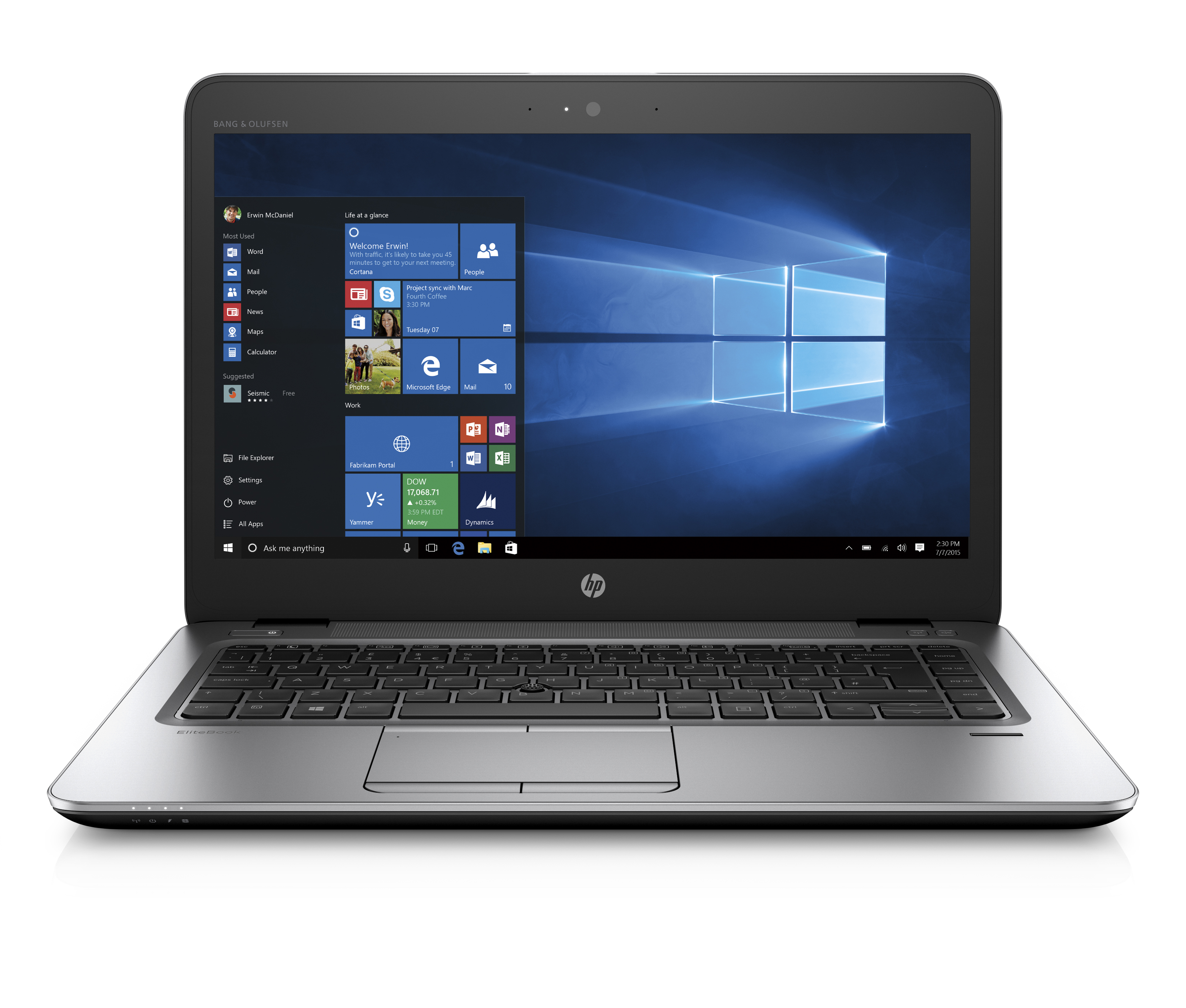
The HP mt43 Mobile Thin Client delivers exceptional design and has remarkable performance in an elegant, yet durable device. It is crafted with premium materials for a thin, light, elite look and feel and features a backlit keyboard, large-format glass touchpad and the HP-exclusive Bang & Olufsen audio system.
This thin client is built to withstand the rigors of professional life and is MIL-STD 810G tested. The HP mt43 features a 14 inch diagonal LED backlit FHD anti-glare display; plus AMD PRO A8-9600 APU (up to 3.0 GHz) with Radeon™ R5 Graphics. This thin client comes preinstalled with Windows 10 IoT Enterprise for Thin Clients.
HP mt20 – the feature rich, value-minded mobile thin client
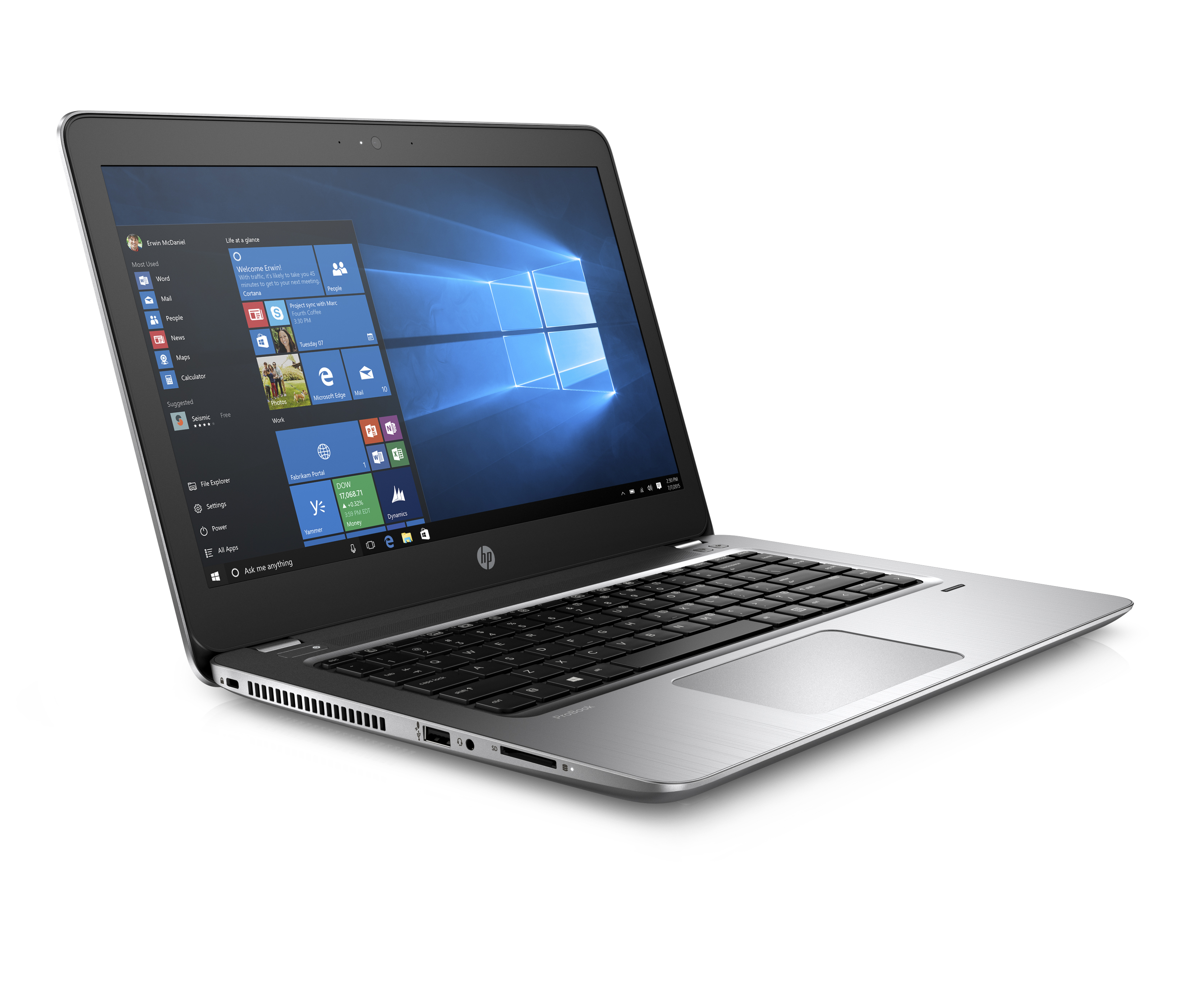
The HP mt20 Mobile Thin Client combines a rich user experience with impressive on the go performance – all without compromising reliability or security. It delivers a rich, immersive user experience with a 14″ HD display, full-sized keyboard, built-in speakers and microphone, and a high-definition 720p webcam for optimal mobile collaboration.
MT20 — Click for full size image of mobile thin client
HP Device Manager allows you to configure, manage, maintain and update your install base and security certificate assignments all from one interface.
HP Velocity optimizes the user experience and is especially suited to challenging network environments and improves the user experience for virtualized applications.
HP True Graphics allows users to view and manipulate rich, cloud-based multimedia content the way it was intended, with smooth video, high frame rates, and real-time interactivity.
HP Easy Shell is quick, simple and customizable and provides a clean streamlined experience for HP Thin Client Windows Embedded environments.
Pricing and Availability
The HP mt43 and HP mt20 mobile thin clients are available today and have estimated U.S. starting prices of $799 And $399 respectively.
NComputing will evolve their RX-HDX thin client into the Citrix Ready workspace hub, bringing innovation and use-case driven features to enterprises.
The Citrix Ready workspace hub is an enterprise-ready software and hardware solution. Citrix Ready verification ensures that it meets the performance, security and manageability demands of an enterprise-grade zero client.
The NComputing RX-HDX thin client is available through authorized NComputing resellers with a MSRP of $119*. The Citrix workspace hub update will be available as a technical preview and available for download on March 31st, 2018. And, if you’re attending Mobile World Congress you can also see it in the Citrix booth.
From VirtualDesktop Jul2020 — IT has the responsibility to provide virtual desktop endpoints that maximize UX based on the use cases, so admins should learn the different sides of the thin client vs. PC debate.
End-user requirements for thin clients vs. PC endpoints
Even the best ticket system will result in some delays for users, and these problems can get even worse for remote workers. Remote employees don’t have the same access to in-person IT support. Therefore, organizations should put an emphasis on ease of use for the user when they choose an endpoint.
Corporate devices provide more ease of use than personal devices because they are pre-configured for work purposes and centrally maintained — there is nothing the users need to install and nothing for them to maintain. Thin client devices get some bonus points regarding ease of use because if there’s a problem that a reboot won’t fix, IT can ship a new unit overnight. With a PC, it’s not so easy.
Security is a major concern for any virtual desktop deployment, and this is especially the case when users access corporate resources from personal devices such as PCs. If IT does not apply the appropriate protections against malware to the personal device, the end user device is vulnerable to file transfers, keyloggers and other security threats. IT professionals must lock down the virtual desktop endpoints, and they can accomplish this by disallowing or scanning file transfers, for example.
10ZiG, a world-market leader in Thin & Zero Client VDI Technology proudly announces the launch of its entirely redesigned, user-friendly, fully featured website.
Leicester, UK – 10ZiG, a world-market leader in Thin & Zero Client VDI Technology proudly announces the launch of its entirely redesigned, user-friendly, fully featured website, www.10ZiG.com. The new website launch is the final phase of a recent full-blown company rebrand involving an updated logo, fresh and modern branding colours and a new look-and-feel to their advertising and marketing tactics.
A few key features of the new website include a simplified, more intuitive layout, an attractive design and a more engaging user experience with enhanced search and navigation capabilities.
It’s now easier to understand which 10ZiG Thin Client or Zero Client will meet a particular VDI Proof of Concept (POC) as device searches can now be performed with just one click. Options include flexible Software Zero Clients (NOS), certified HDX, PCoIP and Blast Extreme, Linux (PeakOS) Thin Clients, Windows Embedded 7 (WES7), Windows Embedded 8 (WE8S) and Windows 10 IoT (W10 IoT) devices along with PC Repurposing software. In addition, users can search based on VDI platform, such as VMware Horizon View or Citrix XenDesktop, via attribute-based, model-oriented categories and grids.
“10ZiG is excited to unveil the new www.10ZiG.com. We recognize the importance of being able to present our powerful line of Thin and Zero Clients in a way that is up to par with the performance and reliability of our units and that of our unsurpassed, UK based technical support team. The new website guides users across 10ZiG units in terms of power and capability – from endpoints supporting task-based workers, or more advanced units capable of supporting 3D, CAD and 4K resolution,” says Jamie Heinz, Director of Marketing, 10ZiG Technology.
“The overall company rebrand and website redesign 10ZiG has undergone is indicative to where we are headed in the industry. 10ZiG is now a major force in the Thin and Zero Client endpoint market compared to our competitors. The advantages in choosing 10ZiG for endpoint devices are clear, from the power and reliability of our units, the 10ZiG three-year advance exchange warranty, free 30-day demo program and our knowledgeable and responsive UK based technical support team to name a few,” says Andy Martin, General Manager, 10ZiG Technology.
Created with the user experience firmly in mind, the new website has been designed using the latest technology, making it compatible with today’s browsers and mobile devices. 10ZiG is inviting visitors to explore the new website to learn more about advanced VDI technology through the informative products, blogs and news sections. The new website also features a free demo section where 10ZiG devices can be easily requested for testing in the local environment of the end user.
To learn more about cutting edge VDI technology from 10ZiG, or to arrange for a FREE Thin or Zero Client evaluation unit, please contact the relevant office below:
10ZiG Technology is a world-market leader in Thin and Zero Client endpoint devices for Virtual Desktop Infrastructure. 10ZiG provides leading Intel and AMD based Dual and Quad Core Thin and Zero Clients for Citrix HDX, VMware PCoIP & Blast Extreme and Microsoft environments. This is in addition to the widest range of Teradici PCoIP Zero Clients on the market. 10ZiG offers free no-obligation demo devices, a U.S. based Technical Support team, and provides their 10ZiG Manager console with cloud capabilities completely free with unlimited user licenses supported. Get your free evaluation device today, courtesy of 10ZiG.
The 2016 challenge IT managers: For the digital transformation or industry 4.0 they must on the one hand provide operative relief. On the other hand the maintenance rises during operation because workstation PCs stay longer in use. With a suitable workspace management strategy this paradox can be dissolve.
Bremen 14 January 2016 – IGEL Technology takes the issue of managed workspace in the new year, significant attention and is expanding its portfolio of solutions to this effect consistently. IT managers in companies and authorities would be so relieved in favor of strategic and complex projects within the digital transformation. These transfers IGEL decades of know-how in the management of Thin, Zero and software thin clients on global IT trends such as software-defined computing and unified management and thereby positions itself in the market for workspace management.
Against the background of a basic priority change in the IT towards digital transformation of business processes, smart products and the Internet-of-Things (IoT) or industry 4.0 say trend analyzes as the “IDC FutureScapes 2016” a significantly longer PC life beyond six years ahead. Technically this is possible: The hardware has become more robust and thanks to Windows 10 also has three-year-old machine a few years yet to come to terms with the previous requirements.
The flipside of the coin: the unabated high maintenance and management costs. There are local applications or user data on the PC, a rebuild will not infrequently after a hardware failure a half or whole day. An unplanned consequence of failures may jeopardize such an important project objectives.
Setting the course towards Unified Management
In order to relieve IT staff sustainably, IGEL applies the principle of “software-defined computing” in the workplace IT to: Use the secure, standardized and cost-effective Linux operating system Udc2 which, as it were for desktop PCs, notebooks, and thin clients of other manufacturers is, IGEL decouples the intelligence for remote access to centralized IT environments and cloud services sustained by the hardware. In combination with a profile-based management – the appropriate software IGEL UMS is included – occur uniformly remotely manageable work environments. These IGEL Managed Workspaces are after acute failure of the terminal – whether PC, laptop or thin client – reactivated within a few minutes on a hitherto unconfigured replacement hardware and ready for use.
A new step towards Unified Device Management undertook IGEL recently with the software UMA (Unified Management Agent), through which can be also PCs and notebooks with a local Windows 7 in the homogeneous UMS environment integrated.
“In the coming months and years, we want our Unified management approach to expand and further integrate device groups,” announced CEO Gloge. “We are setting up the ongoing changes to the workspace management provider consistently continue to an even greater extent to relieve ultimately end users and cloud service from unproductive tasks and increase productivity in IT.”
The Defense Information Systems Agency (DISA) is seeking sources for Application Containment
CONTRACTING OFFICE ADDRESS:
IT CONTRACTING DIVISION
BUILDING 3600
2300 EAST DRIVE
Scott AFB IL 62225-5406 US
For the purposes of this Sources Sought, endpoints are described as follows: t * Thick Client Network clients running on fully-capable systems – Local storage and processing capability; can operate independently if not connected to a network. t * ThinClient Network client running on minimally-capable system – Minimal local storage and processing capability. t * ZeroClient Client with no capability outside of network context. t * Server Respond to client requests; provide enterprise services (typically in data centers). Users are System Administrators. t * Virtual Client Client running virtually on a host platform; no physical resources. The target is an endpoint (excluding devices like phones and tablets) security and management solution that mitigates prevalent adversary attack vectors, tactics, and techniques used to compromise a system. The proposed solution must automatically isolate the execution of high risk applications interacting with untrusted content from more trusted portions of the endpoint (e.g. host operating system); and/or the solution must facilitate incident detection, investigation, response and threat hunting. Any proposed solution must continue to be effective in disconnected, virtual, intermittent, and low bandwidth network conditions without a dependence upon regularly recurring (e.g. daily, weekly, monthly) content updates. The proposed solution must be capable of scaling to millions of endpoints and provide information in near real-time. Any proposed solution must be ready for testing and subsequent deployment. In order for the Government to evaluate the technical merits of the vendors solution(s), the solution(s) shall be capable of meeting the following technical requirements: Application Containment t 1. The solution shall automatically isolate applications interacting with untrusted content (e.g., internet web pages, email, removable media, and office documents) from more trusted portions of the device outside the container. t 2. The solution shall automatically detect potentially malicious code behavior executing within the isolation container. t 3. The solution shall automatically capture necessary details (e.g., ports and protocols in use, running executables and services, browser plugins in use, etc.) of events (e.g., malicious activity) occurring within the isolation container to support retrospective post-event analysis, threat analysis, and situational awareness. t 4. The solution shall automatically constrain potentially malicious activity to within the isolation container. t 5. The solution shall be configurable to control the ability of applications running within the isolation container to access only specified system resources (e.g., storage devices, network resources, human interface devices, etc.). t 6. The solution shall automatically eliminate and report all isolation container artifacts of compromise and intrusion remnants to the common management server in support of rapid remediation and investigation. t 7. The solution shall automatically restore access to a potentially compromised application within 60 seconds post-compromise, unless configured to allow malware to run for the purpose of analysis. t 8. All components shall be protected against unauthorized/malicious access and modification. This applies to executable code, data, and component settings. t 9. The solution shall provide continual verification of the integrity of the isolation container to ensure there is no unauthorized/malicious access or persistent modification. t 10. Solution components shall not impair authorized system operations (e.g., patching, scanning, business software usage, information assurance tools/initiatives (Secure Host Baseline, Assured Compliance Assessment Solution, etc.) nor shall they degrade managed system performance in any way, which may adversely impact a system s primary business/mission functions. t 11. The solution shall provide automatic time stamping of all collected data and events based on a single time standard (e.g., Coordinated Universal Time). t 12. The solution shall support the Department’s currently mandated means of authentication (e.g., Public Key Infrastructure (PKI)). t 13. The solution shall securely store and transmit data in a manner that ensures the confidentiality, integrity, availability, and source authenticity of the data. t 14. The solution shall automatically report operating status and configuration to its common management system, based on a pre-defined schedule, to ensure the capability is operating and configured as expected. t 15. The solution shall interoperate with event monitoring and correlation systems (e.g. SIEMs) to facilitate aggregated situational awareness. t 16. The solution shall allow for patching and update of containerized applications through a means of automated verification (e.g., integration with automated patch management infrastructure/processes). t 17. The solution shall encrypt all data in transit or data at rest with Federal Information Processing Standards (FIPS) 140-2 compliant cryptographic modules. t 18. The solution shall support open standards for automated threat information sharing. t 19. The solution shall protect managed endpoints operating in Connected, Disconnected, Intermittent, and Limited (DIL) bandwidth networked and standalone environments. t 20. The solution shall report to the Common Management Server all potentially malicious events encountered while the managed endpoint was without network connectivity. t 21. The solution shall provide configurable alerting based upon administrator defined criteria. t 22. The solution shall send alerts at administrator-definable intervals. t 23. The solution shall, at a minimum, operate on the most common vendor supported operating systems approved for use in the DoD environment (e.g., Microsoft Windows 8.1, Windows 10 (including Secure Host Baseline), and Exchange Server 2016, Linux). t 24. The solution shall provide the ability for designated administrators, authenticated according to DoD standards, to configure the solution in accordance with applicable DoD policies. t 25. The solution shall automatically report potentially malicious events detected within the isolation container to a common management server and provide actionable information in a non-proprietary, standard format (e.g. Structured Threat Information expression (STIX)). t 26. The isolation container shall ensure that destructive malware within the container is unable to negatively impact user data or the integrity of the host system. t 27. The solution shall, where possible, inspect and/or sanitize active or potentially malicious untrusted content passing out of the container to the underlying more-trusted host. Examples include copy-paste, printing, file saving, and synchronization of configuration, and user data such as cookies and bookmarks. Sanitization should re-encode content in such a way as to minimize the likelihood of malicious exploitation when content is processed. t 28. The solution should be capable of containing operating system kernel-level vulnerability exploitation. t 29. The solution shall have the capability to be tuned/configured to reduce alerts resulting from false positives. t 30. The solution’s uninstall capability shall ensure no artifacts are left behind following execution of the uninstall processes. t 31. All solution components shall have the ability to be automatically deployed and configured based on predefined configurations. SPECIAL REQUIREMENTS Must have Secret Facility Clearance. Please provide your current Facility Clearance level. SOURCES SOUGHT: The North American Industry Classification System Code (NAICS) for this requirement is 511210, with the corresponding size standard of $41.5 million. To assist DISA in making a determination regarding the level of participation by small business in any subsequent procurement that may result from this Sources Sought, you are also encouraged to provide information regarding your plans to use joint venturing (JV) or partnering. Please outline how you would envision your company’s areas of expertise and those of any proposed JV/partner would be combined to meet the specific requirements contained in this announcement. In order to make a determination for a small business set-aside, two or more qualified and capable small businesses must submit responses that demonstrate their qualifications. Responses must demonstrate the company s ability to perform in accordance with the Limitations on Subcontracting clause (FAR 52.219-14). SUBMISSION DETAILS: Responses should include: t 1. Business name and address; t 2. Name of company representative and their business title; t 3. Type of Small Business; t 4. CAGE Code; t 5. Your contract vehicles that would be available to the Government for the procurement of the product and/or service, to include ENCORE III, SETI, NIH, NASA SEWP, General Service Administration (GSA): OASIS, ALLIANT II, VETS, STARS II, Federal Supply Schedules (FSS) (including applicable SIN(s)), or any other Government Agency contract vehicle that allows for decentralized ordering. (This information is for market research only and does not preclude your company from responding to this notice.) t tVendors who wish to respond to this should send responses via email NLT 4:00 PM Eastern Daylight Time (EDT) on February 17, 2020 to Taylor Rakers, taylor.j.rakers.civ@mail.mil and Cody Seelhoefer, cody.r.seelhoefer.civ@mail.mil. If you feel your company has a solution that meets the requirements above, submit a brief capabilities package (no more than ten pages) demonstrating that ability. t tProprietary information and trade secrets, if any, must be clearly marked on all materials. All information received that is marked Proprietary will be handled accordingly. Please be advised that all submissions become Government property and will not be returned. All government and contractor personnel reviewing submitted responses will have signed non-disclosure agreements and understand their responsibility for proper use and protection from unauthorized disclosure of proprietary information as described 41 USC 423. The Government shall not be held liable for any damages incurred if proprietary information is not properly identified. SCOTT AFB, IL 62225
The Defense Information Systems Agency (DISA) is seeking sources for Endpoint Detection and Response (EDR)
CONTRACTING OFFICE ADDRESS:
IT CONTRACTING DIVISION
BUILDING 3600
2300 EAST DRIVE
Scott AFB IL 62225-5406 US
INTRODUCTION:
This is a SOURCES SOUGHT ANNOUNCEMENT to determine the availability and technical capability of small businesses (including the following subsets, Small Disadvantaged Businesses, Certified 8(a), Service-Disabled Veteran-Owned Small Businesses, HUBZone Small Businesses and Woman Owned Small Businesses) to provide the required products and/or services.
The Endpoint Security Portfolio is seeking information for potential sources for Endpoint Detection and Response (EDR) capability allowing cyber defenders to quickly detect and investigate security incidents and automatically detect malicious system activities and behaviors. EDR capabilities continuously record significant events occurring on managed systems for the purpose of identifying, reporting, and investigating malicious activity; thereby reducing and adversary s dwell time on DoD networks. Recorded data accessible through a management console query interface. The EDR capability complements other endpoint security measures and capabilities; the ability to restrict execution of high-risk applications and computer processing.
DISCLAIMER:
THIS SOURCES SOUGHT ANNOUNCEMENT IS FOR INFORMATIONAL PURPOSES ONLY. THIS IS NOT A REQUEST FOR PROPOSAL. IT DOES NOT CONSTITUTE A SOLICITATION AND SHALL NOT BE CONSTRUED AS A COMMITMENT BY THE GOVERNMENT. RESPONSES IN ANY FORM ARE NOT OFFERS AND THE GOVERNMENT IS UNDER NO OBLIGATION TO AWARD A CONTRACT AS A RESULT OF THIS ANNOUNCEMENT. NO FUNDS ARE AVAILABLE TO PAY FOR PREPARATION OF RESPONSES TO THIS ANNOUNCEMENT. ANY INFORMATION SUBMITTED BY RESPONDENTS TO THIS SOURCES SOUGHT ANNOUNCEMENT IS STRICTLY VOLUNTARY.
REQUIRED CAPABILITIES:
For the purposes of this Sources Sought, endpoints are described as follows:
t
Thick Client Network clients running on fully-capable systems – Local storage and processing capability; can operate independently if not connected to a network.
t
Thin Client Network client running on minimally-capable system – Minimal local storage and processing capability.
t
Zero Client Client with no capability outside of network context.
t
Server Respond to client requests; provide enterprise services (typically in data centers). Users are System Administrators.
t
Virtual Client Client running virtually on a host platform; no physical resources.
The target is an endpoint (excluding devices like phones and tablets) security and management solution that mitigates prevalent adversary attack vectors, tactics, and techniques used to compromise a system. The proposed solution must automatically isolate the execution of high risk applications interacting with untrusted content from more trusted portions of the endpoint (e.g. host operating system); and/or the solution must facilitate incident detection, investigation, response and threat hunting. Any proposed solution must continue to be effective in disconnected, virtual, intermittent, and low bandwidth network conditions without a dependence upon regularly recurring (e.g. daily, weekly, monthly) content updates. The proposed solution must be capable of scaling to millions of endpoints and provide information in near real-time. Any proposed solution must be ready for testing and subsequent deployment.
In order for the Government to evaluate the technical merits of the vendors solution(s), the solution(s) shall be capable of meeting the following technical requirements:
EDR
t
The solution shall provide the ability to automatically capture, record and analyze a user-selectable range of endpoint parameters and events in order to assess system operations, support risk management and enable hunt and forensic activities. Examples of data the solution shall be capable of capturing include: – Windows Registry – Changes to Keys (and their associated processes; including auto-run keys), Access Control Lists (ACLs), license keys, ownership, and administrative rights.
t
t- User Activity – Authentication and privileged user activities.
t- Network Activity – File transfers, connections opened and closed, destination (Uniform Resource Locator, Internet Protocols, type of traffic and encryption method (e.g., File Transfer Protocol, Secure File Transfer Protocol, Server Message Block, Transport Layer Security, and Secure Sockets Layer.
t – Processes and Services – Automatic and manual starts and stops. Process parent and child relationships. Loaded and unloaded Dynamic Link Libraries, and record of their associated processes and files on the file system.
t – Software Changes Operating System, driver and program installation, uninstall, patching, and modification information (e.g., software versions, software identification tags, patch information and mutex data).
t – Peripheral Connections – Wired and wireless connections to peripheral devices.
t – Other File Activity – Files created, opened, closed, saved, modified, moved, or deleted.
t – In-memory Activities – In-memory activities associated with potentially malicious activity; including mutexes and named pipes associated with processes.
t – Hardware Changes – Peripheral device detection, removal, or modification.
t
t
The solution shall not impair authorized system operations (e.g., patching, scanning, business software usage, information assurance tools/initiatives (secure host baseline, assured compliance assessment solution, etc.) nor shall it degrade managed system performance in any way, which may adversely impact a system s primary business/mission functions.
t
The solution shall encrypt all data in transit or data at rest with FIPS 140-2 compliant cryptographic modules.
t
The solution shall, at a minimum, operate on the most common vendor supported operating systems approved for use in the DoD environment (e.g., Microsoft Windows 8.1, Windows 10 (including secure host baseline) and Exchange Server 2016).
t
The solution shall support automated/scheduled transfer of endpoint data to Government approved data archives (e.g., commercial cloud, DoD-owned, federal data center, etc.)
t
The solution shall provide time stamping of all collected data and events based on a single time standard (e.g., coordinated universal time).
t
The solution shall securely store and transmit data in a manner that ensures the confidentiality, integrity, availability, and source authenticity of the data.
t
The solution shall provide the ability to automatically discover and alert on previously unknown external and/or internal hardware/peripheral devices (such as storage) connected to endpoints for the purpose of retrospective/post-event analysis.
t
The solution shall provide integrated and customizable search with, at minimum, the ability to, from the central management server or other authorized consoles, search data from all systems for information relevant to an incident investigation or risk analysis.
t
The solution shall have the ability to execute manual and scheduled scans of specified systems for indicators derived from threat intelligence or other sources.
t
The solution shall provide integrated analytics (including visualization) and support the creation of custom analytics, in order to identify anomalous endpoint behaviors, support incident investigation, and perform event analysis.
t
The solution shall have the ability to pull locally stored data from specified endpoints in near real time to support high priority hunt and forensic operations.
t
The solution shall provide automatic hardware-level, operating system-level, and application-level monitoring.
t
The solution shall allow administrative functions to be delegated to users based on roles/permissions and or groupings of endpoints they are responsible for managing.
t
The solution shall provide automated analysis and visualization of an attack; including production of an event timeline and initial assessment of severity/impact.
t
The solution shall support delegation (i.e., user-specified) of who can access/view collected endpoint data.
t
The management and analytic components of the solution shall scale to support an endpoint client load of at least 500,000 endpoints.
t
The solution shall support the Department’s currently mandated means of authentication (e.g., PKI).
t
The solution shall automatically report detection of potentially malicious events to a common management server and provide actionable information in non-proprietary, standard formats (e.g. STIX).
t
The solution shall generate reports based on pre-saved user-defined formats and datasets to facilitate rapid analysis, decision making, and follow-up actions following events.
t
The solution shall, through a central management server, provide options for configurable automated or manual remediation actions in response to detected potentially malicious events.
t
The solution’s uninstall capability shall ensure no artifacts are left behind following execution of the uninstall processes.
t
The solution shall support the rapid push (objective: within 30 seconds) of configuration changes from the management server to all installed agents.
t
The solution shall protect managed endpoints operating in Connected, DIL bandwidth networked, and standalone environments.
t
All solution components shall have the ability to be automatically deployed and configured based on predefined configurations.
t
The solution shall report to the common management server all potentially malicious events encountered while the managed endpoint was without network connectivity.
t
All components shall be protected against unauthorized/malicious access and modification. This applies to executable code, data, and component settings.
SPECIAL REQUIREMENTS
Must have Secret Facility Clearance. Please provide your current Facility Clearance level.
SOURCES SOUGHT:
The North American Industry Classification System Code (NAICS) for this requirement is 511210, with the corresponding size standard of $41.5 million.
To assist DISA in making a determination regarding the level of participation by small business in any subsequent procurement that may result from this Sources Sought, you are also encouraged to provide information regarding your plans to use joint venturing (JV) or partnering. Please outline how you would envision your company’s areas of expertise and those of any proposed JV/partner would be combined to meet the specific requirements contained in this announcement.
In order to make a determination for a small business set-aside, two or more qualified and capable small businesses must submit responses that demonstrate their qualifications. Responses must demonstrate the company s ability to perform in accordance with the Limitations on Subcontracting clause (FAR 52.219-14).
SUBMISSION DETAILS:
Responses should include:
Business name and address;
t
Name of company representative and their business title;
t
Type of Small Business;
t
CAGE Code;
t
Your contract vehicles that would be available to the Government for the procurement of the product and/or service, to include ENCORE III, SETI, NIH, NASA SEWP, General Service Administration (GSA): OASIS, ALLIANT II, VETS, STARS II, Federal Supply Schedules (FSS) (including applicable SIN(s)), or any other Government Agency contract vehicle that allows for decentralized ordering. (This information is for market research only and does not preclude your company from responding to this notice.)
t
tVendors who wish to respond to this should send responses via email NLT 4:00 PM Eastern Daylight Time (EDT) on February 17, 2020 to Taylor Rakers, taylor.j.rakers.civ@mail.mil and Cody Seelhoefer, cody.r.seelhoefer.civ@mail.mil. If you feel your company has a solution that meets the requirements above, submit a brief capabilities package (no more than ten pages) demonstrating that ability.
t
tProprietary information and trade secrets, if any, must be clearly marked on all materials. All information received that is marked Proprietary will be handled accordingly. Please be advised that all submissions become Government property and will not be returned. All government and contractor personnel reviewing submitted responses will have signed non-disclosure agreements and understand their responsibility for proper use and protection from unauthorized disclosure of proprietary information as described 41 USC 423. The Government shall not be held liable for any damages incurred if proprietary information is not properly identified.
JPMC – RENEWAL NOTICE HP Thin Client Terminals and Accessories
Type
Bid
Entity
DoIT – Department of Innovation and Technology
Expires
Jul 14, 2020
Status
Open
Region
Illinois
Reference #
21-448DOIT-TELEC-B-16037
Issued
Jun 28, 2020
More Details
Description
Bulletin Desc: RENEWAL NOTICE – THIS IS NOT A BID SOLICITATION JPMC – The Illinois Department of Innovation and Technology desires to renew a Joint Purchase Master Contract with HP Inc. For HP Thin Client Terminals, Accessories and Support Services. The Joint Purchase Master Contract can be utilized by all governmental agencies and qualified not-for-profit agencies.
Thanks to the upcoming firmware updates for IGEL Linux users can now easier and faster access to Linux-based thin clients using RFID. The employee authenticates once and may his session (Citrix XenApp and Microsoft RDS) during the day on any other thin client in the corporate network to retrieve by presenting the RFID card – simple, quickly and safely.
Bremen 09 April 2015 – With the latest version of the IGEL Linux firmware Bremer thin and zero client vendor for more flexibility and security companies provide. These Evidian software for authentication in the version 5.06.100 of the operating system is integrated. Thus, employees need only once a day a strong authentication using an RFID card perform to open their session. During the day this session the entire corporate network allows easy retrieval by re-presenting the card to the currently used client. So the staff is flexible, can be anywhere access to their data and work effectively. When leaving the workplace, the thin client is automatically blocked by the entrainment of the card and is therefore available for other employees.
The combination of powerful IGEL thin clients and Evidian Single Sign-On relieved both employees and system administrators of password management: Enter passwords, remember and renew is taken over by the SSO. Password policies are adhered to and the helpdesk is exempt from password reset requests. As with IGEL usual, this new function is centralized and profile based remotely administered via the free Universal Management Suite (UMS). By integrating the Evidian software in the IGEL Linux firmware organizations can now effectively save resources for your staff and increase their productivity. An audit and reporting function allows required by law traceability of all registration procedures in the company.
“We are delighted to provide our customers with Evidian another leading single sign-on technology. This is a result of the continuous cooperation with our partners. Thus our customers continuously benefit from the latest security solutions, “Matthias Haas, Director of Product Management commented at IGEL Technology.
Availability
The upcoming IGEL Linux release (5.06.100) is available to all x86 systems (UD and IZ Series incl. Udc2) expected in May 2015. As ( www.myigel.biz ). Currently supported by the integrated solution Citrix and RDP sessions. In the future, other session types and scenarios are planned.
dank des anstehenden Firmware-Updatesfür IGEL Linuxkönnen Anwender nun einfacher und schneller auf Linux-basierte Thin Clients mittels RFID zugreifen. Dazu ist EvidianSoftware zur Authentisierung in die Version 5.06.100 des Betriebssystems integriert. So brauchen Mitarbeiter nur einmal täglich eine starke Authentisierung mittels einer RFID-Kartedurchführen um ihre Sitzung zu öffnen. Untertags lässt sich diese Sitzung im gesamten Unternehmensnetzwerk durch erneutes Präsentieren der Karte am aktuell genutzten Client einfach abrufen. So ist der Mitarbeiter flexibel, kann überall auf seine Daten zugreifen und effektiv arbeiten. Beim Verlassen des Arbeitsplatzes wird der Thin Client durch das Mitnehmen der Karte automatisch gesperrt und steht somit für andere Mitarbeiter zur Verfügung.
Das bevorstehende IGEL Linux Release (5.06.100) steht allen x86 Systemen (UD und IZ Serie inkl. UDC2) voraussichtlich ab Mai 2015 zur Verfügung (www.myigel.biz).
Weitere Informationen entnehmen Sie bitte der beigefügten Pressemitteilung.
IGEL adds Cisco VXME to its unified communications portfolio
Windows Embedded IGEL thin clients are now compatible with Cisco Virtualization Experience Media Engine (VXME) facilitating the use of voice and video technology in virtual IT environments.
Reading, UK. April 16, 2015 – IGEL Technology today announced that its Windows Embedded thin clients are now compatible with Cisco Virtualization Experience Media Engine (VXME), facilitating the use of voice and video technology in virtual IT environments. In conjunction with the unified communication service Cisco Jabber for Windows, IGEL now offers yet another method for holding high-quality audio and video conferences within a virtual desktop environment using thin clients. All IGEL Universal Desktop models with the Windows Embedded W7+ operating system are supported and the required Cisco VXME extension can be easily integrated by any administrator. IGEL’s Universal Management Suite (UMS) and Universal Customization Builder (UCB) tools handle the central packaging and roll-out of the software component.
Simply integrating the VXME extension into the local thin client operating system (Windows Embedded) provides access to the Cisco Jabber client in virtual environments (Citrix XenDesktop/XenApp published desktops or VMware Horizon). Cisco’s Jabber client supports the latest Windows desktop operating systems.
Once the administrator has completed the integration and deployment process, thin client users can communicate via HD video and audio using Cisco Jabber functionality or leverage third party accessories from Jabra, Logitech, and Plantronics such as handsets, headsets, speakers and webcams which are operated directly via the IGEL thin client for a seamless user experience. The VXME extension uses the processing power provided locally through the thin client taking some of the pressure off valuable server resources, which in turn has a positive effect on the overall user experience in VDI environments.
IGEL Technology GmbH recommends using a powerful UD5 range thin client or the new quad-core UD6 model, both with the W7+ operating system and an 8GB flash memory, for these multimedia communications using real-time audio and video conferences.
“The video output of the IGEL UD6 thin client is exceptional. A resolution of 1280 x 720p provides top cross-platform results in a virtual environment. We are excited to be working with IGEL with our VXME solution and look to further enhance the experience for all our mutual customers” says Sandeep Prasad, Product Manager at Cisco Systems.
The addition of Cisco VXME to our unified communications portfolio further underlines IGEL’s commitment to make our customer’s thin and zero client desktops the best designed, flexible and open desktop devices for any business,” said Simon Richards, Managing Director for IGEL UK & Ireland. “This solution creates the perfect desktop for those working in call and support centres and businesses where frequent video conferences and calls are required.”
Availability
The Cisco VXME client can be integrated using an executable file into any IGEL Universal Desktop firmware from version 3.01.100 (Windows Embedded) upwards. The installation file can be downloaded for free by all registered Cisco customers from https://software.cisco.com/download/navigator.html. Please note, in order to download you will need the appropriate licenses from Cisco.
About Cisco
Cisco (NASDAQ: CSCO) is the worldwide leader in IT that helps companies seize the opportunities of tomorrow by proving that amazing things can happen when you connect the previously unconnected. For more information, please visit http://www.cisco.com.
About IGEL Technology
A world leader in thin and zero client solutions, IGEL Technology helps organizations improve the agility, efficiency, and security of their virtual desktop and application delivery systems. IGEL produces one of the industry’s widest range of hardware thin and zero clients, based on Linux and Microsoft Windows, and leads the market in software based thin clients allowing customers to access a broad spectrum of server-based infrastructures and applications. IGEL also offers powerful and intuitive management software for easy deployment and administration of thin clients throughout any size organization. Partnerships with industry leaders like Citrix, VMware, Red Hat, and Microsoft ensure that IGEL provides the most up-to-date technology and trustworthy security to clients in industries that include Healthcare, Education & Research, Public Sector, Financial, Insurance, Retail, Logistics, and Manufacturing. IGEL has offices in the United Kingdom, Australia, France, the Netherlands, Austria, Belgium, Switzerland, Sweden, the United States, Germany, Hong Kong, Shanghai, Beijing and Singapore and is represented by partners in over 50 countries worldwide. To learn more, visit www.igel.co.uk or follow us on Twitter: twitter.com/IGEL_Technology
Cloud Services in 2015: Key Characteristics and Trends
Cloud services in 2015 marked a period of rapid growth, mainstream adoption, and significant evolution in both technology and business models. Here’s a comprehensive overview of what cloud services were like during that year:
Market Growth and Adoption
The global cloud market reached approximately $110 billion in 2015, growing at an annual rate of 28%2.
Public cloud services (IaaS and PaaS) saw the fastest growth, with a 51% increase, while private and hybrid cloud infrastructure services grew by 45%2.
Cloud infrastructure as a service (IaaS) spending alone was projected to hit $16.5 billion, up 32.8% from 20141.
Cloud was becoming mainstream: 88% of businesses used public cloud services, 63% used private cloud, and 82% adopted hybrid cloud setups5.
Competitive Landscape
The market was consolidating around a few major providers: Amazon Web Services (AWS), Microsoft Azure, IBM, Google Cloud Platform, Cisco, and HPE124.
AWS maintained dominance, but Microsoft and IBM were making significant gains, especially in enterprise and hybrid cloud solutions3.
Many smaller providers struggled to compete, with some exiting the market or pivoting to managed services1.
Key Features and Service Types
IaaS, PaaS, and SaaS: All major service models were available and growing. IaaS and PaaS saw the highest growth rates, while SaaS continued to expand, especially with offerings like Office 36523.
Hybrid and Multi-Cloud: Hybrid cloud architectures became the norm, with most enterprises blending public and private clouds for flexibility, performance, and cost savings45.
Best-of-Breed Solutions: Enterprises increasingly adopted a mix of services from different providers to avoid vendor lock-in and maximize performance4.
Security and Compliance: Security concerns drove adoption of private cloud connections and direct links to providers, with 72% of IT professionals citing security as a top benefit4.
Technical Evolution
Internet of Things (IoT): Cloud platforms began supporting IoT, with AWS launching managed IoT services to facilitate device connectivity and data processing at scale3.
Video and Media: Providers like IBM focused on integrating video delivery and management into their cloud offerings3.
Containers and Efficiency: The emergence of container technology was starting to reshape how cloud data centers operated, promising greater efficiency and agility4.
Challenges
Complexity: Many CIOs struggled with integrating cloud services due to complex existing IT environments and the need to modernize legacy applications3.
Vendor Selection: Identifying the right mix of cloud services and providers was a major challenge for businesses3.
Summary Table: Cloud Services in 2015
Aspect
2015 Status/Trend
Market Size
$110 billion, 28% annual growth
Leading Providers
AWS, Microsoft Azure, IBM, Google Cloud, Cisco, HPE
Adoption Rates
88% public cloud, 63% private cloud, 82% hybrid cloud
Fastest Growth Areas
Public IaaS/PaaS (51%), Private/Hybrid Cloud (45%)
In summary, 2015 was the year cloud computing became mainstream, with explosive growth, widespread adoption across industries, and the rise of hybrid and multi-cloud strategies. Market competition was fierce, innovation was rapid, and enterprises were beginning to see cloud as an essential, not optional, part of their IT strategy.
### Citrix underlines the efficiency of the high-end models IGEL UD5 and UD6. Both devices meet the requirements of the HDX Premium Policies and recommend itself as a high-performance thin client for the provision of graphics-intensive applications via XenDesktop. ###
### Citrix unterstreicht die Leistungsfähigkeit der IGEL High-End-Modelle UD5 und UD6. Beide Geräte erfüllen die Vorgaben der HDX Premium Richtlinien und empfehlen sich damit als hochperformante Thin Clients für die Bereitstellung grafikintensiver Anwendungen über XenDesktop. ###
Thanks virtualized, shared graphics resources (vgpu) can now be an efficient and safe over a thin client also particularly power-hungry jobs in architecture, engineering, planning and design.Virtualisation specialist Citrix provides the HDX 3D Pro feature of XenDesktop the necessary high-performance protocol for a smooth transition. However, the devices used must comply with for the seamless interaction and the best user experience a list of requirements, the Citrix has defined verification in its HDX Premium.
The IGEL UD5 and UD6 are available now at this circuit because they offer with their sophisticated hardware framework the best prerequisites for the provision of sophisticated graphics, 3D or multimedia applications. The IGEL UD5 with dual-core processor is ideal for 2D -Arbeitsplätze with high multimedia requirements. In professional 3D range of IGEL UD6 with quad-core CPU and 2GB of RAM is the right choice.