Category Archives: ScoopIt Thin Client News

Thin Clients, Zero Clients, Android Stations and Cloud Clients
Since 1999, Thinclient.org has been reporting the thin client computing market as well as the ChromeBook, Zero Client, Android clients, Pi Raspberry Clients and Thick Client market. Generally the cloud computing market since it started with companies such as Citrix back in the late 80s.

thin client is a lightweight[vaguecomputer that has been optimized for establishing a remote connection with a server-based computing environment. The server does most of the work, which can include launching software programs, performing calculations, and storing data. This contrasts with a fat client or a conventional personal computer; the former is also intended for working in a client–server model but has significant local processing power, while the latter aims to perform its function mostly locally.

Thin client hardware generally supports a keyboard, mouse, monitor, jacks for sound peripherals, and open ports for USB devices (e.g., printer, flash drive, webcam). Some thin clients include legacy serial or parallel ports to support older devices such as receipt printers, scales or time clocks. Thin client software typically consists of a graphical user interface (GUI), cloud access agents (e.g., RDPICAPCoIP), a local web browserterminal emulators (in some cases), and a basic set of local utilities.

Thin Client Case Study – Brent & 10Zig

Brent Borough Council saw a 33% reduction in carbon emissions and energy consumption using 10ZiG Thin Clients

 “We were a traditional XP fat client estate and were experiencing problems with log-in times and maintenance of the PC’s across our sites. PC’s were generally taking between 20-30 minutes to log-on and even 45 minutes in some cases. When you added this time up over a week, month or year then it was a serious issue for the productivity of our workforce. We were also finding the PC’s challenging to support, particularly with implementing patches or providing general maintenance.


We have 2150 desktops spread across 50 sites, with the majority, 1650, housed at our Civic Centre. The other 500 are spread over the other 49 locations and we needed 4 vans and just shy of 70 support staff throughout the various IT scatter teams in order to keep the lights on.”

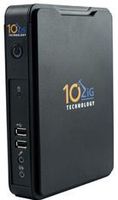
10ZiG Technology | The Undisputed Heavy Weight Thin Client Champion of the World!

February 12th, 2016 Leicester, UK – 10ZiG Technology is proud to announce their new look Dual and Quad Core Thin & Zero Client hardware range. The devices have been developed to provide the highes…

Source: www.realwire.com

Powered by an Intel 2GHz Quad Core processor, capable of speeds up to 2.42GHz with Intel Turbo Boost Technology, this hardware series provides support for Citrix HDX, Citrix HDX 3D Pro (5848qc), VMware Horizon and Microsoft environments. Offering Dual DVI ports as standard, 7 x USB ports (including USB 3.0), optional VESA mounting and/or wireless support, the 5800q Series caters for a vast range of use cases.

10ZiG Technology | New 10ZiG Quad Core 4K Thin Client & Zero Client

Enterprising 5900q Thin Client & Zero Client Series enhances the 10ZiG Technology line of devices with innovative design, first-time features, and outstanding product performance with the 10ZiG touch! LAS VEGAS, NEVADA – 10ZiG Technology® is primed to reveal its new 5900q Thin Client & Zero Client Series with exceptional 3-monitor 4KUHD support, innovative touch technology, and PoE option at VMworld Las Vega

Source: www.realwire.com

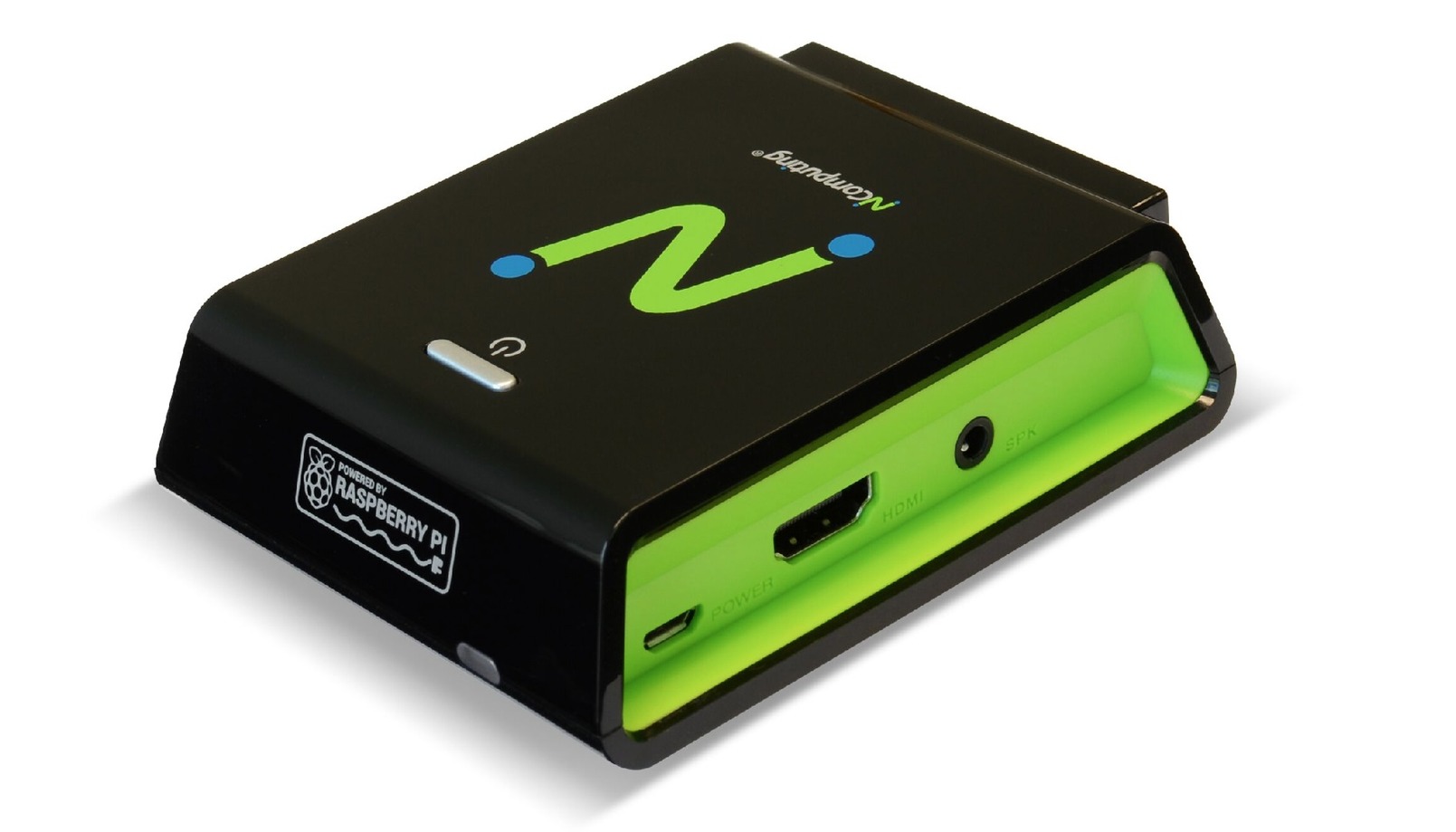
Raspberry Thin Client – Pi 3 Model B+ arrives: Faster CPU, Wi-Fi, 300Mbps Ethernet

Raspberry Pi Foundation unveils the Raspberry Pi 3 Model B+, its newest model in the Raspberry Pi 3 lineup.

Source: www.zdnet.com

The Raspberry Pi Foundation has launched the Raspberry Pi 3 Model B+, offering a faster CPU and faster wireless throughput than its predecessor, the Raspberry Pi 3 Model B.

Raspberry Pi 3 Model B+ comes exactly two years after the launch of the Raspberry Pi 3 Model B and is in line with Raspberry Pi Foundation’s two-year B+ ‘evolution’ upgrade.

In other words, the changes don’t warrant calling it a Raspberry Pi 4, but there are noticeable improvements, including a faster processor, higher Wi-Fi speeds, and faster Ethernet.

Download now: Raspberry Pi 3 Model B+: An insider’s guide (free PDF)

Why client-server must die

Old models of computing always tend to linger too long, but client-server was based on a fallacy — and needs to go away sooner rather than later

Source: www.infoworld.com

I write this week from IBM’s Insight conference in Las Vegas. A former InfoWorld editor in chief, Stewart Alsop, predicted that the last mainframe would be unplugged in 1996. This week I’ll attend a session where IBM runs Apache Spark on a mainframe, even as the mighty beast’s luster finally fades.


InfoWorld Mobile Security Deep DiveMobile security: The InfoWorld Deep DiveThis guide, available in both PDF and ePub editions, explains the security capabilities inherent toREAD NOWI’m going to the Spark-on-the-mainframe session for the lolz. IBM loves its mainframes because they sustain one of the few noncompetitive hardware businesses in existence, where IBM can make nearly a 50 percent margin.

The mainframe business is also one of the only legitimate areas of computing where you’ll see ©1980 on the startup screen. Client-server computing does not depend on specific hardware. Instead, it’s simply a computing model that has evolved under various hardware and network constraints.

I’m sure we — that is, me and the LinkedIn or Twitter spheres — can quibble over the definition of client-server versus the model I’ll call “purely distributed.” So allow me to define client-server as one or more clients connected to a server listening on a pool or set of sockets that mainly scales vertically and usually has a central data store. This is the model of the LAN.

I’ll define the distributed model as N-clients or peers connected to a mesh of N servers that mainly scale horizontally and use a data store or stores that also shard and distribute processing. This model is built to tolerate failure and demand spikes, enabling you to add more nodes (often linearly) and relocate infrastructure at will. This is the model of the cloud.

The power of this more distributed model goes beyond purely scaling up to include scaling down. This is important because of one of the implied fallacies of client-server was that workloads are predictable.

From the start this has failed to be true. In the distant past, I’ve administered systems that were rendered useless for all other purposes during EoM reporting, then saw only light use throughout the rest of the month. Ironically, this same fallacy is also why mainframe TPC studies are nonsense. Remember when Slashdot was your browser home page and mere mention of your site caused an outage due to a spike in traffic called the Slashdot effect?

The whole Internet is like that now.

Have you ever tried to set up a test database for a large, existing, Oracle-based project? You need to be able to scale up for unpredictable Internet-age data traffic and usage patterns, but you need to scale down to conserve resources (read: massive Amazon bill) and adapt nimbly (not to mention to test the project on your laptop).

Workloads keep getting more unpredictable and in many cases more voluminous. Moreover, our expectations have increased. Waiting isn’t really acceptable, and outages in the age of Google are considered major professional failures. Competition in many areas is fierce and global, while regulations have more bite (at least until President Trump takes office).

Our client-server systems won’t scale to real-time demands. They are not resilient and, in many cases, cloud-ready. Meanwhile, it has become much, much easier to write distributed systems. It takes no time to deploy a few MongoDB instances compared to Oracle or even SQL Server. Spark has a supersimple API. NodeJS lends itself nicely to writing event-driven resilient distributed systems; plus, they’re all easier to use than their predecessors.

Naysayers will point out that these new technologies have relatively small market penetration, but in truth, it’s growing. Some say a technology dies when its developers retire. You may have to pry Oracle out of those PL/SQL developers’ cold dead hands, but it will happen. Today, millennials tend to feel more comfortable with MongoDB than even MySQL.

The client-server era will die in the cloud. In 20 years, as I start to eye retirement, no new client server systems will be put into place for normal business use outside of very specialized areas. The new stuff is simply too much better. It doesn’t require a specific deployment model, it’s easier and cheaper, and it fits the expectations and use cases of the modem business world.

Will the last client-server system be unplugged in 20 years? No — some sectors of business aren’t growing very fast, are protected from competition, or aren’t facing new regulations, nor do they need to write or buy much new software. They’ll run what they have until the cows come home.

However, we as an industry don’t care too much about them because they don’t pay our bills. Instead, we hope they all get Ubered.


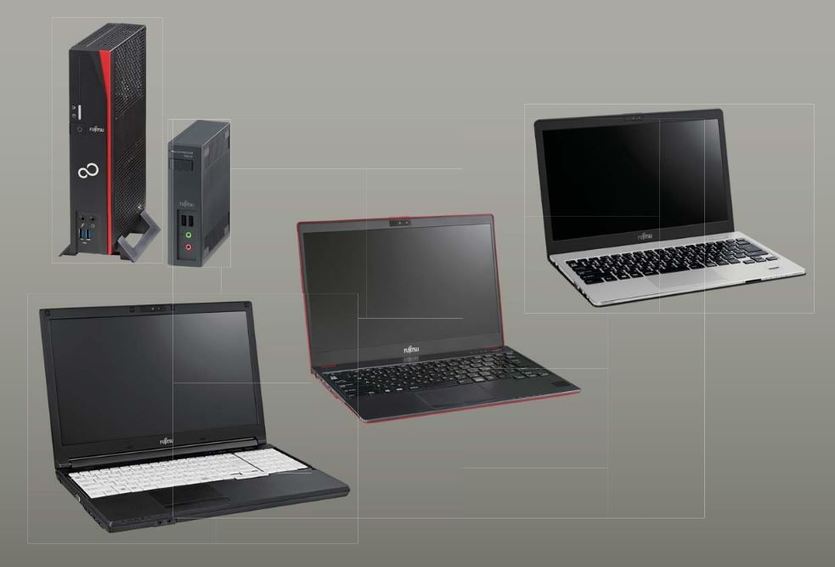
Fujitsu launches the world’s lightest 13.3″ thin client laptop weighing just 799g – MSPoweruser

Fujitsu this week launched a new ultra-portable thin-client, FUTRO MU937. Fujitsu claims that it is the world’s lightest 13.3″ mobile thin client and it weighs just 799g and comes with a thickness of 15mm. Generally, lightweight laptops will be less durable. Despite its extremely light body, Fujitsu this device has cleared several strict tests, including …

Source: mspoweruser.com

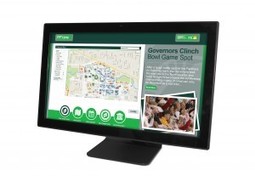
Tightrope Media Systems to Unveil All-in-One Carousel Digital Signage Displays – rAVe [Publications]

ST. PAUL, MINNESOTA, March 8, 2016 – Tightrope Media Systems is developing a new all-in-one display system powered by its Carousel digital signage software. The all-in-one displays, to be shown at the Digital Signage Expo (March 16-17, Las Vegas Convention Center, Booth 1037) are ideal for interactive, information-based kiosks in busy consumer and visitation spaces. …

Source: www.ravepubs.com

Running on 22, 32 and 42 inch POE AIOs from Thinlabs. Nice.

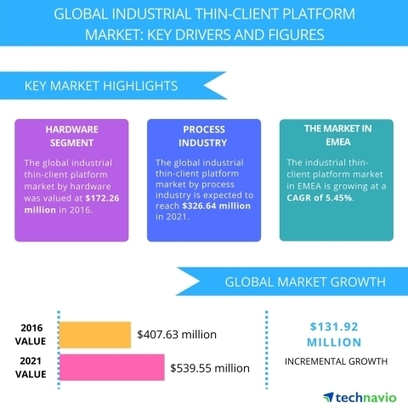
Global Industrial Thin Client Platform Market 2017- Advantech, American Industrial Systems, ASUS, DevonIT, FUJITSU, MiTAC – Press Release – Digital Journal

The Global Industrial Thin-client Platform Market 2017 Industry Research Report is an in-depth study and professional analysis on the current state of the Industrial Thin-client Platform market.

Source: www.digitaljournal.com

Major Companies covered in this Research Report are,
Centerm
Dell
HP
IGEL
Ncomputing
Advantech
American Industrial Systems
ASUS
DevonIT
FUJITSU
MiTAC